PARIS: A French court on Tuesday ordered Nicolas Sarkozy to stand trial for illicit campaign financing, adding to the ex-president’s legal woes as he also prepares to answer charges of exerting pressure on a judge.
Sarkozy, 64, lost his final appeal to France’s highest criminal court, and risks a year in prison and a fine of 3,750 euros ($4,085) if found guilty.
The ruling came the same day as another court ordered a trial for ex-prime minister Edouard Balladur on charges of campaign finance violations in an unrelated case.
Sarkozy is not the country’s first former president to be prosecuted — Jacques Chirac, who died last week, was given a two-year suspended sentence in 2011 for embezzlement and misuse of public funds during his time as mayor of Paris.
Prosecutors say Sarkozy spent nearly 43 million euros ($40 million) on his failed 2012 re-election bid — almost double the legal limit of 22.5 million euros — using fake invoices.
He has said he was unaware of the fraud by executives at the public relations firm Bygmalion, who are among 13 others being pursued in the case.
Sarkozy’s lawyer Emmanuel Piwnica called the appeals court ruling a “disappointment.”
Since losing the election to the Socialist Party’s Francois Hollande and leaving office, Sarkozy has fought a barrage of corruption and campaign financing charges, all of which he rejects.
The former Republican party leader faces another trial on charges of corruption and influence peddling over his alleged attempts to try to get information from a judge about an investigation focused on him.
And he has been charged over accusations he accepted millions of euros from the late Libyan dictator Muammar Qaddafi toward his first presidential campaign in 2007.
Sarkozy will face a standard criminal court, while Balladur, 90, will be tried by the Court of Justice of the Republic, a tribunal set up to hear cases of ministerial misconduct.
The court has no jurisdiction over heads of state, except in treason cases.
Balladur and former defense minister Francois Leotard, 77, were charged in 2017 with “complicity in misuse of corporate assets” over the sale of submarines to Pakistan when Balladur was prime minister, from 1993 to 1995.
The kickbacks are estimated at some 13 million francs (almost two million euros in today’s money), which are suspected of including a cash donation to Balladur’s 1995 presidential campaign of a little over 10 million francs, prosecutor Francois Molins said in a statement.
Balladur also has to answer to a charge that he concealed the crimes.
The claims came to light during an investigation into a 2002 bombing in Karachi, Pakistan, which targeted a bus transporting French engineers.
Fifteen people were killed, including 11 engineers working on the submarine contract.
The Al-Qaeda terror network was initially suspected of the attack, but the focus later shifted to the arms deal as investigators considered whether the bombing may have been revenge for the non-payment of promised bribes after Chirac pipped Balladur in the vote and canceled the payment of commissions.
Balladur’s lawyers said Tuesday that he was “confident” he would be cleared of any wrongdoing, “given that he never committed any of the acts of which he is accused.”
Six others facing trial in the case include Balladur’s campaign manager Nicolas Bazire; Thierry Gaubert, who worked for Sarkozy, who was budget minister at the time; and a Franco-Lebanese middleman, Ziad Takieddine.
They will go on trial this month in a Paris criminal court.
Other senior French politicians charged with financial misconduct include the former prime ministers Francois Fillon and Alain Juppe.
Fillon crashed out of the running for the presidency in 2017 after being charged with using public funds to pay his wife for a fake job as his assistant.
Juppe, a prime minister under Chirac, was given a suspended jail sentence in 2004 over a party funding scandal.
On Monday, ex-justice minister Jean-Jacques Urvoas was given a suspended month-long sentence for passing on secret details of a tax fraud and corruption investigation to the politician targeted, the rightwing MP Thierry Solere.


![]()

French ex-president Sarkozy to face campaign finance trial
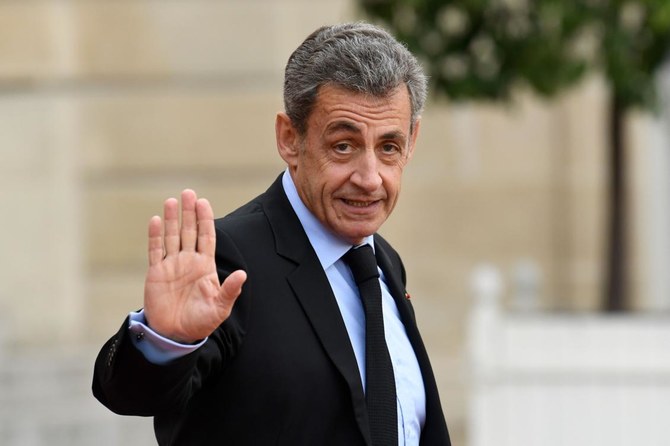
French ex-president Sarkozy to face campaign finance trial
- The court definitively rejected Sarkozy's appeal, confirming a criminal court will judge the case
- The date of the trial hasn't been set


Latest updates


© 2026 SAUDI RESEARCH & PUBLISHING COMPANY, All Rights Reserved And subject to Terms of Use Agreement.