At a desert cemetery in Pakistan, four dynasties sleep in the boundless sands

1 / 10
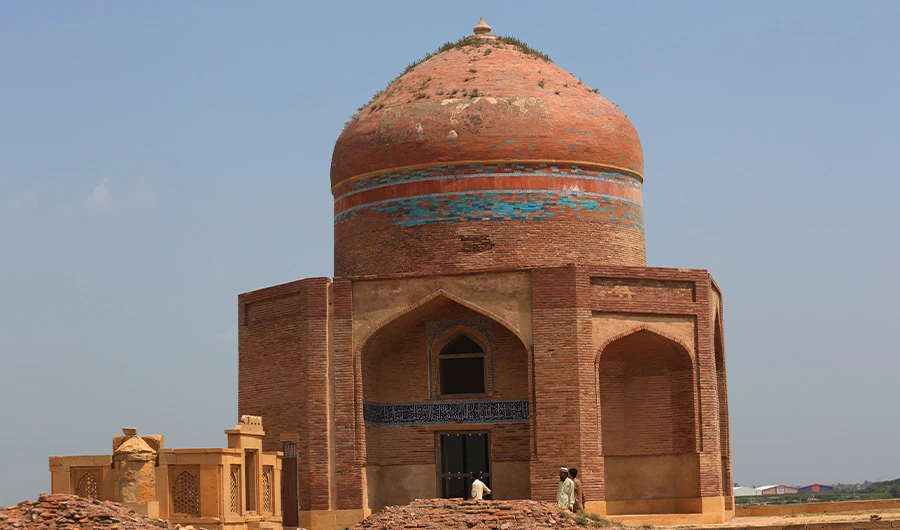
The tomb of Sultan Ibrahim, who died in 1559, at Makli Necropolis is a solid octagonal brick structure. Photograph taken on Sept 25, 2019. (AN photo by SA Babar)
2 / 10
Makli Necropolis near Thatta city of Pakistan’s southern Sindh province offers a glimpse into the history of four famous dynasties that ruled over the region. Photograph taken on Sept 25, 2019. (AN photo by SA Babar)
3 / 10
Makli Necropolis near Thatta city of Pakistan’s southern Sindh province offers a glimpse into the history of four famous dynasties that ruled over the region. Photograph taken on Sept 25, 2019. (AN photo by SA Babar)
4 / 10
In 1981, Makli was declared a UNESCO World Heritage Site. Photograph taken on Sept 25, 2019. (AN photo by SA Babar)
5 / 10
In 1981, Makli was declared a UNESCO World Heritage Site. Photograph taken on Sept 25, 2019. (AN photo by SA Babar)
6 / 10
In 1981, Makli was declared a UNESCO World Heritage Site. Photograph taken on Sept 25, 2019. (AN photo by SA Babar)
7 / 10
In 1981, Makli was declared a UNESCO World Heritage Site. Photograph taken on Sept 25, 2019. (AN photo by SA Babar)
8 / 10
In 1981, Makli was declared a UNESCO World Heritage Site. Photograph taken on Sept 25, 2019. (AN photo by SA Babar)
9 / 10
In 1981, Makli was declared a UNESCO World Heritage Site. Photograph taken on Sept 25, 2019. (AN photo by SA Babar)
10 / 10
In 1981, Makli was declared a UNESCO World Heritage Site. Photograph taken on Sept 25, 2019. (AN photo by SA Babar)
Updated 29 September 2019
Follow

At a desert cemetery in Pakistan, four dynasties sleep in the boundless sands

  • The necropolis is a testament to the great Sindhi civilization
  • Some people say ‘Makli’ means little Makkah, though the origin and meaning of the name remain unclear

THATTA, Sindh: Nearly a hundred kilometers away from Pakistan’s commercial hub Karachi, this town was once the capital of Sindh and home to some of the most powerful dynasties of the time.
Given its historic significance, Thatta is still surrounded by monuments, though its biggest attraction is Makli Necropolis where about half a million people are said to be resting in peace.
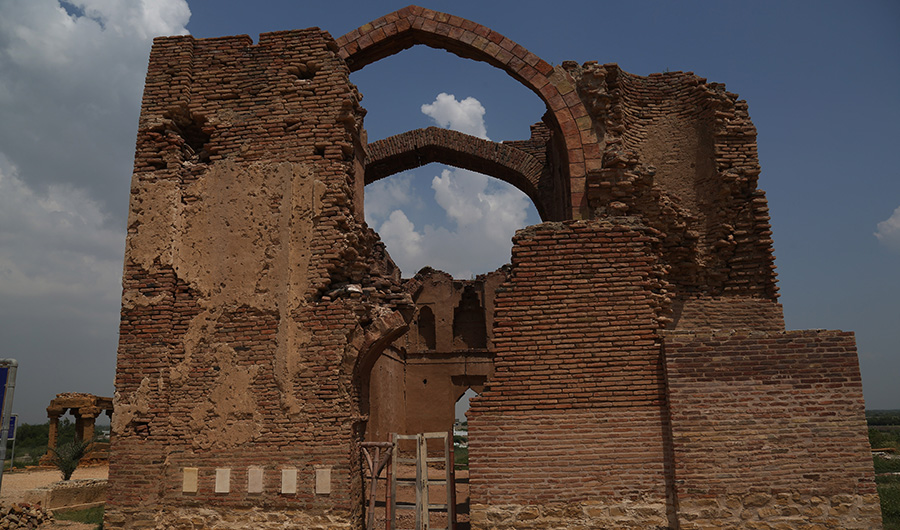


A view of the old Jamia Masjid, built in 1391 AD by Jam Tamachi, a famous ruler of Sindh from Samma dynasty. Photograph taken on Sept 25, 2019 (AN Photo by SA Babar)

Among the residents of the graveyard are many members of royal families whose tombs still stand out as masterworks of creativity, art and calligraphy.
Covering more than 10 square kilometers, the cemetery also contains 21 active Sufi shrines, thus attracting hundreds of devotees from across the province and other parts of the country.
In 1981, Makli was declared a UNESCO World Heritage Site. An outstanding testament to the Sindhi civilization, the place accommodates members of Samma (1340-1520 AD), Arghun (1520-1555 AD), Tarkhan (1555-1592 AD) and Mughals (1592-1739 AD) dynasties. While the first three were native dynasties, the Mughals were invaders who occupied Sindh.
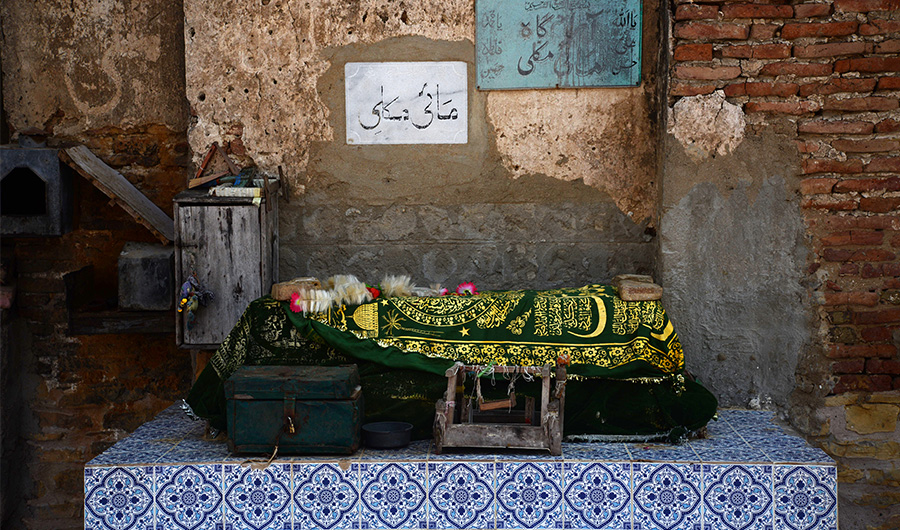


Grave of Mai Makli at the necropolis. Photograph taken on Sept 25, 2019 (AN Photo by SA Babar)

“These monuments are a stark reminder of the dedicated craftsmanship and construction prowess of the Mughals. Some monuments are done in yellow Jungshahi buff stone, while some in bricks, both building material native to the region,” Sarfraz Nawaz Jatoi, an official of Sindh’s culture department told Arab News on Thursday, adding that the Qur’anic inscriptions, geometric and floral ornamentation, meticulously carved in stones, were also unique.
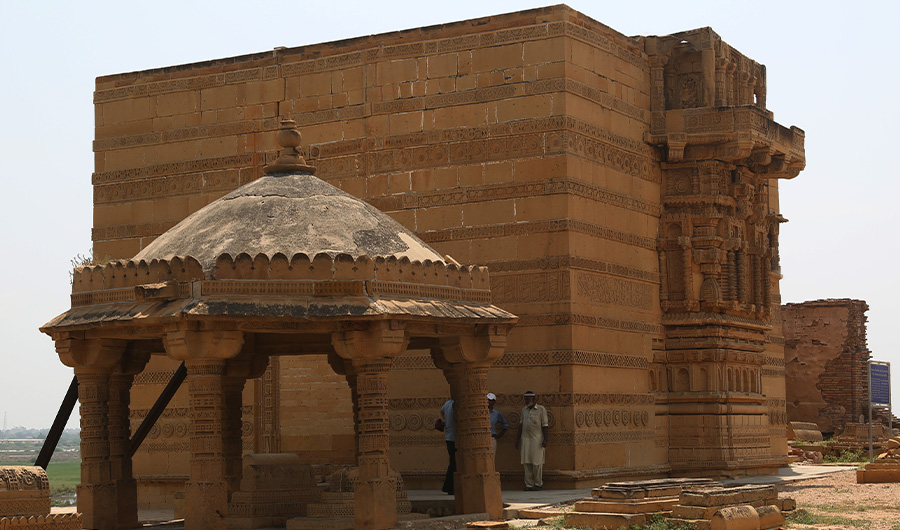


The tomb of Jam Nizamuddin alias Jam Nando, one of the most important rulers of Samma, who ruled over Sindh from 1460 to 1508. “His era is considered as a prosperous and peaceful period for Sindh,” Sarfraz Nawaz Jatoi, official of the province’s culture department, told Arab News on Sept 25, 2019. (AN Photo by SA Babar)

According to one account, the site was named Makli – or little Makkah – by a Sufi saint, Sheikh Hamad Jamali, after he heard the story of a pilgrim who had called it Makkah while returning from his sacred Hajj journey.
An old caretaker, Muhammad Hasan, however, shared a different story with Arab News, which is among several myths surrounding the name of the place.
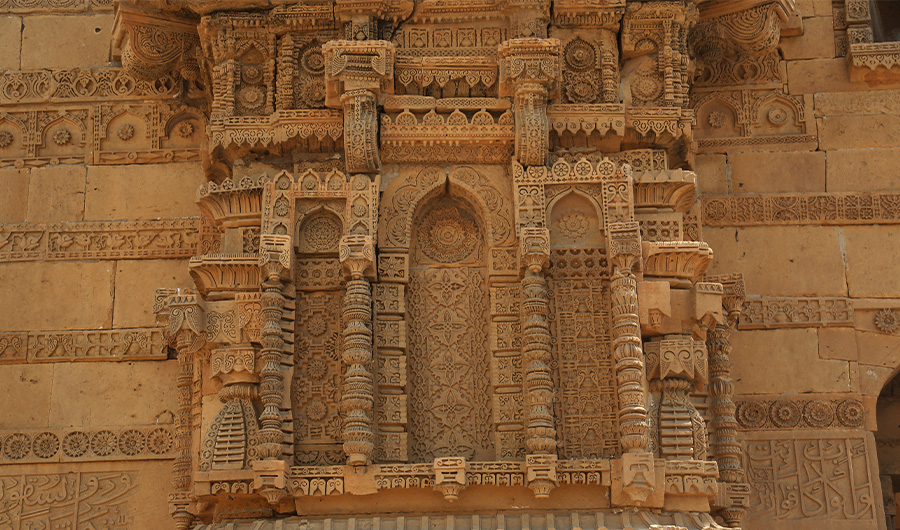


The tomb of Jam Nizamuddin alias Jam Nando, one of the most important rulers of Samma, who ruled over Sindh from 1460 to 1508. “His era is considered as a prosperous and peaceful period for Sindh,” Sarfraz Nawaz Jatoi, official of the province’s culture department, told Arab News on Sept 25, 2019. (AN Photo by SA Babar)

“Mai Makli was a pious woman who grew goats and sold their milk. It is said she would take lassi [a curd-based drink] to Makkah at night where she was seen by several pilgrims from Sindh. The place and this graveyard is named after her,” Hassan said while pointing toward her grave between a mosque and seminary.
“There are several myths about the name, but everyone agrees that it is a great historical site. The province’s culture department is doing its best to make it more accessible to tourists around the world,” Jatoi said.
Pakistan condemns Sudan attack that killed Bangladeshi UN peacekeepers, calls it war crime

Updated 14 December 2025
Follow

Pakistan condemns Sudan attack that killed Bangladeshi UN peacekeepers, calls it war crime

  • Six peacekeepers were killed in a drone strike in Kadugli as fighting between Sudan’s army and the RSF grinds on
  • Pakistan, a major troop contributor to the UN, says perpetrators of the attack must be identified, brought to justice

ISLAMABAD: Pakistan on Sunday extended condolences to the government and people of Bangladesh after six United Nations peacekeepers from the country were killed in a drone strike in southern Sudan, condemning the attack and describing it as a war crime.

The attack took place amid a full-scale internal conflict that erupted in April 2023 between the Sudanese Armed Forces (SAF) and the Rapid Support Forces (RSF), a powerful paramilitary group, following a power struggle after the collapse of Sudan’s post-Bashir political transition.

Omar Al-Bashir, who ruled Sudan for nearly three decades, was ousted by the military in 2019 after months of mass protests, but efforts to transition to civilian rule later faltered, plunging the country back into violence that has since spread nationwide.

The drone strike hit a logistics base of the United Nations Interim Security Force for Abyei (UNISFA) in Kadugli, the capital of South Kordofan state, on Saturday, killing the Bangladeshi peacekeepers. Sudan’s army blamed the RSF for the attack, though there was no immediate public claim of responsibility.

“Pakistan strongly condemns the attack on @UNISFA in Kadugli, resulting in the tragic loss of 6 Bangladeshi peacekeepers & injuries to several others,” the country’s permanent mission to the UN said in a social media message. “We honor their supreme sacrifice in the service of peace, and express our deepest condolences to the government and people of #Bangladesh.”

“Such heinous attacks on UN peacekeepers amount to war crimes,” it added. “Perpetrators of this horrific attack must be identified and brought to justice. As a major troop-contributing country, we stand in complete solidarity with all Blue Helmets serving the cause of peace in the perilous conditions worldwide.”

According to Pakistan’s UN mission in July, the country has deployed more than 235,000 peacekeepers to 48 UN missions across four continents over the past eight decades.

Pakistan also hosts one of the UN’s oldest peacekeeping operations, the United Nations Military Observer Group in India and Pakistan (UNMOGIP), and is a founding member of the UN Peacebuilding Commission.

More than 180 Pakistani peacekeepers have lost their lives while serving under the UN flag.

Pakistan and Bangladesh have also been working in recent months to ease decades of strained ties rooted in the events of 1971, when Bangladesh — formerly part of Pakistan — became independent following a bloody war.

Relations have begun to shift following the ouster of former Bangladeshi prime minister Sheikh Hasina last year amid mass protests.

Hasina later fled to India, Pakistan’s neighbor and arch-rival, creating space for Islamabad and Dhaka to rebuild their relationship.