

Western border remains close ahead of Afghan polls, says Pakistan

1 / 2
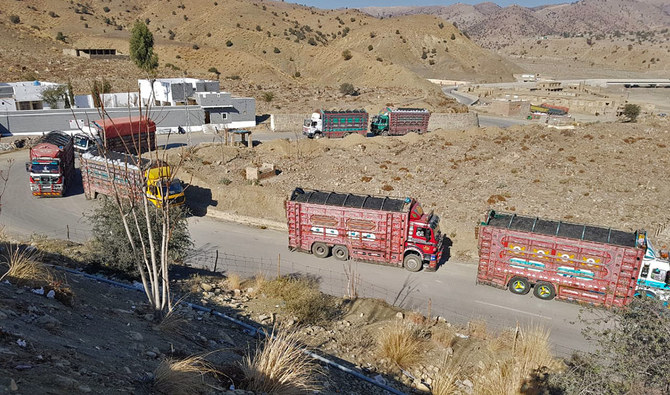
A general view of the busy Torkham border crossing between Pakistan and Afghanistan on September 18, 2019. Pakistan on Thursday decided to close all crossing points along the Pak-Afghan border in view of the upcoming presidential election scheduled to be held on Sept. 28, 2019. (AN photo)
2 / 2
Updated 27 September 2019
Follow

Western border remains close ahead of Afghan polls, says Pakistan

  • Officials say the step has been taken to support political transition in the war-ravaged country
  • The Taliban have asked their followers to disrupt the electoral contest in Afghanistan

PESHAWAR: In view of the Afghan presidential election on Saturday, Pakistan decided on Thursday to close all border crossing points on September 27 and 28 to enhance security along the frontier and support political transition in Afghanistan, said an official while talking to Arab News.
Assistant Commissioner of Khyber tribal district, Muhammad Imran, said the government would take all necessary measures to avoid any untoward incident at the Torkham border crossing.
“Security has already been in place in the border areas but relevant officials, deputed along the border, have also been instructed to stay vigilant and spot movement of all anti-social elements,” he said.
The upcoming electoral exercise in Afghanistan was delayed twice before due to official security concerns. However, a large number of 9.6 million registered Afghan voters is expected to visit polling stations to cast vote in the fourth presidential ballot since the Taliban regime was toppled in 2001.
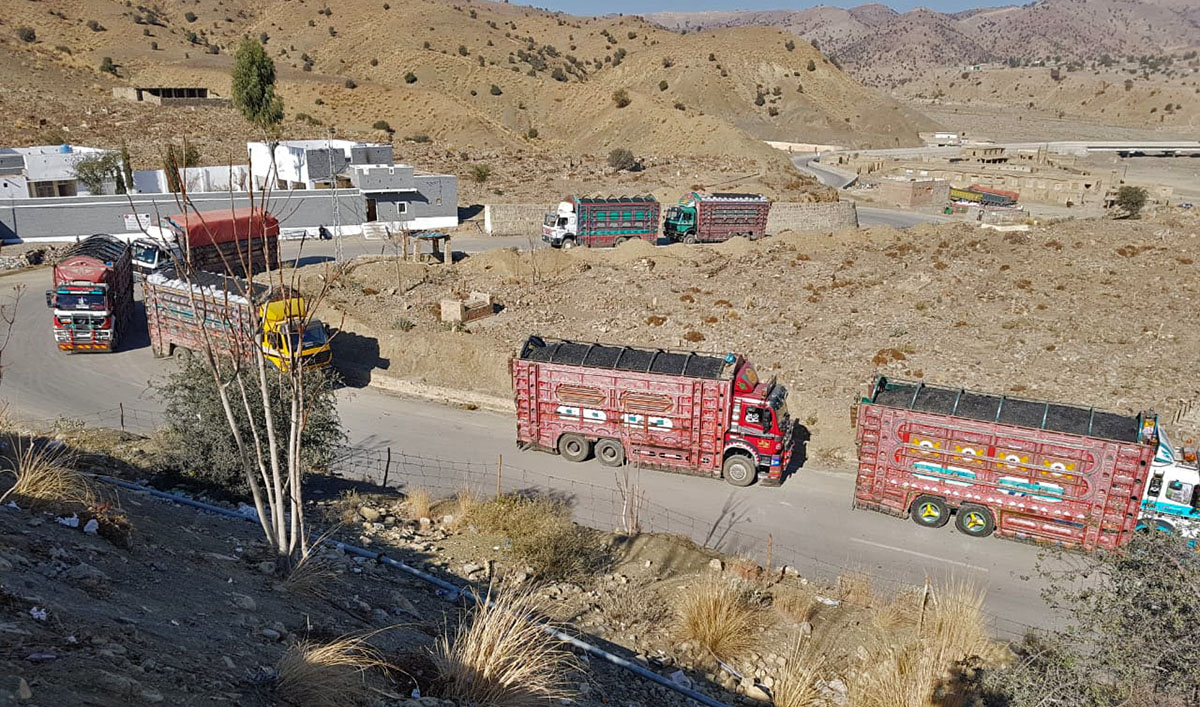


Heavy vehicles head toward Afghanistan via Ghulam Khan border in North Waziristan tribal district on January 31, 2019. Pakistan on Thursday decided to close all crossing points along the Pak-Afghan border in view of the upcoming presidential election scheduled to be held on Sept. 28, 2019. (AN photo)

In an official statement issued on Thursday, Pakistan’s Ministry of Foreign Affairs also proclaimed the closure of border crossings, announcing “strict security check of all pedestrians and trading vehicles from 26-29 September 2019” and “closure of all passage ways/cargo terminals (except for emergency patients) on 27-28 September 2019.”
According to the Afghan media, 16 candidates are striving for the office of the president in their country, including President Ashraf Ghani and Chief Executive Officer Abdullah Abdullah.
The frontrunners have remained rivals for the past five years, though they were also part of the power sharing government.
Hajji Usman, an Afghan businessman and customs clearing agent at the Torkham border, said the closure of the crossing point would negatively impact business activities.
“I think the closure of the border is a futile exercise,” he said. “This will only damage truckloads of fruits and vegetables.”
However, the Taliban issued a statement on Thursday, urging its supporters to use all means necessary to disrupt the presidential election in Afghanistan.
“The Islamic Emirate directs its Mujahideen to prevent this process throughout the country by making use of everything at their disposal and activate their plans for its neutralization,” the statement added.



Pakistan backs Yemen unity, supports Riyadh talks amid regional tensions

Updated 7 sec ago
Follow

Pakistan backs Yemen unity, supports Riyadh talks amid regional tensions

  • Pakistan urges Yemeni stakeholders to work ‘in good faith’ toward a negotiated political solution
  • Ishaq Dar discusses regional situation with the Saudi and Emirati foreign ministers from Beijing

ISLAMABAD: Pakistan on Saturday welcomed a call by Yemen’s Presidential Leadership Council for political dialogue in Riyadh among all factions on the ground, reaffirming its support for Yemen’s unity following a “limited” airstrike by a Saudi-led coalition targeting weapons shipments from the United Arab Emirates to the port city of Mukalla in southern Yemen.

The coalition forces spokesperson said the weapons were meant to support the Southern Transitional Council (STC) forces, backed by the UAE, in Yemen’s Hadramaut and Al-Mahra “with the aim of fueling the conflict.”

Rashad Al-Alimi, President of the Yemeni Presidential Leadership Council, requested the Saudi authorities hold a conference bringing together all factions in southern Yemen, prompting the Kingdom to invite them “to develop a comprehensive vision” for the future.

“Pakistan welcomes the call by Yemen’s Presidential Leadership Council to hold comprehensive talks in Riyadh and once again urges all Yemeni stakeholders to engage in good faith toward a negotiated political solution based on agreed parameters,” the foreign office said in a statement.

“Pakistan reaffirms its steadfast support for the unity and territorial integrity of Yemen,” it added.

The diplomatic messaging was reinforced by Pakistan’s Deputy Prime Minister and Foreign Minister Mohammad Ishaq Dar, who spoke separately by phone from Beijing with Saudi Foreign Minister Faisal bin Farhan and UAE Foreign Minister Abdullah bin Zayed Al Nahyan.

The foreign office said Dar welcomed the Saudi foreign ministry’s recent statement on Yemen and expressed appreciation for efforts by all sides to resolve the regional situation amicably, while also noting that dialogue and diplomacy had produced “tangible outcomes on the ground.”

Dar arrived in Beijing earlier in the day, where he is due to co-chair the 7th Pakistan-China Foreign Ministers’ Strategic Dialogue with Wang Yi on Sunday. He will also attend events marking the start of the 75th year of Pakistan-China diplomatic relations, with commemorative initiatives planned throughout 2026.