ISLAMABAD: The Bill and Melinda Gates Foundation on Wednesday signed a memorandum of understanding of $200 million with Pakistan to support the government’s flagship poverty alleviation “Ehsaas” program that aims to reduce socio-economic inequalities by investing in people.
At a meeting in New York, Prime Minister’s Special Assistant on Poverty Alleviation and Social Protection Dr. Sania Nishtar signed the document with President of Global Development at the Foundation Chris Elias.
The meeting was also attended by Prime Minister Imran Khan and the American business tycoon and philanthropist, Bill Gates.
According to the MoU, the $200 million promised by the Foundation will fund 134 poverty alleviation projects under the Ehsaas program.
“I’m pleased that the Bill & Melinda Gates Foundation will assist with a range of activities including accelerating stunting reduction programs, supporting financial inclusion initiatives and investing in public health systems to improve health and reduce maternal, newborn and child mortality,” Prime Minister Imran Khan said at the occasion.
The “Ehsaas” program was launched on March 27, 2019, by the Pakistan Tehreek-e-Insaf administration.
“Ehsaas is about the creation of a ‘welfare state’ by countering elite capture and leveraging 21st century tools—such as using data and technology to create precision safety nets; promoting financial inclusion and access to digital services; supporting the economic empowerment of women; focusing on the central role of human capital formation for poverty eradication, economic growth and sustainable development; and overcoming financial barriers to accessing health and post-secondary education,” the prime minister’s policy statement explained.
The program covers projects ranging from building homes for the homeless to ensuring financial independence for women and family planning initiatives.


![]()

Bill, Melinda Gates pour $200 million in Pakistan's poverty alleviation program
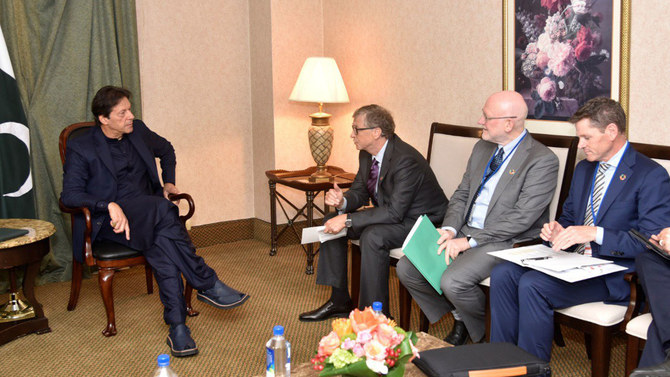
Bill, Melinda Gates pour $200 million in Pakistan's poverty alleviation program
- The funds will be used for 134 poverty alleviation projects under the “Ehsaas” program
- The program is designed to reduce socio-economic inequalities in the country
Latest updates




© 2026 SAUDI RESEARCH & PUBLISHING COMPANY, All Rights Reserved And subject to Terms of Use Agreement.