NEW YORK: The United States led more than 30 countries on Tuesday in condemning what it called China’s “horrific campaign of repression” against Muslims in the western region of Xinjiang at an event on the sidelines of the annual UN General Assembly that was denounced by China.
In highlighting abuses against ethnic Uighurs and other Muslims in China, Deputy Secretary of State John Sullivan said the United Nations and its member states had “a singular responsibility to speak up when survivor after survivor recounts the horrors of state repression.”
Sullivan said it was incumbent on UN member states to ensure the world body was able to closely monitor human rights abuses by China and added that it must seek “immediate, unhindered, and unmonitored” access to Xinjiang for the UN High Commissioner for Human Rights (UNHCR).
Sullivan said Tuesday’s event was co-sponsored by Canada, Germany, the Netherlands and Britain, and was joined by more than 30 UN states, representatives of the European Union and more than 20 nongovernmental organizations, as well as Uighur victims.
“We invite others to join the international effort to demand and compel an immediate end to China’s horrific campaign of repression,” he said. “History will judge the international community for how we respond to this attack on human rights and fundamental freedoms.”
Paola Pampaloni, deputy managing director for Asia of the European External Action Service, said the EU was “alarmed” by the situation and also urged “meaningful” access to Xinjiang.
“We are concerned about ... information about mistreatment and torture,” she said. “China is always inviting us to the camps under their conditions, we are in negotiations right now for terms and conditions for free access.”
On Monday US President Donald Trump had called for an end to religious persecution at another event on the sidelines of the UN gathering and repeated his comments in a speech on Tuesday.
Trump, who has been cautious about upsetting China on human rights issues while making a major trade deal with Beijing a major priority, said religious freedom was under growing threat around the world but fell short of specifically mentioning the Uighur situation.
“Volume is coming up at a pace that we hope that the Beijing government recognizes not only US but the global concern about this situation,” David Stilwell, US Assistant Secretary, Bureau of East Asian and Pacific Affairs told reporters at a briefing.
“We will see how that plays out and how Beijing reacts and take it from there.”
A representative for the Chinese delegation to the UN General Assembly accused Washington of violating the UN Charter by criticizing China.
The United Nations says at least 1 million ethnic Uighurs and other Muslims have been detained in what China describes as “vocational training centers” to stamp out extremism and give people new skills.
Sullivan said the United States had received “credible reports of deaths, forced labor, torture, and other cruel, inhumane, or degrading treatment” in the camps.
He said there were also many reports that the Chinese government forces detainees to renounce their ethnic identities as well as their culture and religion.
Though US officials have ramped up criticism of China’s measures in Xinjiang, it has refrained from responding with sanctions, amid on-again, off-again talks to resolve a bitter, costly trade war.
At the same time, it has criticized other countries, including some Muslim states, for not doing enough or for backing China’s approach in Xinjiang.
Rishat Abbas, the brother of Uighur physician Gulshan Abbas, who was abducted from her home in Urumchi in September 2018, told Tuesday’s event that “millions of Uighurs are becoming collateral damage to international trade policies, enabling China to continue to threaten our freedoms around the world, enable it to continue its police state.”
UN human rights chief Michelle Bachelet has repeatedly pushed China to grant the United Nations access to investigate reports of disappearances and arbitrary detentions, particularly of Muslims in Xinjiang.
China’s envoy in Geneva said in June that he hoped Bachelet would visit China, including Xinjiang. Bachelet’s office said in June that it was discussing “full access” with China.


![]()


US leads condemnation of China for ‘horrific’ repression of Muslims
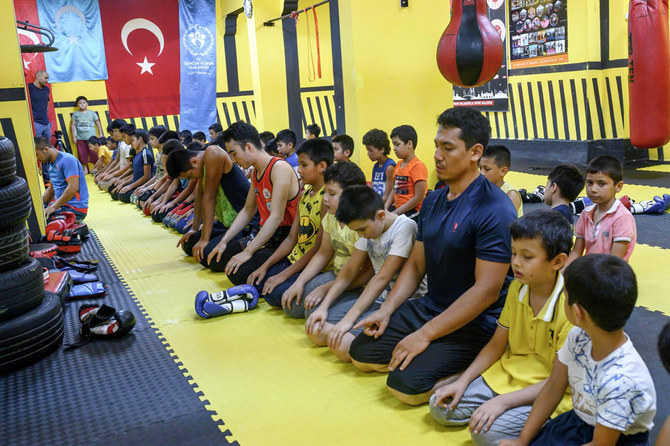
US leads condemnation of China for ‘horrific’ repression of Muslims
- China urged to give “immediate, unhindered, and unmonitored” access to Xinjiang for the UNHCR
- UN says at least 1 million ethnic Uighurs and other Muslims have been detained in China crackdown


Duterte drew up ‘death lists’, boasted about murders: ICC prosecutor
- Former Philippines president Rodrigo Duterte personally drew up “death lists” and boasted about murders committed during his “war on drugs“
THE HAGUE: Former Philippines president Rodrigo Duterte personally drew up “death lists” and boasted about murders committed during his “war on drugs,” an International Criminal Court prosecutor alleged Tuesday at a crimes against humanity hearing.
On day two of proceedings against Duterte, ICC prosecutor Edward Jeremy laid out searing testimony including allegations that children had their heads wrapped in packing tape and strangled to death.
“As president, Duterte publicly named persons he alleged were involved in drugs, and many of those would end up as victims in his so-called war on drugs,” Jeremy said.
The “Duterte list” was “basically a death list,” Jeremy cited a witness as saying, showing a video of Duterte himself saying: “I am the sole person responsible for it all.”
Duterte faces three ICC counts of crimes against humanity, with prosecutors alleging his involvement in at least 76 murders between 2013 and 2018.
Prosecutors say this is a “mere fraction” of the thousands believed killed in his “war on drugs” as mayor of Davao City and then president.
“As witnesses stated, the poor were often targeted, because they were the ones least likely to file complaints against the police,” said Jeremy.
Jeremy played a clip of Duterte joking about “extrajudicial killings” during a speech.
“And in this opulent, gilded, presentation room, the officials laugh along with their president while he boasts about his skills in extrajudicial killing,” said Jeremy.
“And outside on the streets of the Philippines, the bodies pile up.”
Jeremy alleged that almost 1,500 people had already been killed at the time of this clip.
The week-long ICC proceedings are not a trial but a “confirmation of charges” hearing, enabling judges to weigh whether to move ahead with a trial.
Duterte, 80, is not in the courtroom after exercising his right not to appear.
His defense team says he is weak and in cognitive decline. The prosecution and victims counter that he is healthy but does not want to face loved-ones of victims.
The court passed him fit to attend but granted him his right to absence.
Once the hearings wrap up Friday, the court will take up to 60 days to decide whether to proceed to a full trial, usually by written judgment.
Duterte’s defense lawyer, Nicholas Kaufman, on Monday said his client “maintained his innocence absolutely.”
Kaufman argued that while Duterte used “bluster and hyperbole” in his speeches, he also frequently ordered authorities only to shoot in self-defense.
On day two of proceedings against Duterte, ICC prosecutor Edward Jeremy laid out searing testimony including allegations that children had their heads wrapped in packing tape and strangled to death.
“As president, Duterte publicly named persons he alleged were involved in drugs, and many of those would end up as victims in his so-called war on drugs,” Jeremy said.
The “Duterte list” was “basically a death list,” Jeremy cited a witness as saying, showing a video of Duterte himself saying: “I am the sole person responsible for it all.”
Duterte faces three ICC counts of crimes against humanity, with prosecutors alleging his involvement in at least 76 murders between 2013 and 2018.
Prosecutors say this is a “mere fraction” of the thousands believed killed in his “war on drugs” as mayor of Davao City and then president.
“As witnesses stated, the poor were often targeted, because they were the ones least likely to file complaints against the police,” said Jeremy.
Jeremy played a clip of Duterte joking about “extrajudicial killings” during a speech.
“And in this opulent, gilded, presentation room, the officials laugh along with their president while he boasts about his skills in extrajudicial killing,” said Jeremy.
“And outside on the streets of the Philippines, the bodies pile up.”
Jeremy alleged that almost 1,500 people had already been killed at the time of this clip.
The week-long ICC proceedings are not a trial but a “confirmation of charges” hearing, enabling judges to weigh whether to move ahead with a trial.
Duterte, 80, is not in the courtroom after exercising his right not to appear.
His defense team says he is weak and in cognitive decline. The prosecution and victims counter that he is healthy but does not want to face loved-ones of victims.
The court passed him fit to attend but granted him his right to absence.
Once the hearings wrap up Friday, the court will take up to 60 days to decide whether to proceed to a full trial, usually by written judgment.
Duterte’s defense lawyer, Nicholas Kaufman, on Monday said his client “maintained his innocence absolutely.”
Kaufman argued that while Duterte used “bluster and hyperbole” in his speeches, he also frequently ordered authorities only to shoot in self-defense.
Latest updates


© 2026 SAUDI RESEARCH & PUBLISHING COMPANY, All Rights Reserved And subject to Terms of Use Agreement.