
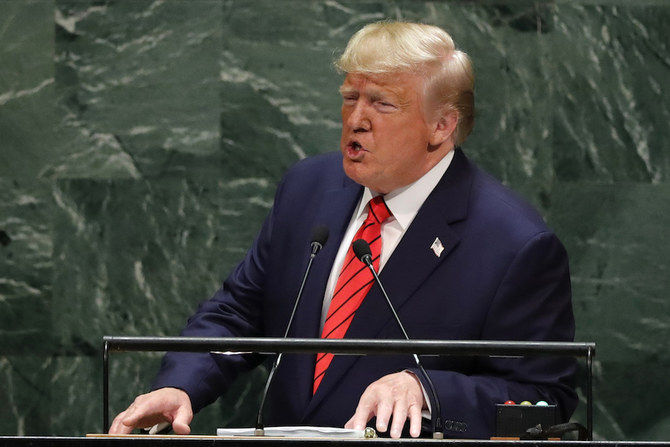

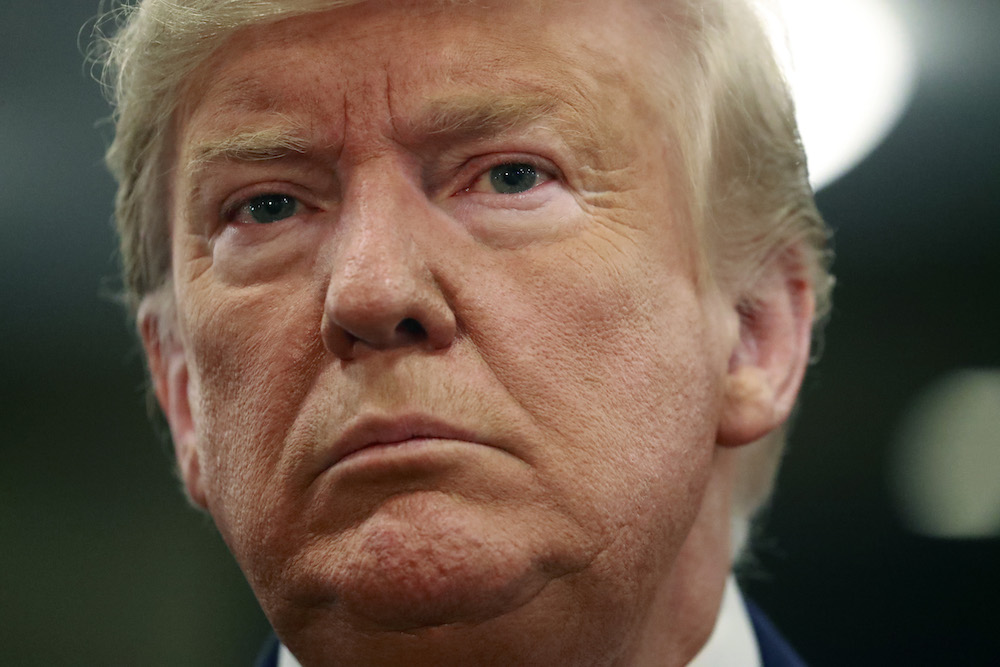
NEW YORK: President Donald Trump took center stage at the UN General Assembly on Tuesday to deliver a strong defense of nationalism while exhorting the world to act against Iran's “bloodlust” and rising aggression.
The president called on the global leaders seated before him to join the US in further isolating Tehran, pushing them to use economic sanctions to pressure Iran to give up its nuclear program and stop attacks that are rattling the Middle East.
“Not only is Iran the world's largest state sponsor of terrorism, but Iran's leaders are fueling the tragic wars in both Syria and Yemen,” Trump said. "All nations have a duty to act. No responsible government should subsidize Iran's bloodlust.”
Meanwhile, Saudi Arabia's minister of state for foreign affairs Adel Al-Jubeir said investigations show Iran conducted the recent attacks on Aramco facilities and will consider a military response once its investigation is complete during a Council on Foreign Relations panel on the sidelines.
“We want to mobilize international support, and we want to look at all options - diplomatic options, economic options and military options - and then make the decision,” Al-Jubeir said at a conference on the sidelines of the UNGA. “We want to avoid war. But at the same time we have to signal to the Iranians that ‘your behavior cannot continue’,” he added. For a full round-up of Al-Jubeir's comments, click here.
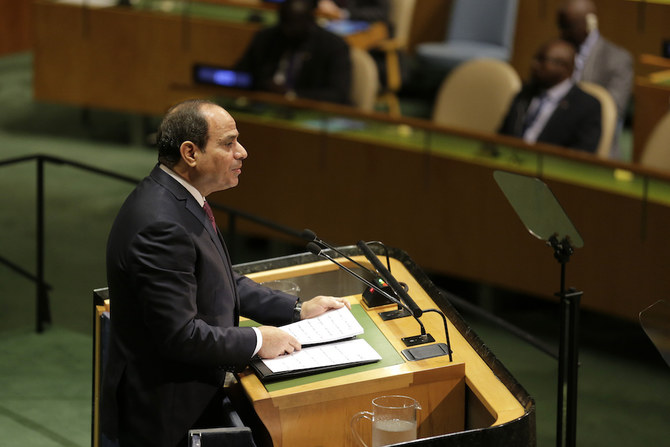
Also on Tuesday Egyptian President Abdel Fatteh El-Sisi said that a concerted effort was needed to stop militias taking control of Libya and to prevent external actors from intervening there.
The Palestine-Israel situation was also a topic of discussion, something King Abdullah II of Jordan raised during his address, saying that regional stability will always remain fragile if the two parties do not agree, the occupation was a "human tragedy" and that Palestinians deserve their full rights.
To follow how day one unfolded, scroll below...
-------
21:30 - That is a wrap on Arab News coverage of day one, make sure to come back tomorrow for more live coverage of the second day of debates.
21:00 - It is not just all about the debates at the UN headquarters, there are all sorts of events on the sidelines - and Saudi Arabia's foreign minister Ibrahim Al-Assaf attended such an event, seen here at a joint KSRelief and UNWRA event.
The inauguration attended by FM of #Bahrain @khalidalkhalifa, FM of #Yemen Mohammed Al-Hadrami and SG of @KSRelief Abdullah Al-Rabeeah, and @UNRWA CG @PKraehenbuehl pic.twitter.com/RNVRyPFt0U
— Foreign Ministry (@KSAmofaEN) September 24, 2019
20:00 - French president Emmanuel Macron's turn to address the audience, and he says the attacks on Saudi Aramco facilities "changed the situation" in the Middle East. He adds that the time is now for the US and Iran to pursue new negotiations, and it must include the JCPOA nuclear deal parties and other regional nations.
#LIVE: #France's president Emmanuel Macron at #UNGA - Saudi #Aramco attack changed the situation in the #MiddleEast, time has come to resume negotiations between #Iran, JCPOA parties and the regional nations
Follow live coverage here: https://t.co/1VMgdZQych pic.twitter.com/fsUGaQPRNN
— Arab News (@arabnews) September 24, 2019
19:20 - Saudi Arabia's Al-Jubeir is speaking on the sidelines of the UNGA with the Council on Foreign Relations and is speaking about Iran's involvement in the Saudi Aramco attacks, saying investigations show the weapons used originated from Iran. He also said the Islamic Republic is suffering under US sanctions.
He said the Arab coalition is fighting in Yemen to stabilize the region and to prevent the Houthis taking full control and the spread other militia affiliated to Iran.
#LIVE: Saudi Arabia's Minister of State for Foreign Affairs Adel Al-Jubeir, in New York for #UNGA, says preliminary investigations show weapons used in #SaudiAramco attacks were Iranian
Follow live coverage here: https://t.co/1VMgdZQych pic.twitter.com/3WkPjurMFa
— Arab News (@arabnews) September 24, 2019
Al-Jubeir also raised the issue of Qatar's funding of terrorist groups, saying that although the state was a neighbor it had to alter its policies of funding malign groups in the region which started in 1996. He also said Saudi Arabia was constantly strengthening its defense systems and had stopped hundreds of drones from attacking the Kingdom.
#LIVE: Al-Jubeir: We have prevented hundreds of drones from entering Saudi Arabia and are constantly working to strengthen our defenses
Follow live coverage here: https://t.co/1VMgdZQych pic.twitter.com/PAciZjY4Ty
— Arab News (@arabnews) September 24, 2019
18:40 - Jordan's King Abdullah II uses his address to the audience to highlight the plight of the Palestinian people and expresses his wish for a peaceful solution between Palestine and Israel, adding the occupation is an ongoing "human tragedy" - urging the global community to allow Palestinians to get their full rights.
#LIVE: #Jordan's King Abdullah II at #UNGA - Regional stability will always remain fragile if #Palestine and #Israel do not agree, the occupation is a "human tragedy" and Palestinians deserve their full rights
Follow live coverage here: https://t.co/1VMgdZQych pic.twitter.com/dne3ApVjQL
— Arab News (@arabnews) September 24, 2019
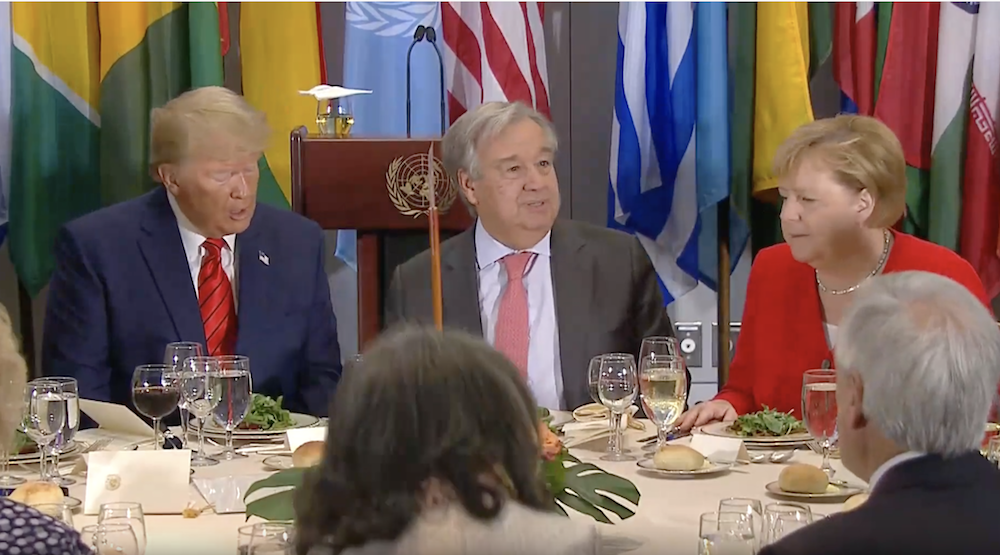
18:20 - While Bolivia's president speaks and we wait for Jordan's King Abdullah II, some of the leaders and dignitaries have broken for a lunch break, with Secretary General Guterres dining with Trump and German Chancellor Angela Merkel...
17:40 - Read Arab News columnist Abdel Aziz Aluwaisheg's thoughts on why deterring Iranian aggression is a priority at UN General Assembly...
Opinion
This section contains relevant reference points, placed in (Opinion field)
17:00 - As the presidents of Nigeria and Maldives speak, and we await an address from Jordan's King Abdullah II later this afternoon, you can read more Arab News stories from the UN General Assembly 2019, including analysis on the US and Iran appearing to be on a collision course at UN.
READ MORE: Trump calls on world to stand up to 'Iran's bloodlust'
Protesters urge Trump to reject compromise with Iran
16:20 - Next to address the General Assembly is Turkish president Recep Tayyip Erdogan, who uses his address to remind them of the humanitarian cost of Syria's civil war and called for an end to the nearly nine-year-old war, adding that many of the 3.6 million asylum seekers residing in Turkey are Syrian.

16:15 - El-Sisi stresses the importance of finding a solution to the Palestinian issue, with its own state and East Jeruslaem as its capital. Also condemns the attacks on Saudi Aramco facilities, reiterating the need for nations to combat terrorism and extremism through tolerance and dialogue.
15:55 - Next to speak is Egyptian president El-Sisi, who arrived earlier at the UN Headquarters...

15:30 - Donald Trump uses part of his address to urge the world community to stop "subsidizing Iran's bloodlust" and says all nations have a duty to act on Iran's aggression in the Middle East. He also reiterates his belief that Iran must not acquire a nuclear weapon, while confirming the US decision to tighten sactions on Iran's central bank and sovereign wealth fund following attacks on Saudi Aramco facilities.
#LIVE: US President Donald #Trump at #UNGA - We must never allow #Iran to acquire nuclear weapon, US has withdrawn from nuclear deal and imposed tough sanctions, will be tightened if Iran continues malign behavior #UNGA
Follow live coverage here: https://t.co/1VMgdZQych pic.twitter.com/fXQtCChGmJ
— Arab News (@arabnews) September 24, 2019
#LIVE: US President Donald #Trump at #UNGA - No responsible nation should subsidize #Iran's bloodlust, all nations have a duty to act on Iran
Follow Arab News' live coverage here: https://t.co/1VMgdZQych pic.twitter.com/6wGz45TzSh
— Arab News (@arabnews) September 24, 2019
14:55 - US President Donald Trump has arrived ahead of his address, where he plans to tell the UNGA that the US "does not seek conflict with any other nation" as tensions with Iran rise.
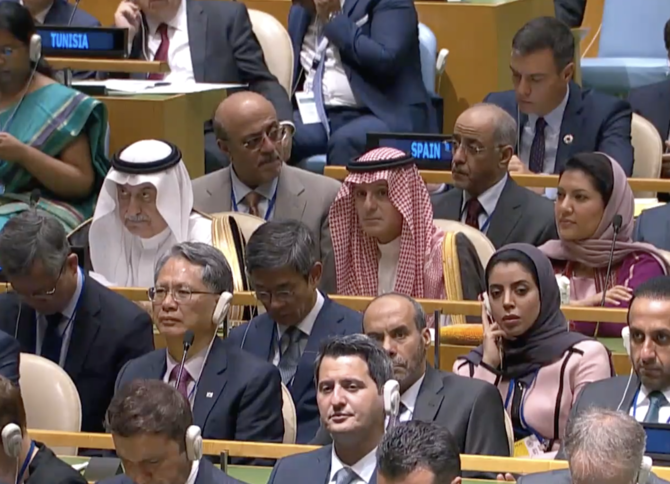
14:30 - The Saudi Arabian delegation among the dignitaries in the audience includes Minister of Foreign Affairs Ibrahim Al-Assaf, Minister of State for Foreign Affairs Adel Al-Jubeir and Saudi ambassador to the US Princess Reema bint Bandar bin Sultan.

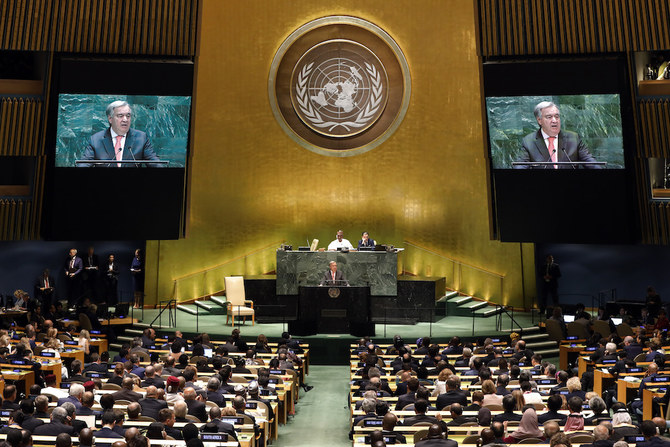
14:15 - Secretary General Antonio Guterres opens proceedings by outlining the work of the United Nations since last year's assembly. He spoke about the newly drafted Syrian constitution and called the attacks on Saudi Aramco facilities in the Kingdom "totally unacceptable" urging all countries to push for "reason and restraint."
#LIVE: Secretary General Antonio #Guterres opens proceedings. Mentions newly drafted #Syrian constitution and calls attacks on Saudi #Aramco facilities "totally unacceptable" urging all countries to push for "reason and restraint"https://t.co/Taz7SkjlHX pic.twitter.com/GslfspyE3b
— Arab News (@arabnews) September 24, 2019
14:00 — Good afternoon. The big names speaking on day one of the debates include US president Donald Trump, UK prime minister Boris Johnson and French president Emmanuel Macron. And from the Middle East - Egyptian president Abdel Fattah El-Sisi and King Abdullah II of Jordan.
(With Agencies)