

Book Review: ‘All-American Muslim Girl’ is a timely take on what it means to be a young Muslim

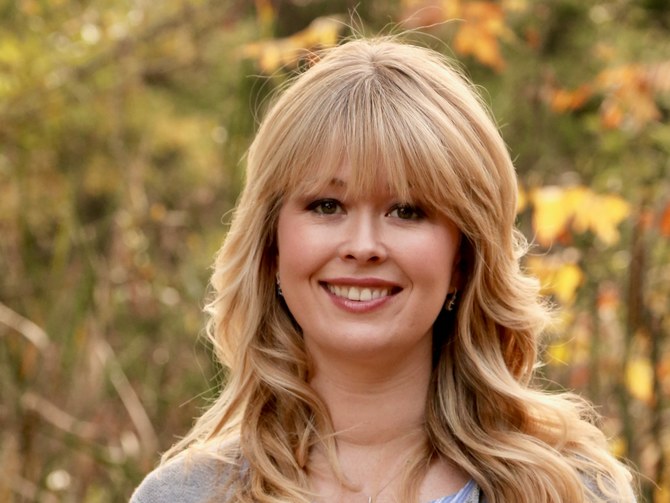
Author Nadine Jolie Courtney’s second Young Adult novel sheds light on harsh realities that young Muslims face today in the West. (Supplied)
Updated 23 September 2019
Follow

Book Review: ‘All-American Muslim Girl’ is a timely take on what it means to be a young Muslim

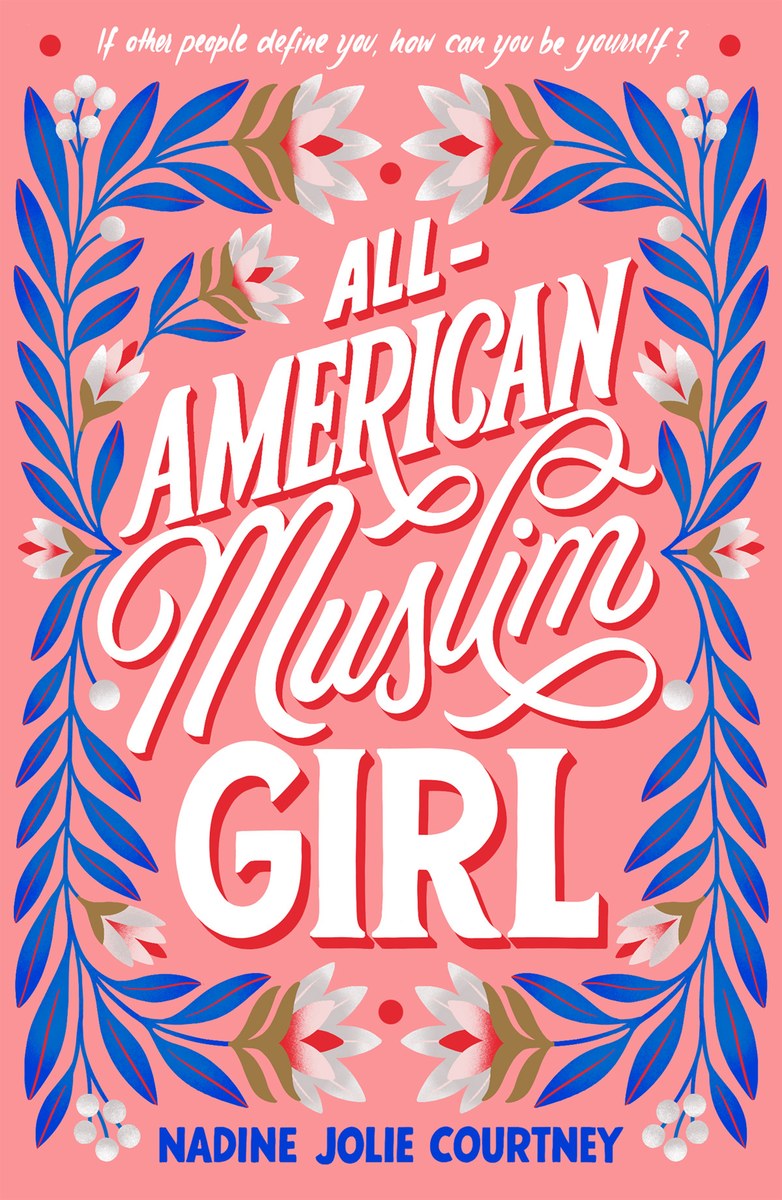
DHAHRAN: “All-American Muslim Girl” opens with the news of a shooting in the United States. The protagonist, 16-year old Alia (Allie) Abraham is boarding a flight when the news breaks and she is immediately plagued with sadness, frustration, and a series of anxious thoughts: “Please God, don’t let there have been a Muslim involved” and “Not that facts matter. Chances are good we’ll bear the blame one way or another.”

Author Nadine Jolie Courtney’s second Young Adult novel sheds light on harsh realities that young Muslims face today in the West — the ever-growing Islamophobia, hate rhetoric, and amidst it all, the struggles of finding their identity and fitting in.

In such tumultuous times, her family discourages her from drawing any unwanted attention to their Syrian-Circassian and Muslim identity. With her blue eyes, blonde hair, and sweet disposition, Allie never had any problems fitting in as a second-generation, all-American teenager. On the other hand, she is tired of “fitting in” and being accepted as a white girl. She feels a deep desire to bond with her teita (grandmother), but has never learned enough Arabic to converse with her properly. She is curious to learn about fasting during Ramadan, but doesn’t ask too many questions, afraid that it might upset her atheist father.
When the Abraham family settles into a small town north of Atlanta, Allie befriends the cool crowd at school and starts dating popular Wells Henderson. Soon, she finds out that Wells is the son of Jack Henderson, host of America’s most popular television show, “The Jack Attack” — a show that propagates hate rhetoric against minorities.

As her relationship with Wells deepens, Allie finds herself living a dual life. In the privacy of her bedroom, she learns how to pray and read the Qur’an. She joins the school’s Muslim Student Association (MSA) and, in discourse with other young Muslim women, tries to reconcile Islamic beliefs with her Western upbringing. Through this journey of self-discovery, Allie learns to embrace her identity.

Inspired by the author’s life, “All-American Muslim Girl” is a timely and relevant read on what it means to be a young Muslim in today’s world — you don’t have to be defined by other people’s expectations. Stay true to yourself, even if that means making some people uncomfortable.


Canadian Lebanese singer Maya Waked on music, identity, home

Updated 7 sec ago
Follow

Canadian Lebanese singer Maya Waked on music, identity, home

  • Late father’s love of music shaped childhood’s soundtrack

DUBAI: For Canadian Lebanese singer Maya Waked, music has always been inseparable from memory.

Some of her earliest recollections are rooted in her family home in Lebanon, where her late father’s love of music shaped the soundtrack of her childhood.


A post shared by Maya Waked (@wakedmaya)


“He had a beautiful voice, so he used to sing a lot at home,” she recalled, adding that he made her and her sisters listen to Arab icons like Fairuz, Asmahan, Umm Kulthum and Mohammed Abdel Wahab. “These are my first memories.”

Waked’s sound today blends Arabic melodies with improvisation and international textures, resonating across borders. (Supplied)

Music was not just something playing in the background; it was an experience her parents actively nurtured. Waked grew up attending weekly concerts, operas and musical events, an upbringing she describes as “a blessing.” But when she left Lebanon as a teenager, that connection briefly shifted. Living and studying in France for a few years, she found herself leaning into European culture, wanting to feel modern and influenced by her new surroundings.

It was only later, after moving to Canada, that her relationship with her Arab identity came into sharp focus. “This is where it hit me that my roots are my refuge,” she said. “My resources. This is where I find myself ... my stability.” In Canada she hosted a radio program for the Arabic diaspora, speaking Arabic on air and reconnecting with her culture while far from home.


A post shared by Maya Waked (@wakedmaya)

Waked said she never felt torn between cultures. Instead, she learned to live comfortably in all of them. “You can have your identity that is a mix of everything,” she said, explaining that while she sings mainly in Lebanese, her music carries influences from French literature, jazz, bossa nova and global sounds. That multiculturalism has become the foundation of her artistic identity.

Waked’s sound today blends Arabic melodies with improvisation and international textures, resonating across borders.

Some of her earliest recollections are rooted in her family home in Lebanon, where her late father’s love of music shaped the soundtrack of her childhood. (Supplied)

Her recent performance in Saudi Arabia, at the Ritz-Carlton Jeddah, marked a new milestone in her regional journey. It was her first time performing in the Kingdom, and she said: “It was a very meaningful experience for me. I felt that the audience was very curious and very open. They are great listeners and very cultured. They know the songs and recognized some of the tunes.”

Looking ahead, Waked said she was currently in the process of recording new music and planning a music video following performances across the region.