


JEDDAH: As with any Arab drama series, a good storyline will always be the talk of majlis, or social gatherings. These days, the conversation might take place via Twitter or Instagram, but, nevertheless, it will remain a hot topic.
That was certainly the case with MBC’s “Al-Asoof” (“Winds of Change“), a historical drama that explored Saudi Arabia’s transition from its desert past to the regional powerhouse it has become today.
It was a story that all Saudis wanted to hear, with lingering questions many were asking: What changed in the Kingdom and why?
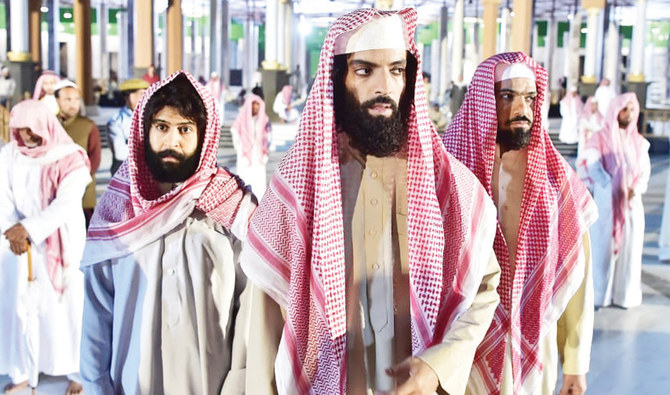
The series returned to television during Ramadan, with its second season debut depicting a watershed moment in Saudi history — the shift from a moderate to ultra-conservative ideology that followed Juhayman Al-Otaibi’s 1979 attack on Makkah’s Holy Mosque.
The show focused on a Riyadh family during a time of social upheaval as it delved into the events surrounding the siege and its aftermath, including the infamous Awakening movement.
“Al-Asoof” was written by Abdulrahman Al-Wabil and directed by Muthanna Sobh. The cast included Naser Al-Gasabi, Abdul-Ellah Al-Sanani, Habib Al-Habib, Reem Abdullah and Yagoub Al-Farrhan.
The Dubai-based MBC Group is committed to providing content that “discusses important events and issues,” Ali Jaber, its director, told Arab News recently. “The second series of ‘Al-Asoof’ tackles a major historical event in Saudi Arabia ... an important process in the formation of the present society,” he said.
“The MBC Group wants to explore the reality of the audience’s life leading up to Al-Otaibi, who turned life in Saudi Arabia upside down, pushing the country and society to a more conservative way of life.”
“Al-Asoof” deals with major intellectual changes that took place in the Saudi capital during the past five decades, including some of the most controversial events in Saudi history. The series has drawn criticism mainly from conservatives, as veteran columnist Abdulrahman Al-Rashed pointed out in a 2018 column, entitled “Why the fight against Al-Asoof?”
“Extremists are against it because they believe it is an attempt to destroy what they built during the following two decades, which they refer to as “the Awakening” — and they are right.”
 University professor Fatma Zain told Arab News: “I’ve never been too keen on following shows during Ramadan, but ‘Al-Asoof’ told me a story I never lived through but felt the aftermath of when I returned from my studies in the US.
“I left Jeddah in the mid-1970s to pursue my university studies, just like many Saudis of my generation, and we never lived through the time when Al-Otaibi attacked the mosque. We heard the news on American news outlets, but never more than a few minutes on the subject. It was a confusing time for many of us,” she recalled.
“I saw the change after returning in the early 1980s. Though Jeddah was less conservative than the capital, we still felt it and saw hints of it. The religious police presence was more prominent than before and more women were covered up. After watching the show’s two seasons, I now know the story. I can make sense of it all. The mere name (Juhayman Al-Otaibi) was taboo, and with time it was forgotten. But questions surrounding the terrorist attack still lingered. ‘Al-Asoof’ provided answers that my generation needed and that the next generation can learn from.”
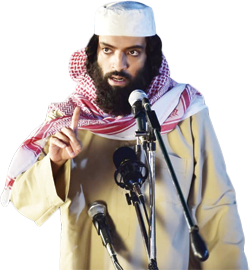
Saudi actor and producer Yagoub Al-Farrhan, who played Al-Otaibi in the show’s second season, told Arab News that the series was relevant not only to his generation, but also to future generations.
“In an interview three years ago, I was asked about a character I wanted to play in a biography film. Funnily enough, I said Al-Otaibi,” said Al-Farrhan. “I gathered as much information as I could about his character and mindset, and tried to understand the mentality of someone prepared to commit such an act. That is something all extremists groups have in common, not to mention the narcissistic characteristics and similarities their leaders share.”
Al-Farrhan said that in his portrayal of Al-Otaibi he tried to show the fake religious charisma common among militants. He said that the absence of detailed information about the Makkah siege was a problem. But with help of memoirs written by Nasser Al-Hizaimi, a former member of the extremist group, along with videos and reports, he reached a point where he felt comfortable in the role.
“Al-Asoof” not only told the story of a major event that took place amid a difficult geopolitical climate, but also offered viewers an insight into the Kingdom’s changing society.
“It felt as if we were on a mission,” Al-Farrhan said. “We had many discussions along the way and ended up with all this love for those lost in this incident and other similar incidents, yet grateful for this amazing new era we live in now.”


