HONG KONG: Oil prices saw a record surge Monday after attacks on two Saudi facilities slashed output in the world’s top producer by half, fueling fresh geopolitical fears as Donald Trump blamed Iran and raised the possibility of a military strike on the country.
Brent futures surged $12 in the first few minutes of business — the most in dollar terms since they were launched in 1988 and representing a jump of nearly 20 percent — while WTI jumped more than $8, or 15 percent.
Both contracts pared the gains but were both still more than 10 percent up.
The attack by Tehran-backed Houthi militia in neighboring Yemen, where a Saudi-led coalition is bogged down in a five-year war, hit two sites owned by state-run giant Aramco and effectively shut down six percent of the global oil supply.
Trump said Sunday the US was “locked and loaded” to respond to the attack, while Secretary of State Mike Pompeo said: “The United States will work with our partners and allies to ensure that energy markets remain well supplied and Iran is held accountable for its aggression.”
Tehran denies the accusations but the news revived fears of a conflict in the tinderbox Middle East after a series of attacks on oil tankers earlier this year that were also blamed on Iran.
“Tensions in the Middle East are rising quickly, meaning this story will continue to reverberate this week even after the knee-jerk panic in oil markets this morning,” said Jeffrey Halley, senior market analyst at OANDA.
Trump authorized the release of US supplies from its Strategic Petroleum Reserve, while Aramco said more than half of the five million barrels of production lost will be restored by tomorrow.
But the strikes raise concerns about the security of supplies from the world’s biggest producer.
Oil prices had dropped last week after news that Trump had fired his anti-Iran hawkish national security adviser John Bolton, which was seen as paving the way for an easing of tensions in the region.
“One thing we can say with confidence is that if part of the reason for last week’s fall in oil and improvement in geopolitical risk sentiment was the news of John Bolton’s sacking ... and thoughts this was a precursor to some form of rapprochement between Trump and Iran, then it is no longer valid,” said Ray Attrill at National Australia Bank.


Oil prices surge after attacks hit Saudi output
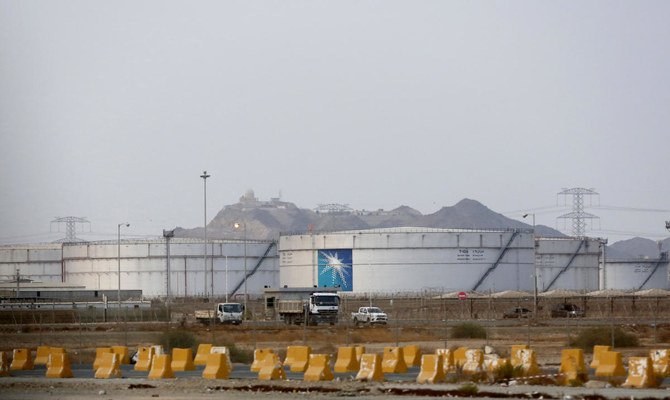
Oil prices surge after attacks hit Saudi output

- The Houthi attacks hit two Aramco sites and effectively shut down six percent of the global oil supply
- President Donald Trump said Sunday the US was ‘locked and loaded’ to respond to the attacks
Pakistan seeks operationalization of World Bank’s $20 billion framework to advance reform priorities

Pakistan seeks operationalization of World Bank’s $20 billion framework to advance reform priorities
- Pakistan’s finance chief meets World Bank Country Director Bolormaa Amgaabazar in the capital
- The Bank’s 10-year Country Partnership Agreement for Pakistan was approved in January last year
ISLAMABAD: Pakistan’s Finance Minister Muhammad Aurangzeb on Wednesday called for the operationalization of the World Bank Country Partnership Framework (CPF) to advance the government’s key reform priorities during a meeting with the Bank’s country director, according to a statement.
The Bank’s Board of Directors approved a 10-year CPF deal with Pakistan, indicating $20 billion in financing for Pakistan under the framework. The amount will include public and private financing from the World Bank Group, with roughly half expected to come from private-sector operations led by the International Finance Corporation (IFC).
“The Finance Minister emphasized the importance of effective operationalization of the CPF, particularly in priority areas such as population management and climate change,” the finance ministry said in a statement after Aurangzeb’s meeting with the Bank’s Country Director Bolormaa Amgaabazar.
“He underscored the need for strong coordination between federal and provincial governments to ensure coherence in policy design and implementation.”
Discussions focused on population, human capital development, climate resilience, agricultural reform and energy sector sustainability, it added.
The ministry said both sides exchanged views on enhancing institutional coordination, improving transparency in project design and strengthening monitoring mechanisms to deliver intended outcomes. It highlighted that the World Bank expressed readiness to continue supporting agricultural transformation efforts in collaboration with the IFC.
“Both sides agreed to continue technical-level engagements to explore feasible solutions in line with Pakistan’s reform agenda and fiscal framework,” the finance ministry added.
Climate resilience and population control are major concerns for policymakers in Pakistan, a country whose population exceeds 241 million, making it the world’s sixth-most populous country. Limited infrastructure, health care, and educational opportunities place added strain on public services, contributing to unemployment and poverty.
The South Asian nation is also among the countries most affected by climate change. Unusually heavy monsoon rains in 2022 killed more than 1,700 people and caused over $30 billion in damages. Torrential rains and floods since late June last year have claimed more than 1,000 lives, as authorities continue surveys to assess the full extent of the destruction.


