


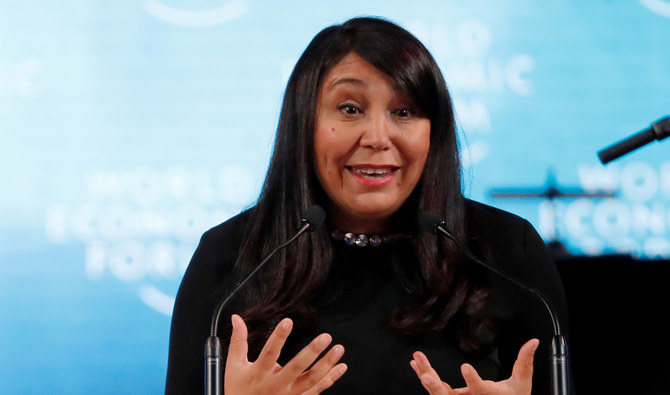
Female Saudi directors Haifaa Al-Mansour and Shahad Ameen brought a message to the Venice Film Festival along with their movies: Women must be seen and heard.
Mansour’s “The Perfect Candidate” is one of two films by female directors out of 21 competing for the festival’s Golden Lion award, telling the story of a woman doctor facing gender-based challenges while running for municipal council.
Ameen’s “Scales,” which screened out of competition, focuses on a young girl surviving against superstitious villagers who believe she is a curse. Both directors hope their films will convey a message of empowerment at a time when Saudi Arabia has been easing male guardianship rules. “Showing a lead female character, it is indirectly empowering women,” Mansour said.
“The one who will make most money in this film is the girl, she is not a supporting role, she is the main role. You invest in her journey, love her and root for her that is what is very important for a conservative audience to see.”
The start of Mansour’s film reflects the changes in the Kingdom, with protagonist Maryam driving her car to work.
Asked what she wanted Saudi female audiences to take away from the film, Mansour, also known for the English-language film “Mary Shelley,” said: “That it is about time to put themselves out there and not to be afraid of failure or to be judged.
“We come from a very traditional society so even with the liberties, like ... (women) driving is legal but not a lot of women drive because it is not accepted still socially. So it is very important for women ... to take advantage of the new freedoms given to them because that is ... how to move forward.”
In “Scales,” Hayat has been saved by her father from a village tradition of families sacrificing their daughters to sea creatures, making her an outcast.
Mansour has previously described how she at times had to hide in a van while directing her 2012 film “Wadjda” about a young Saudi girl determined to buy a bicycle.
“It’s changed a lot, I don’t have to be in the van anymore ... and accessibility ... we shot in really remote areas and we were able to shoot,” she said.


