LAHORE: Kazi Jamal, a resident of Pakistan’s populous Punjab province, was visiting a sister he had not seen in 25 years in Poonch district, a remote area of Indian-administered Kashmir, when New Delhi unilaterally wiped out the autonomy of the disputed region.
Thousands of army troops moved into the Himalayan valley to quell any possible unrest the move would bring in a territory fought over by India and Pakistan for decades and internet connections, mobile phones and even land lines were cut off, throwing Kashmir into an information black hole.
As a result, 42 Pakistanis visiting family members in Indian-administered Kashmir were stranded on the wrong side of the border as both countries shut down border crossings and Pakistan suspended the Samjhauta Express rail service linking it to India and a ‘friendship’ bus between Lahore and Delhi.
Days before Jamal’s 28-day visa expired in the first week of August, he and dozens of other Pakistanis reached the official crossing point at Tatrinote village on the Line of Control that splits Kashmir into two areas - one administered by India, one by Pakistan. There they found that the bridge to cross over into the Pakistani side had been damaged.
Two Indian soldiers approached the travelers and said officials on the Pakistan side had refused to open the gate to let in its citizens.
“It was a lie,” Jamal told Arab News. “The bridge was broken. We could see it.”
“We waited for two hours and then turned back since there was no way across,” said Jamal, who on August 26 finally returned home via a cross-border bus service launched by Pakistan and India in 2006.
The two authorized crossings for buses – Chakan Da Bagh and Tatrinote – open every Monday for a few hours but had remained closed from August 5 to 26, said Naveed Aslam, a senior official at the Deputy Commissioner's office in Kotli, a town in Azad Kashmir.
“After the blockade, 42 people from Azad Jammu and Kashmir were stuck,” he said. “Six people who had crossed over from the Indian side were also stuck here.”
“Every season, around 40 to 50 people go from our side and the same number comes from the other side,” Dr. Umar Azam, the deputy commissioner in Kotli, said. “You can safely say that over 1,000 people travel back and forth every year from these two crossing points.”
As of September 2, all Pakistani visitors to India-administered Kashmir have returned home, officials said.
Jamal, who said he spent five weekends in Indian-administered Kashmir, said each Friday after August 5 gave rise to a new wave of fear.
Last month, on one occasion, Indian police used tear gas and pellets to fight back at least 10,000 people protesting Delhi’s withdrawal of special rights for Kashmir in its main city of Srinagar. One of the deadliest protests broke out soon after Friday prayers, which were held under strict security measures.
“I spent five Fridays there,” Jamal said, “Every Thursday, a policeman would use mosque speakers to announce that tomorrow is a Friday; no one should come near the mosque. No one should come for Friday prayers. I have never seen this much fear.”
Mohammad Yunas Zargar, who returned home after being stranded in Kashmir since July, said there was a week-long celebration when he returned home, with family members and neighbors coming to see him with flowers, gifts and sweets.
“Since there was no phone or internet connection in the valley, no one in Azad Kashmir had heard from me in days; they were worried,” Zargar said. “I breathed a sigh of relief when I returned home, but I just can’t stop thinking about my family on the other side and what they are going through.”


Pakistani Kashmiris stranded across the border for weeks finally come home
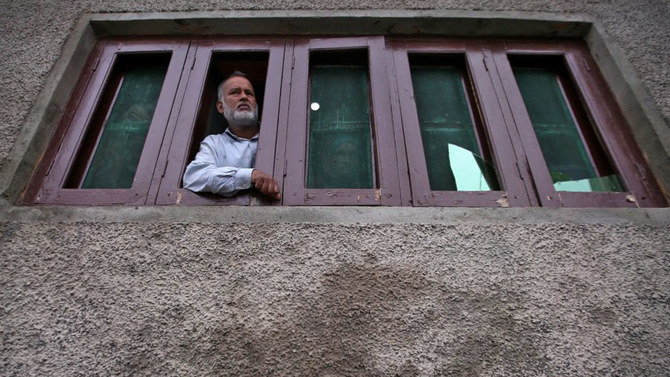
Pakistani Kashmiris stranded across the border for weeks finally come home

- As of September 2, all 42 Pakistanis stuck in Indian-administered Kashmir since August 5 have returned
- Two main border crossings for buses, Chakan Da Bagh and Tatrinote, were closed from August 5-26

UN torture expert decries Pakistan ex-PM Khan’s detention
- Khan’s party alleges government is holding him in solitary confinement, barring prison visits
- Pakistan’s government rejects allegations former premier is being denied basic rights in prison
GENEVA: Pakistan’s former prime minister Imran Khan is being held in conditions that could amount to torture and other inhuman or degrading treatment, the United Nations’ special rapporteur on torture warned Friday.
Alice Jill Edwards urged Pakistan to take immediate and effective action to address reports of the 73-year-old’s inhumane and undignified detention conditions.
“I call on Pakistani authorities to ensure that Khan’s conditions of detention fully comply with international norms and standards,” Edwards said in a statement.
“Since his transfer to Adiala Jail in Rawalpindi on September 26, 2023, Imran Khan has reportedly been held for excessive periods in solitary confinement, confined for 23 hours a day in his cell, and with highly restricted access to the outside world,” she said.
“His cell is reportedly under constant camera surveillance.”
Khan an all-rounder who captained Pakistan to victory in the 1992 Cricket World Cup, upended Pakistani politics by becoming the prime minister in 2018.
Edwards said prolonged or indefinite solitary confinement is prohibited under international human rights law and constitutes a form of psychological torture when it lasts longer than 15 days.
“Khan’s solitary confinement should be lifted without delay. Not only is it an unlawful measure, extended isolation can bring about very harmful consequences for his physical and mental health,” she said.
UN special rapporteurs are independent experts mandated by the Human Rights Council. They do not, therefore, speak for the United Nations itself.
Initially a strong backer of the country’s powerful military leadership, Khan was ousted in a no-confidence vote in 2022, and has since been jailed on a slew of corruption charges that he denies.
He has accused the military of orchestrating his downfall and pursuing his Tehreek-e-Insaf (PTI) party and its allies.
Khan’s supporters say he is being denied prison visits from lawyers and family after a fiery social media post this month accusing army leader Field Marshal Asim Munir of persecuting him.
According to information Edwards has received, visits from Khan’s lawyers and relatives are frequently interrupted or ended prematurely, while he is held in a small cell lacking natural light and adequate ventilation.
“Anyone deprived of liberty must be treated with humanity and dignity,” the UN expert said.
“Detention conditions must reflect the individual’s age and health situation, including appropriate sleeping arrangements, climatic protection, adequate space, lighting, heating, and ventilation.”
Edwards has raised Khan’s situation with the Pakistani government.