

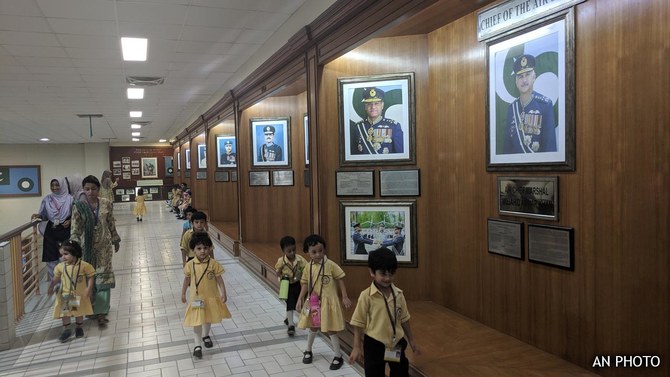
At Karachi’s air force museum, memorabilia include war trophies from India and Israel

1 / 10
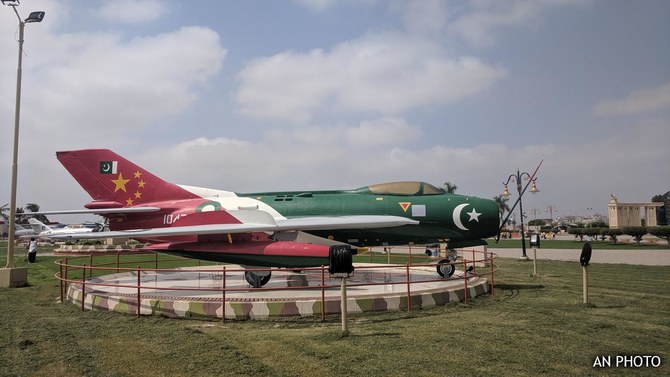
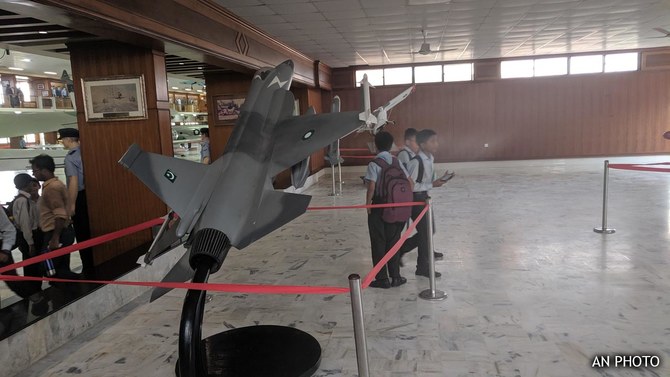
An F-6 (MIG-19) aircraft manufactured by China in 1961 and inducted by Pakistan Air Force in 1966, a year after the 1965 India Pakistan war, is displayed at the Pakistan Airforce Museum in Karachi, Pakistan, on September 4, 2019 (AN Photo)
2 / 10
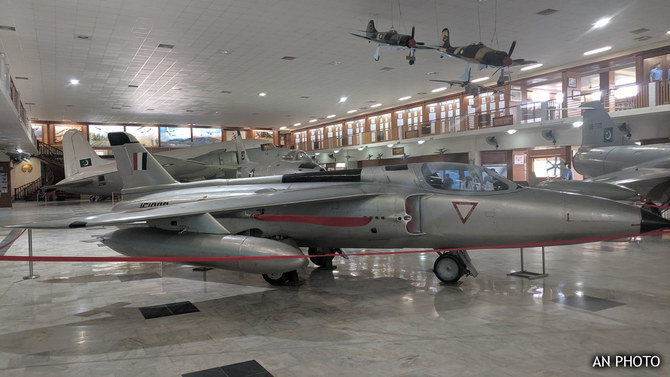
Gnat, a single seater fighter manufactured by a British company in 1955, was grounded by flight lieutenant Hakeemullah and flying office Abbas Mirza on September 3, 1965. Photograph taken at the Pakistan Airforce Museum in Karachi, Pakistan, on September 4, 2019 (AN Photo)
3 / 10
An FPS-20 Combat Radar displayed at the Pakistan Airforce Museum in Karachi, Pakistan, on September 4, 2019. (AN Photo)
4 / 10
A photograph of Brij Pal Singh, an Indian pilot of the Gnat aircraft that was grounded by PAF’s flight lieutenant Hakeemullah and flying office Abbas Mirza in 1965, is seen placed on the grounded Gnat aircraft at the Pakistan Airforce Museum in Karachi, Pakistan, on September 4, 2019. (AN Photo)
5 / 10
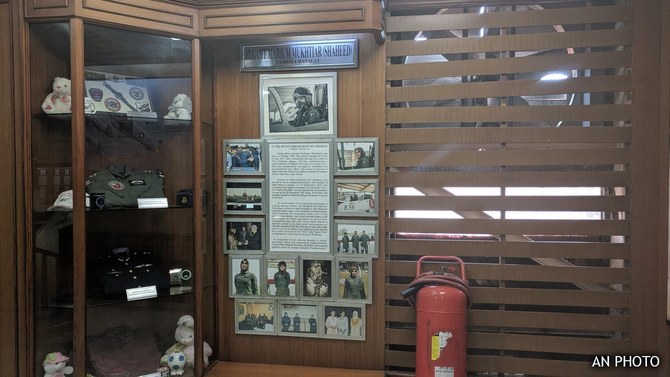
A section dedicated to Flying Officer Marium Mukhtiar, Pakistan’s first female combat pilot who died in a crash on duty, is seen at the Pakistan Airforce Museum in Karachi, Pakistan, on September 4, 2019 (AN Photo)
6 / 10
A section reserved for Flying Officer Marium Mukhtiar, Pakistan’s first female combat pilot who died in a crash on duty: Photograph taken on Sept 4, 2019 (AN Photo)
7 / 10
A monument for martyrs of the Pakistan Air Force can be seen at the Pakistan Airforce Museum in Karachi, Pakistan, on September 4, 2019 (AN Photo)
8 / 10
A section dedicated to Flying Officer Marium Mukhtiar, Pakistan’s first female combat pilot who died in a crash on duty, is seen at the Pakistan Airforce Museum in Karachi, Pakistan, on September 4, 2019 (AN Photo)
9 / 10
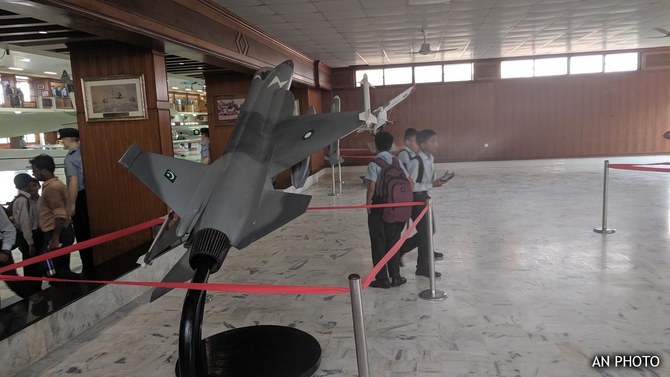
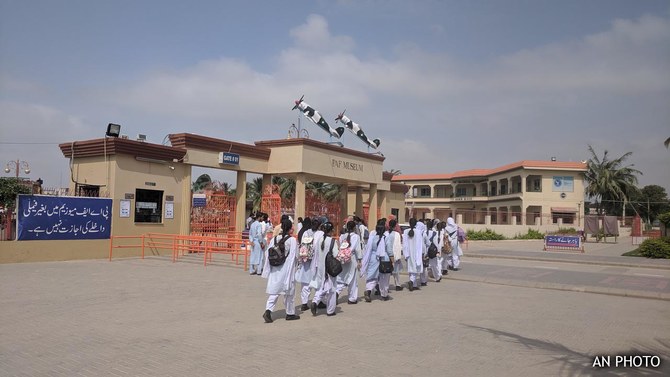
Students visit the Pakistan Airforce Museum in Karachi, Pakistan, on September 4, 2019 (AN Photo)
10 / 10
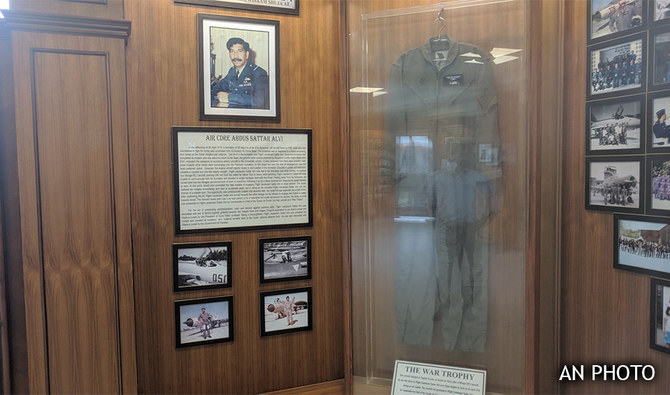
This picture shows a section dedicated to Air Commodore Abdul Sattar Alvi and his “war trophy,” a flying coverall belonging to Captain M Lutz, an Israeli Air force Pilot of Mirage IIICJ aircraft which Alvi shot down over the Golan Heights in Syria on April 26, 1974. Photograph taken at the Pakistan Airforce Museum in Karachi, Pakistan, on September 4, 2019. (AN Photo)
Updated 07 September 2019
Follow

At Karachi’s air force museum, memorabilia include war trophies from India and Israel

  • Built in 1994, the facility attracts thousands of visitors every day
  • Features all major fighter aircraft, weapons and radars used by the Pakistan Air Force

KARACHI: The children furiously took notes as their teacher Tasneem Ahmed read an information board next to a FPS-6, one of several combat radars displayed at the Pakistan Air Force Museum in Karachi.
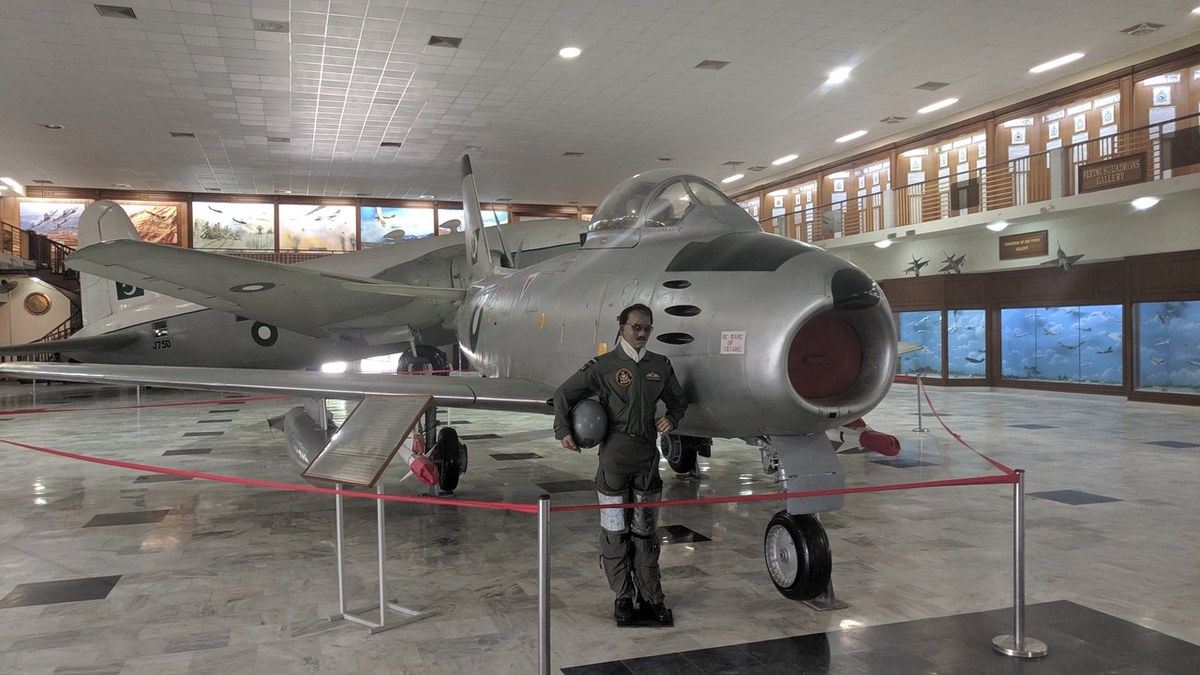


A statue of Air Commodore Muhammad Mahmood Alam, a Pakistani fighter pilot who downed nine Indian Air Force aircrafts during the India Pakistani War of 1965, stands with a F-86 aircraft at the Pakistan Airforce Museum in Karachi, Pakistan, on September 4, 2019 (AN Photo)

The children are here on a study tour and listen carefully as their teacher walks them through aircrafts, radars and mementoes of war heroes on the school study tour at the air force museum and park situated near the Karsaz Flyover on Karachi’s Shahrah-e-Faisal thoroughfare.
A majority of the aircraft, weapons and radar are displayed outside in the park but the main museum features all major fighter aircraft that have been used by the Pakistan Air Force.
“The aim of this study tour is to inform our students about their forces and the sacrifices of our heroes who lived their lives to protect this country,” Ahmed told Arab News. 
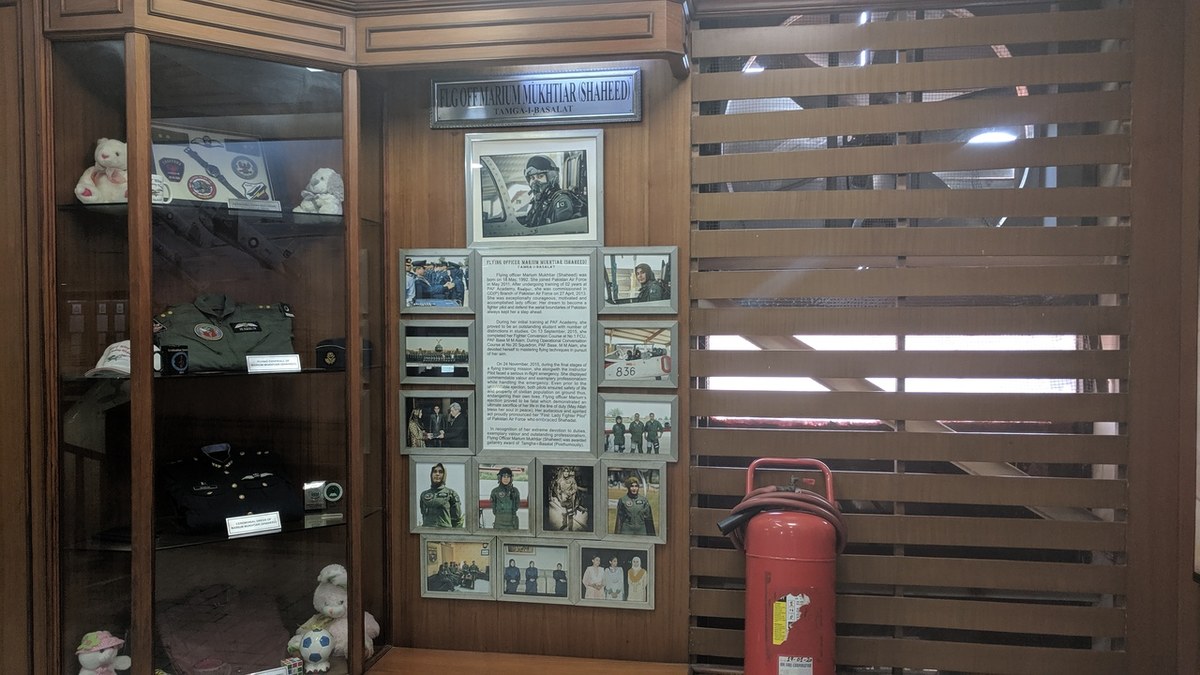


A section reserved for Flying Officer Marium Mukhtiar, Pakistan’s first female combat pilot who died in a crash on duty: Photograph taken on Sept 4, 2019 (AN Photo)

Afshan Ayaz, another teacher on the tour added: “We want to instill in them a sense of attachment with their country and their forces.”
Such tours at the museum are common from November through February each year when thousands of visitors thronging to the site. Even during the off-peak season, museum officials say, the daily count of visitors is around 4,000 people on weekdays and 15,000 on the weekends.
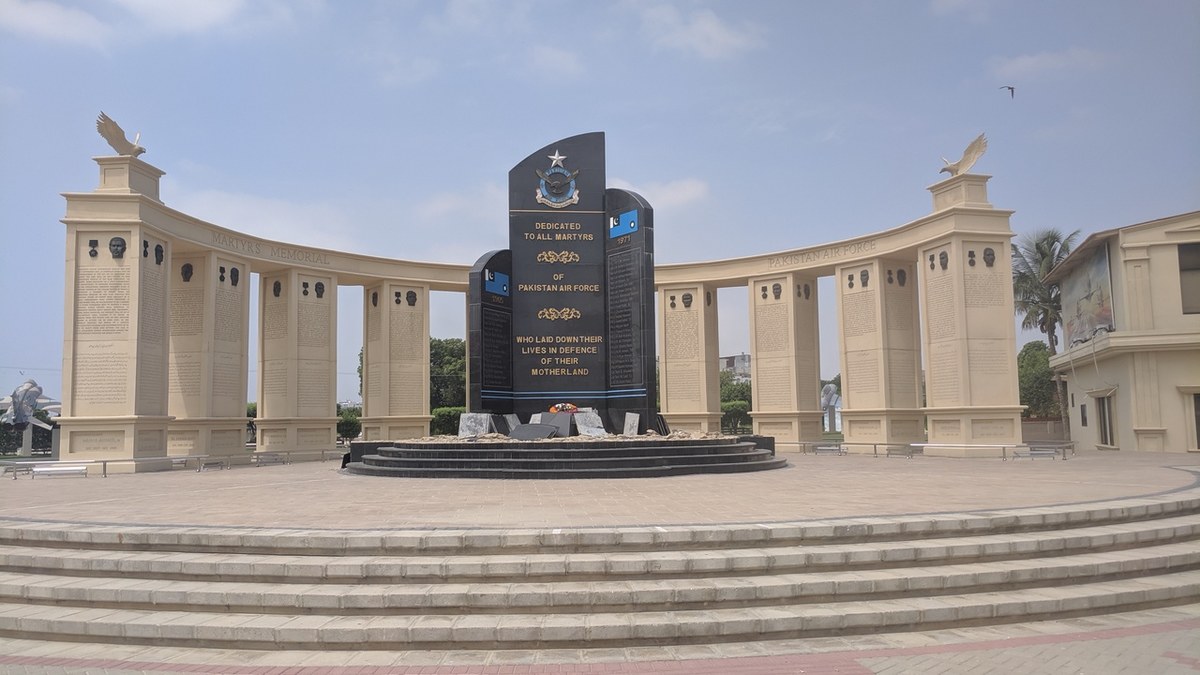


A monument for the martyrs of the Pakistan Air Force can be seen at Karachi’s PAF museum: Photograph taken on Sept 4, 2019 (AN Photo)

The PAF museum houses a huge archival exhibition gallery in the main hangar. The centerpiece of the aircraft collection is the Viking used by Pakistan’s founding father, Muhammad Ali Jinnah, as his official plane. There is also a “war trophy” displayed in the gallery: An Indian Air Force Gnat which was captured during a conventional conflict between the two South Asian archrivals in 1965.
The museum also boasts a flying coverall that was presented to flight lieutenant Abdul Sattar Alvi by the commander-in-chief of Syrian forces after Alvi shot down an Israeli Mirage on April 26, 1974.
The gallery is divided into multiple thematic sub galleries, featuring memorabilia from different eras of PAF’s air combats.
“It was a very informative visit. We saw aircrafts and much else and our teachers explained their significance to us,” Eman Kamran, a fifth grader, told Arab News as she posed with her friends for a picture next to Jinnah’s personal aircraft.


Babar Azam dropped for scoring too slowly, says Pakistan coach Hesson

Updated 20 February 2026
Follow

Babar Azam dropped for scoring too slowly, says Pakistan coach Hesson

  • Shaheen Shah Afridi was left out after conceding 101 runs in three matches
  • Pakistan will now face New Zealand in the opening match of the second phase

COLOMBO: Batting great Babar Azam was dropped for Pakistan’s final T20 World Cup group game against Namibia for scoring too slowly, said head coach Mike Hesson on Friday.

Azam, who is the highest run-scorer in T20 international history with 4,571 runs, was left out for the must-win game against Namibia as Pakistan racked up 199-3 and secured a place in the Super Eights by 102 runs.

The 2009 champions face New Zealand in Colombo on Saturday in the opening match of the second phase.

“I think Babar is well aware that his strike rate in the power play in the World Cup is less than 100 and that’s clearly not the role we think we need,” Hesson told reporters after Pakistan’s final practice session on Friday was washed out by rain.

Pakistan left out Azam for the same reason at last year’s Asia Cup and even after dismal showing in the Big Bash League, he was still selected for the T20 World Cup.

“We brought Babar back in for a specific role post the Asia Cup,” said Hesson.

“We’ve got plenty of other options who can come in and perform that role toward the end.

“Babar is actually the first to acknowledge that.

“He knows that he’s got a certain set of skills that the team requires and there are certain times where other players can perform that role more efficiently.”

Hesson also defended dropping pace spearhead Shaheen Shah Afridi after he conceded 101 runs in three matches, including 31 in two overs against India.

“We made a call that Salman Mirza was coming in for Shaheen, and he bowled incredibly well,” said Hesson.

“To be fair, he was probably really unlucky to not be playing the second and third games.”

Hesson was wary of Pakistan’s opponents on Saturday.

“New Zealand have played a huge amount in the subcontinent in recent times so we have to play at our best.”