

New Saudi visa scheme to be announced 27 September, 50 nationalities expected to benefit

1 / 3
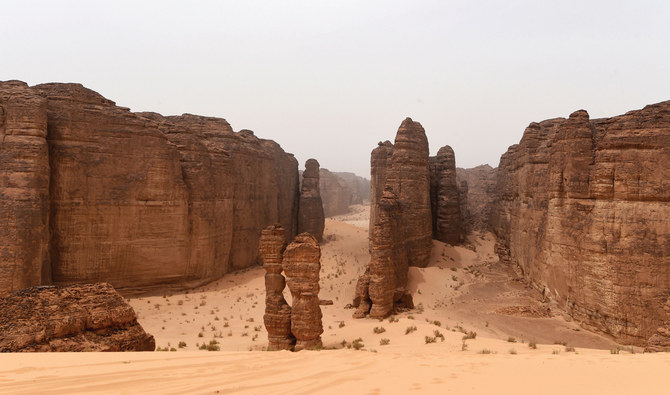
Madain Saleh
2 / 3
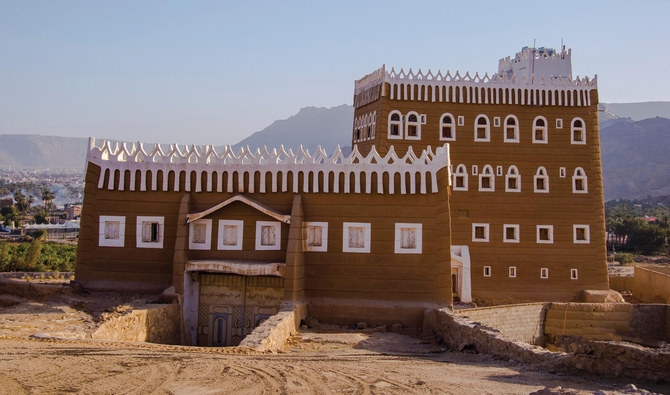
Najran
3 / 3
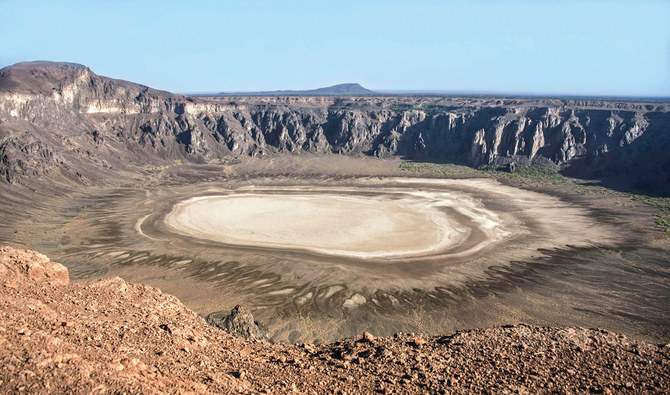
Wahba Crater
Updated 06 September 2019
Follow

New Saudi visa scheme to be announced 27 September, 50 nationalities expected to benefit

  • An event later this month will promote “the sights and sounds” of Saudi Arabia
  • Travel experts say tourism and leisure could account for 10 percent of gross domestic product by 2030

DUBAI: Saudi Arabia is putting the final touches to a “game changer” initiative to attract international tourists, with a visa scheme to open the Kingdom to visitors from up to 50 countries, Okaz newspaper reported.

Although not officially confirmed by the government, industry sources told Arab New an event to showcase Saudi tourist attractions would take place this month, with a major global advertising campaign launched in the presence of leading international travel and tourism experts.

Leisure tourism — in a market hitherto dominated by pilgrimage — is a vital part of the Vision 2030 plan to diversify the economy away from oil dependency. Travel experts say tourism and leisure could account for 10 percent of gross domestic product by 2030, adding more than $100 billion a year to the economy.

The event on Sept. 27 will promote “the sights and sounds” of Saudi Arabia to a regional and international audience. Progress on other tourism projects — such as a nationwide digital events calendar and plans to expand the successful “Saudi Seasons” concept — will also feature. 

Work is already underway on a luxury resort on the Red Sea coast, visitor facilities at the historic AlUla area and an entertainment city at Qiddiya outside Riyadh.

HIGHLIGHTS

• An event to showcase Saudi tourist attractions would take place on Sept. 27.

• Leisure tourism is a vital part of the Vision 2030 plan to diversify the economy away from oil dependency.

• Travel experts say tourism and leisure could account for 10 percent of GDP by 2030.

• The event will promote ‘the sights and sounds’ of the KSA to a regional and global audience.

The economic effects of new tourist visas will be significant. The World Travel and Tourism Council said leisure and tourism accounted for 9 percent of the Kingdom’s economy in 2018, and forecast it would rise to 10.4 percent by 2029, calculated by direct and indirect economic impact. 

The property consultancy Colliers International estimated in a recent report that tourism and travel would make up 9 percent of the total GDP by 2026.

Imad Damrah, managing director of Colliers Saudi Arabia, told Arab News that foreign tourism visas would have a significant impact. “It will be a game changer for tourism, leisure and entertainment in Saudi Arabia,” he said.

“It will not just encourage more new people to come, but it will be easier for people who have already decided to come.”

Damrah believes Saudi Arabia can hold its own in the global tourism business. “Let’s get some perspective on this. If you come to Saudi Arabia, you can still go to Florida, or Dubai, as well. Every destination has its own attraction,” he said.


Experimental farm in Al-Lith looks into future of Saudi Arabian agriculture

Updated 21 min 35 sec ago
Follow

Experimental farm in Al-Lith looks into future of Saudi Arabian agriculture

  • Research initiative reflects strategic transformation

JEDDAH: An experimental farm in Saudi Arabia’s Al-Lith Governorate is one of the research initiatives reflecting the strategic transformation taking place in the Kingdom’s agricultural sector.

The farm uses highly efficient, sustainable production models that combine scientific research with commercial application, contributing to strengthening the country’s food security system and the sustainability of water resources.

Located in the Ghumaiqa Center on an area of about 10 hectares, the cutting-edge farm is a testing platform for modern agricultural technologies that tackle the challenge of water scarcity.

The farm includes developed open fields and modern greenhouses, supported by smart irrigation encompassing drip and sprinkler irrigation alongside surface and subsurface technologies.

All the systems operate via smart controls that enable the monitoring of water consumption and ensure improved efficiency, thereby achieving a balance between agricultural production and water conservation.

The farm also uses treated and diluted low-salinity seawater.

It aims to diversify agricultural water sources, reduce reliance on freshwater, and open new horizons for agriculture in coastal and semi-arid environments.

A view of the experimental farm in Al-Lith. (SPA)

The project represents a promising investment opportunity in the field of smart agriculture, enabling the development of commercially scalable production models, particularly for high-value vegetables and fruits, while reducing operational costs associated with water and energy, enhancing the economic feasibility of future agricultural projects.

In addition, the project contributes to transferring and localizing agricultural expertise, supporting local food supply chains, and creating an attractive environment for agricultural investment.

This aligns with Sustainable Development Goals and enhances the efficiency of the private sector in adopting innovative agricultural solutions.

Yahya bin Abdulrahman Al-Mahabi, the director of the Ministry of Environment, Water and Agriculture office in Al-Lith Governorate, told the Saudi Press Agency that the project represented the future of agriculture in the Kingdom.

He explained that the vision was based on investing in technology, enhancing the return on water per unit, and integrating scientific research with investment opportunities.

Al-Mahabi spoke of the experimental farm as a modern, scalable and replicable model applicable in several regions of the Kingdom, particularly in coastal environments.

Al-Mahabi highlighted the Ministry of Environment, Water and Agriculture’s commitment to supporting distinctive projects that contributed to achieving food security while developing rural areas and enhancing agricultural production efficiency, in line with the objectives of the Kingdom’s Vision 2030.