ISLAMABAD: Pakistan’s Interior Minister, Brigadier (r) Ijaz Ahmed Shah said this week the government was not negotiating any kind of amnesty deal with jailed opposition leaders, including former Prime Minister Nawaz Sharif.
Sharif is currently serving a seven-year sentence imposed last year for failing to disclose the source of income that allowed him to acquire the Al-Azizia Steel Mills in Saudi Arabia.
As part of an anti-graft crusade promoted by Pakistani Prime Minister Imran Khan, there have been swathes of arrests of other opposition politicians also, including former PM Shahid Khaqan Abbasi and ex-president Asif Ali Zardari.
Rejecting rumors of negotiations between the government and opposition parties, particularly for the release of Sharif, the Pakistani interior minister said on Monday that no such deal was in the offing.
“If there is any deal, the government would do it through the interior ministry but we are not doing any such thing,” Shah told Arab News in an interview.
He said Sharif had been investigated by the National Accountability Bureau (NAB) and was sentenced by an accountability court: “This [deal] is the prerogative of NAB as plea bargain is a part of their law. If NAB is proceeding on something, I am not aware of it.”
Speaking about the conflict in the disputed Kashmir region, sparked last month by New Delhi’s move to revoke the special status of the region, Shah said the situation would make the withdrawal of United States’ troops from Afghanistan difficult.
Tension remains high in Kashmir, where security forces have used tear gas against stone-throwing protesters and the valley remains under lockdown after Indian Prime Minister Narendra Modi’s decision to withdraw special rights for the Muslim-majority state on August 5.
By stripping Indian-administered Kashmir of its special status, New Delhi blocked the region’s right to frame its own laws and allowed non-residents to buy property there. Delhi says the change would help Kashmir’s development, but the move has angered many residents of the region and been strongly condemned by Pakistan.
In the background, Zalmay Khalilzad, an Afghan-born US diplomat, has led nine rounds of talks with Taliban leaders to try to reach a peace deal to end the 18-year-long war in Afghanistan, Pakistan’s western neighbor.
Shah said the ongoing conflict in Indian-administered Kashmir would harm US interests in the region, “especially their plan of withdrawal from Afghanistan.”
“If they want to leave Afghanistan and the Kashmir issue remains hot like this, then their withdrawal will not be smooth,” Shah said. “If they want to leave Afghanistan with ease then Kashmir should not be like this.”
The interior minister credited Pakistani Prime Minister Imran Khan with taking a “clear stance” on Kashmir, referring to Khan’s announcement before the Azad Kashmir parliament that “he would be the envoy of the Kashmiri people.”
“No other Prime Minister has ever raised their voice for the Kashmir issue like Imran Khan,” Shah said. The PM would also raise the Kashmir issue at the United Nations General Assembly session in New York on September 22 and 23 also, the minister said.
“You will see it is going to be a very big success,” Shah said. “The prime minister will try to shake the conscience of the world community.”
So far, the minister said, the reaction of the international community to the ongoing Kashmir crisis was lukewarm.
“The world community is reacting but their reaction is not up to the gravity of the situation. It should have been much more than this,” Shah lamented.
Speaking about an upcoming review by the global watchdog, the Financial Action Task Force (FATF), into whether Islamabad had implemented an agreed upon action plan to counter-terrorism financing, Shah said much of what the watchdog wanted Pakistan to do was in Pakistan’s favor.
“There are certain things, almost more than fifty percent things, which Pakistan should have done 20 to 25 years back,” he said.
On a recent crackdown against banned groups and charities and organizations linked to them, Shah said the government’s writ would be established at all costs: “There is only one writ, that is the writ of the government. We have taken actions against most of the banned organizations. If some are left we will act against them.”


![]()

No deal with opposition or Nawaz Sharif — Pakistani interior minister
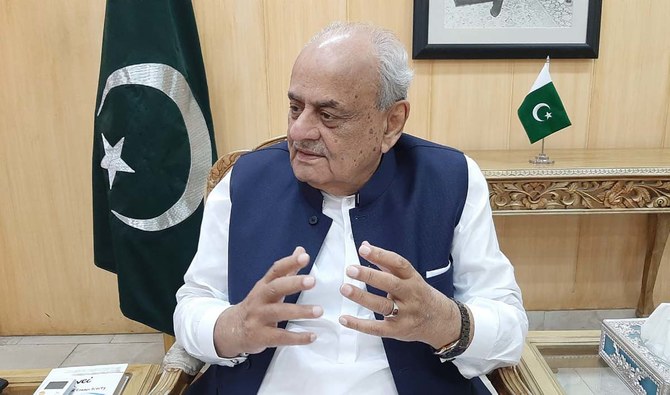
No deal with opposition or Nawaz Sharif — Pakistani interior minister
- Shah says prerogative of National Accountability Bureau to offer a plea bargain to Sharif
- Says tensions in Kashmir will make US troop withdrawal from Afghanistan difficult
Latest updates





© 2026 SAUDI RESEARCH & PUBLISHING COMPANY, All Rights Reserved And subject to Terms of Use Agreement.