
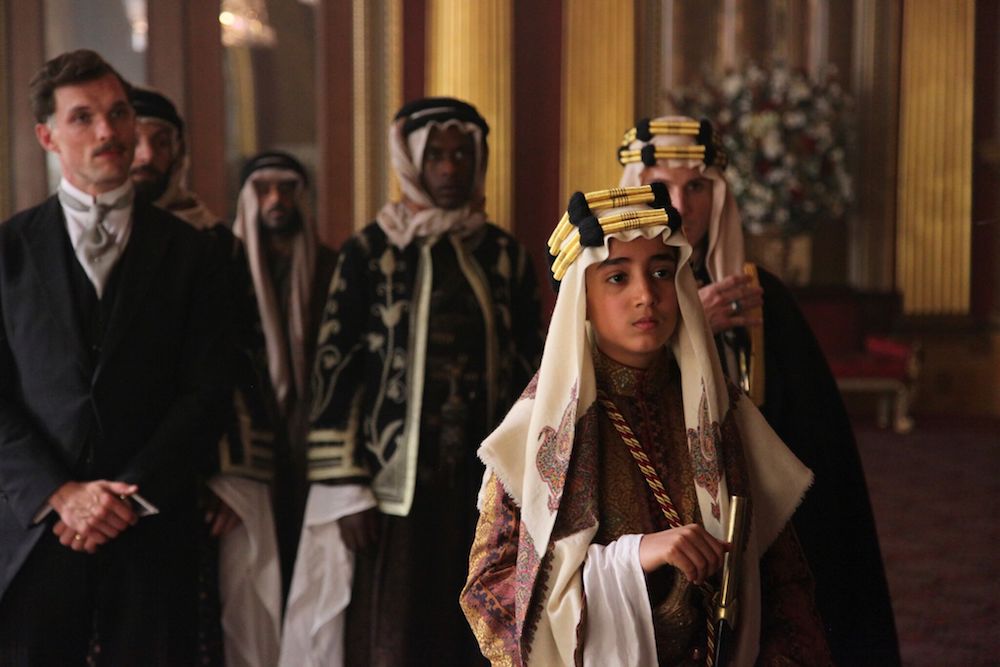
RIYADH: On Sept. 26, “Born a King” will premiere in theaters across the Middle East and North Africa. The movie tells the story of a young King Faisal Al-Saud during his trip to the UK on a diplomatic mission aged just 13.
The film’s producer, Andre Vicente Gomez, believes the movie will break stereotypes about Saudi Arabia.
“There are a lot of stereotypes about the country. If the film will surprise the Saudis, then imagine the European or American reactions,” he told Arab News.

“We don’t know yet what the reaction will be, but I think this movie will help the opening of the Kingdom to the world because it shows a Saudi Arabia they don’t know.”
This is not Gomez’s first attempt at creating a film in the Kingdom. “My relationship with Saudi Arabia is long, I came here in 2010, looking for locations for an animated film about spirits (jins),” he said.
Things took a different turn as Saudi television and the Ministry of Culture told him that producing a film about spirits might be controversial, “because in the Quran there are some jins that are good and others that are not so good.”
That project was spiked, but his interest in Saudi Arabia’s history was only starting.
Two years later, he made a musical in Spain titled “The Last Horseman,” which was inspired by a Saudi story.
He dove deep into Saudi history, reading up on all the books he could get his hands on. He then came across the story of King Faisal.
“I thought it would make a great movie, but not a biography of King Faisal — just the London trip. The story of a young boy coming of age, going to the city and encountering this new world.”
Gomez wrote 12 pages of the script before contacting the King Faisal Foundation. He met Prince Turki and called himself “lucky” with how quick the events took place.
Prince Turki read the script while meeting with Gomez. He liked what he read, but he told the producer that he would need the approval of the rest of the family, especially King Salman, the brother of King Faisal.

A month later, Prince Turki met Gomez in Paris and informed him that the family approved of the project and he had the green light to go ahead.
“I started writing the script and went to a Saudi novelist, Badr Al-Samary, who helped me and guided me on the first steps on the story.”
It was no easy task to ensure the accuracy of all the details, but with extensive research and the help of Prince Turki, they were able to make it as accurate as possible.
“Really, the person who has more input, more emphasis and guidance has been Prince Turki.

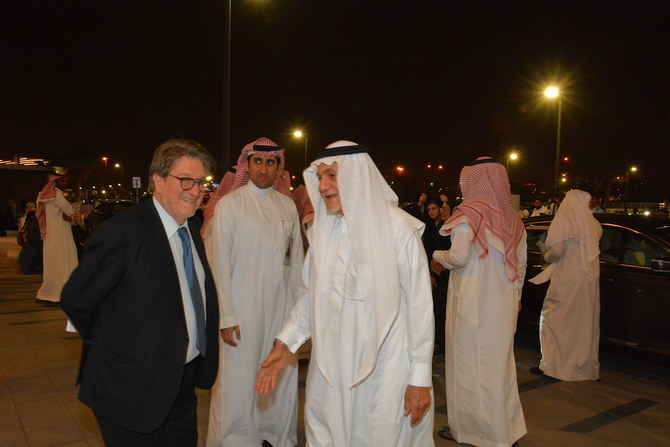
The film’s producer, Andre Vicente Gomez, believes the movie “Born a King” will break stereotypes about Saudi Arabia. (Supplied)
“He supervised everyone on the seven or eight drafts of the scripts that were first produced. He also helped me choose actors for the different parts.”
Gomez credited Russian author Alexei Vassilev’s book “The History of Saudi Arabia,” which provided useful information on the history. “He’s an expert on the Middle East and Saudi Arabia in particular.”
The movie was shot in London and Riyadh, with 75 percent of the movie filmed in London. The cast and crew worked for seven weeks nonstop. “The London filming went very well. It was spectacular and everyone was happy.”
Filming in Riyadh started in autumn as they had to wait for the heat to subside.
For most of the crew, it was their first time in the Kingdom. Gomez said that the crew “really fell in love with the country. If you ask the cast and crew what they liked the most about Saudi Arabia, they will tell you the people.”

The filming in Riyadh took place in Prince Abdulaziz bin Fahad’s farm in Diriyah, “it’s like a reproduction of Saudi Arabia 100 years ago.”
The film consisted of 200 crew members, half of which were Saudi.
The actor playing King Abdulaziz is a Saudi working in Hollywood. “We did a casting in the Kingdom and 200 people came for the session. There was a lot of interest. We didn’t have any problems. The protagonist of the film is a boy from Jeddah. As for King Abdulaziz, we found a Saudi actor already working in Hollywood.”
The filmmakers are currently negotiating with Netflix, hoping that they will take the film for their platform. The movie has been filmed in English but it is also dubbed in Arabic.
Gomez is set to produce another Saudi movie — “Champions” — in January, about people with special needs in a help center in Jeddah.