WASHINGTON: US President Donald Trump on Monday denied an Axios report that he wanted to drop nuclear bombs on hurricanes before they made landfall in the United States, calling it "ridiculous".
During a briefing, Trump asked if it would be possible to disrupt hurricanes forming off the coast of Africa by dropping a nuclear bomb in the eye of the storm, a report on the Axios website said on Sunday.
According to an anonymous source, the news website said that attendees left the hurricane briefing thinking, "What do we do with this?"
Axios did not say when this conversation took place.
But Trump slammed the story, calling it "fake news," in his latest swipe at the media.
"The story by Axios that President Trump wanted to blow up large hurricanes with nuclear weapons prior to reaching shore is ridiculous. I never said this. Just more FAKE NEWS!" he tweeted.
The White House declined to comment on the report earlier, but Axios quoted a senior administration official as saying Trump's "objective is not bad."
Axios said the president had previously made a similar suggestion in a 2017 conversation, asking a senior official whether the administration should bomb hurricanes to prevent them making landfall.
Trump did not specify in 2017 that nuclear bombs be used.
The idea of bombing hurricanes is not a new one -- and was originally proposed by a government scientist in the 1950s under President Dwight Eisenhower.
Since then it has continued to pop up, even though scientists agree it would not work. The National Oceanic and Atmospheric Administration has a page dedicated to the concept.
"During each hurricane season, there always appear suggestions that one should simply use nuclear weapons to try and destroy the storms," the NOAA said.
Not only would a bomb not alter a storm, the winds would quickly spread radioactive fallout over nearby land, NOAA added.
"Needless to say, this is not a good idea," said NOAA.
The US is regularly pummeled by hurricanes. In 2017 one named Harvey became the strongest hurricane to make landfall in 12 years.
Twitter lit up with reactions to the Axios story, with many users appearing shocked.
"Not 'The Onion,'" one user wrote, referring to the satirical news publication known for outlandish headlines.
"What could possibly go wrong?" asked another.
Many tweets also included the hashtag #ThatsHowTheApocalypseStarted.
Democratic presidential hopeful Kamala Harris weighed in as well, tweeting, "Dude's gotta go."


![]()
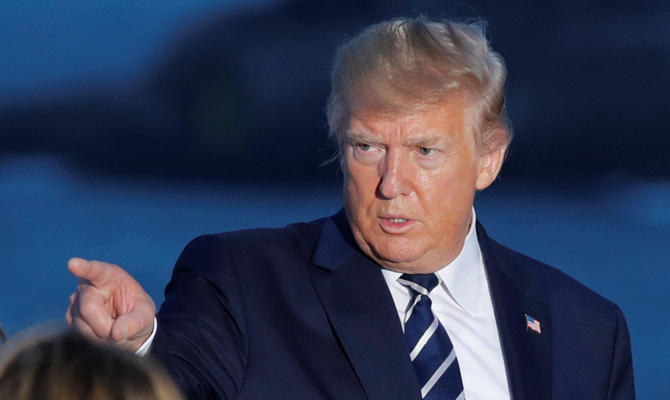
Trump denies report he wanted to nuke hurricanes

Trump denies report he wanted to nuke hurricanes
- Trump slammed the story, calling it "fake news," in his latest swipe at the media
- Twitter lit up with reactions to the Axios story, with many users appearing shocked
Latest updates


© 2026 SAUDI RESEARCH & PUBLISHING COMPANY, All Rights Reserved And subject to Terms of Use Agreement.