RIYADH: The Saudi Program for the Development and Reconstruction of Yemen has successfully carried out several projects to generate potable water, the Saudi Press Agency reported.
The wells have started to produce water, meeting the needs of people in Al-Mahra governorate. Solar power techniques have been reportedly used in their designs.
The latest wells constructed in Al-Ghayda directorate in Al-Mahra are Tenhalen and Dethort.
The Dethort well has a depth of up to 90 meters while Tenhalen has a depth of up to 190 meters.
The Saudi program has supported the water sector in Yemen through the distribution of 120 tanks delivered to different governorates, as the first step in sustainable water projects.
There are other projects in the pipeline to support the water sector, including establishing water storage reservoirs and dams.
The program, which covers most Yemeni governorates, focuses on vital sectors such as health, water, electricity, agriculture, fisheries and ports.

Saudi Arabia uses solar power to generate water in Yemen
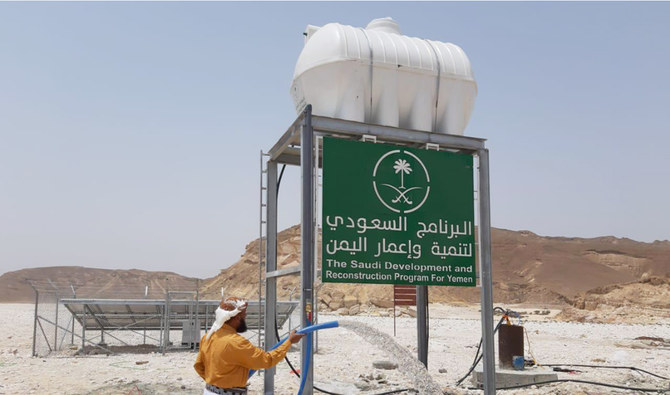
- The Saudi program has supported the water sector in Yemen through the distribution of 120 tanks delivered to different governorates, as the first step in sustainable water projects
SDAIA president says Saudi Arabia is building an integrated AI ecosystem
RIYADH: Saudi Data and Artificial Intelligence Authority President Abdullah Al-Ghamdi says that Saudi Arabia is moving steadily to establish artificial intelligence as a trusted national capability, the Saudi Press Agency reported.
Guided by the objectives of Saudi Vision 2030, Al-Ghamdi said the goal is to use AI to help develop government services, enhance competitiveness, build human capacity and improve quality of life through a comprehensive strategy based on three main pillars that unlock the potential of this technology and achieve sustainable developmental impact.
“The first pillar focuses on building human capacity and enhancing readiness to engage with AI technologies,” he said.
The second pillar is building an integrated national AI ecosystem that drives expansion and innovation by developing advanced digital infrastructure that enables various sectors to adopt AI applications efficiently, consistently and with effective governance, Al-Ghamdi said.
The third pillar, he said, is governance that ensures responsible and measurable AI through a national framework aligned with international standards.
This came during Al-Ghamdi’s speech at a high-level ministerial session held on Thursday on the sidelines of the AI Impact Summit 2026 in New Delhi.
He is heading the Saudi delegation, and the session saw broad participation from heads of state, decision-makers and technology leaders from around the world.
Al-Ghamdi also had a meeting with Indian Prime Minister Narendra Modi on Thursday evening, discussed AI cooperation and expressed his gratitude for hosting the summit and for the hospitality extended to the participants.


