ISLAMABAD: Pakistan’s National Disaster Management Authority (NDMA) on Monday accused India of releasing about 0.24 million cusecs of water into the Sutlej river without giving a prior warning, saying it could flood a substantial portion of Pakistani territory.
Talking to Arab News, the NDMA spokesman, Brig. Mukhtar Ahmed, said the water level in the river at Ganda Singh Wala – a Pakistani village in Kasur district located near the Indian border – was continuously rising.
“We have alerted Punjab’s provincial government and relevant district administrations to deal with the situation,” he said.
“Six districts in Punjab – namely Kasur, Okara, Pakpattan, Lodhran, Vehari and Bahawalpur – can be affected because of this,” Ahmed added.
He said that India usually informed Pakistani authorities before releasing additional water in the river, but “this time we were not informed and it has created an alarming situation.”
According to the NDMA, the additional water would enter Pakistan today, August 19, 2019.
“Water flow in all other rivers is normal,” he said, adding: “We are only monitoring the Sutlej and Indus rivers.”
NDMA statistics show 212 people have been killed and 155 others injured in rain-related incidents in Pakistan since July 1, 2019 due to the ongoing monsoon rainfalls.
Pakistan faces flash floods and landslides during the monsoon season which usually runs from July to September.


Pakistan says India released water in Sutlej without issuing prior warning
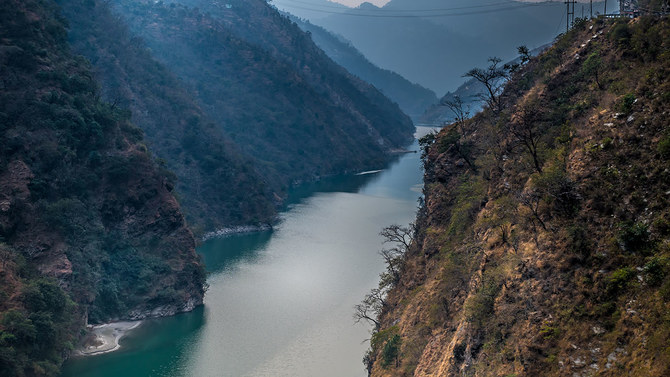
Pakistan says India released water in Sutlej without issuing prior warning

- The NDMA has issued a flood alert, warning the Punjab government and at least six district administrations
- Official statistics show 212 people have been killed in rain-related incidents in Pakistan since July 1, 2019

Pakistan’s president defends ongoing strikes in Afghanistan, urges Kabul to dismantle militants
- Afghanistan on Thursday launched attacks in retaliation for Pakistani airstrikes the previous Sunday
- Pakistan’s military says it is only targeting Afghan military installations to avoid civilian casualties
ISLAMABAD: Pakistan’s president on Monday defended his country’s ongoing military strikes in neighboring Afghanistan, saying Islamabad tried all forms of diplomacy before targeting militants operating from Afghan territory, and called on the Taliban government in Kabul to disarm groups responsible for attacks in Pakistan.
Pakistan earlier said it is in “open war” with Afghanistan, alarming the international community. The border area remains a stronghold for militant organizations including Al-Qaeda and the Daesh (Islamic State) group.
“(The Afghan Taliban) must choose to dismantle the terror groups that survive on conflict and its war economy,” Asif Ali Zardari said during a speech to lawmakers, adding that “no state accepts serial attacks on its soil.”
Afghanistan on Thursday launched attacks in retaliation for Pakistani airstrikes the previous Sunday. Since then, Pakistan has carried out operations along the border, with Information Minister Attaullah Tarar claiming the killing of 435 Afghan forces and the capture of 31 Afghan positions.
Kabul has denied such claims.
In Afghanistan, the deputy government spokesman Hamdullah Fitrat said Pakistan’s military fired mortar shells at a refugee camp in eastern Kunar province, killing three children and injuring three others.
Afghanistan’s defense ministry said Afghan forces carried out strikes targeting a Pakistani military facility near Paktia province, causing “substantial losses and heavy casualties.”
Pakistan’s military did not respond to questions. It has said Pakistan is only targeting Afghan military installations to avoid civilian casualties.
Pakistan has witnessed a surge of violence in recent months and blames it on the outlawed Pakistani Taliban, known as Tehreek-e-Taliban Pakistan or TTP. It operates both inside Pakistan and from Afghan territory.
Islamabad accuses Afghanistan’s Taliban government of providing safe havens for the TTP, which Kabul denies.
The latest cross-border fighting ended a ceasefire brokered by Qatar and Turkiye in October. The two sides failed to reach a permanent agreement during talks in Istanbul.
Zardari reiterated Pakistan’s call for talks, saying, “We have never walked away from dialogue.”
The Pakistani leader again accused Afghanistan of acting as a proxy for India by sheltering militant groups.
“Stop being used by another country as a battlefield for their ambitions,” he said.
Zardari cited a recent report from the United Nations Security Council’s monitoring team that described the presence of militant groups in Afghanistan as an extra-regional threat.


