

British hijab-wearing model Mariah Idrissi has it covered

1 / 4
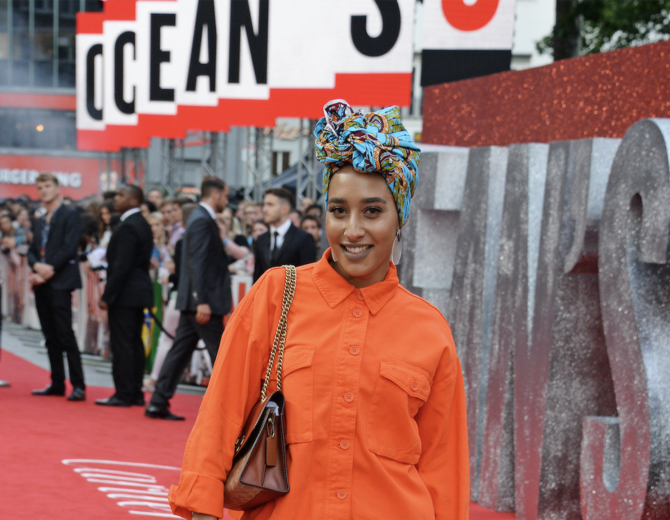
Mariah Idrissi on the red carpet at a film premiere in London. (Getty Images)
2 / 4
Mariah Idrissi sporting different modest fashion looks on her Instagram page. (Photo courtesy: Instagram)
3 / 4
Mariah Idrissi sporting different modest fashion looks on her Instagram page. (Photo courtesy: Instagram)
4 / 4
Mariah Idrissi on the red carpet at a film premiere in London. (Getty Images)
Updated 17 August 2019
Follow

British hijab-wearing model Mariah Idrissi has it covered

  • “Saudi Arabia is a blessed land both physically and spiritually,” Idrissi said
  • “I would love to be a part of changing some of the stereotypes around the country through my work in fashion and film,” Idrissi commented

LONDON: Born in North West London to Moroccan and Pakistani parents, model Mariah Idrissi has made quite a name for herself – starring in campaigns for major high street retailers, hosting TED Talks and sharing snaps of her travels with her 88,000 Instagram followers.
The hijab-wearing model has been vocal about her preference for modest fashion and spoke to Arab News about her style, faith and achievements.
“I wear hijab to represent my faith, my culture, and because I genuinely love the idea of modest dress,” she said. “I think it’s important to feel comfortable in what you wear and also not lose a sense of your personality, hence why there is so much diversity in modest styles.”


Her breakthrough came when she was scouted in a shopping center. She did not think it would lead to anything; however, she was casted for an H&M ad. “The campaign went viral. From that moment I realized how little the media represented Muslims, and if they did it was often negative. That motivated me to continue to pursue a career in fashion and change the narrative around how hijab is viewed in the West,” she explained.
She also gave her first significant public speech in 2016, a TEDxTeen live-streamed to millions, about how modest clothing has now become a trend. Idrissi believes the fashion industry is catering more to women who want modest wear than it did a decade ago.
“I feel it is definitely improving,” she said. “Summertime can still be a little bit of a struggle in comparison to autumn and winter which is cooler, so there is still room for improvement.”


After her breakthrough with H&M, Idrissi went on to participate in projects with leading brands, including MAC Cosmetics and M&S in the Middle East. She also looks forward to working on projects in Saudi Arabia when an opportunity arises.
“Saudi Arabia is a blessed land both physically and spiritually. I feel there is so much potential and opportunity. I would love to be a part of changing some of the stereotypes around the country through my work in fashion and film,” Idrissi said.
She is now working on a few film projects, both features and documentaries, to continue challenging negative stereotypes around Muslims.


Moreover, she aims to inspire other potential modest models and advises them to always ask why before embarking on this path. Asking why has helped her on this career journey because even through difficult times, she was able to push forward.
As her upbringing has taught her, Idrissi is demonstrating that modernity and progression are not in conflict with tradition and customs: They are two sides of the same coin.

Decoding villains at an Emirates LitFest panel in Dubai

Updated 25 January 2026
Follow

Decoding villains at an Emirates LitFest panel in Dubai

DUBAI: At this year’s Emirates Airline Festival of Literature in Dubai, a panel on Saturday titled “The Monster Next Door,” moderated by Shane McGinley, posed a question for the ages: Are villains born or made?

Novelists Annabel Kantaria, Louise Candlish and Ruth Ware, joined by a packed audience, dissected the craft of creating morally ambiguous characters alongside the social science that informs them. “A pure villain,” said Ware, “is chilling to construct … The remorselessness unsettles you — How do you build someone who cannot imagine another’s pain?”

Candlish described character-building as a gradual process of “layering over several edits” until a figure feels human. “You have to build the flesh on the bone or they will remain caricatures,” she added.

The debate moved quickly to the nature-versus-nurture debate. “Do you believe that people are born evil?” asked McGinley, prompting both laughter and loud sighs.

Candlish confessed a failed attempt to write a Tom Ripley–style antihero: “I spent the whole time coming up with reasons why my characters do this … It wasn’t really their fault,” she said, explaining that even when she tried to excise conscience, her character kept expressing “moral scruples” and second thoughts.

“You inevitably fold parts of yourself into your creations,” said Ware. “The spark that makes it come alive is often the little bit of you in there.”

Panelists likened character creation to Frankenstein work. “You take the irritating habit of that co‑worker, the weird couple you saw in a restaurant, bits of friends and enemies, and stitch them together,” said Ware.

But real-world perspective reframed the literary exercise in stark terms. Kantaria recounted teaching a prison writing class and quoting the facility director, who told her, “It’s not full of monsters. It’s normal people who made a bad decision.” She recalled being struck that many inmates were “one silly decision” away from the crimes that put them behind bars. “Any one of us could be one decision away from jail time,” she said.

The panelists also turned to scientific findings through the discussion. Ware cited infant studies showing babies prefer helpers to hinderers in puppet shows, suggesting “we are born with a natural propensity to be attracted to good.”

Candlish referenced twin studies and research on narrative: People who can form a coherent story about trauma often “have much better outcomes,” she explained.

“Both things will end up being super, super neat,” she said of genes and upbringing, before turning to the redemptive power of storytelling: “When we can make sense of what happened to us, we cope better.”

As the session closed, McGinley steered the panel away from tidy answers. Villainy, the authors agreed, is rarely the product of an immutable core; more often, it is assembled from ordinary impulses, missteps and circumstances. For writers like Kantaria, Candlish and Ware, the task is not to excuse cruelty but “to understand the fragile architecture that holds it together,” and to ask readers to inhabit uncomfortable but necessary perspectives.