Saudi Aramco deal will help India’s Reliance to reduce $42bn debt burden

Reliance CEO Mukesh Ambani said that the company had already been processing Saudi crude oil for 20 years. (AFP)
Updated 18 August 2019
Follow

Saudi Aramco deal will help India’s Reliance to reduce $42bn debt burden

  • Reliance will buy up to 500,000 barrels a day of crude oil from Aramco, more than double its current purchase

NEW DELHI: India’s Reliance Industries’ deal to sell a 20 percent stake in its oil to chemicals business to Saudi Aramco will reap major dividends for both companies, analysts said.

Under the terms of the non-binding deal announced earlier this week, the conglomerate will get roughly $15 billion for the 20 percent stake, money that it will use to pare its massive debt load.  Reliance has an overall debt of nearly $42 billion including $20 billion at its fibre division which the group is currently in talks to sell. 

In exchange, Reliance will buy up to 500,000 barrels a day of crude oil from Aramco, more than double its current purchase.

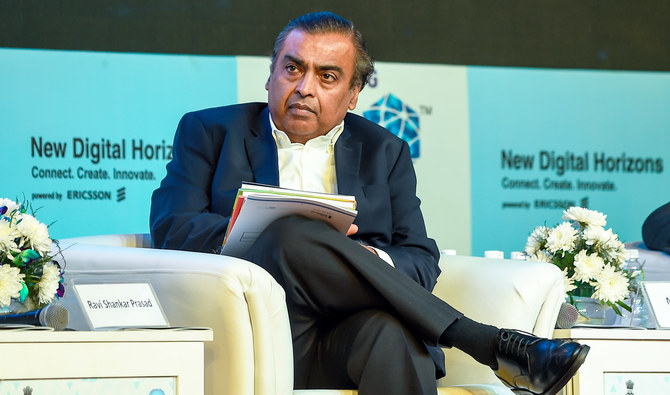
Reliance chairman and the country’s richest man, Mukesh Ambani, said that the company had been processing Saudi crude oil every single day for the past 20 years and this deal, among the largest foreign investments in India, signified “perfect synergy between the world’s largest oil producer and the world’s largest integrated refinery and petrochemicals complex.”

The deal will cover all of Reliance’s refining and petrochemicals assets, including 51 percent of its petroleum retail joint venture.

Reliance has been on the lookout for strategic partners for its businesses to help it in its goal of reducing its debt, said Ajay Bodke, chief executive officer, portfolio management services at Prabhudas Lilladhar, a brokerage. “Reliance has become a net debt company from a net cash company. Whatever money that flows in from this deal will be used by Reliance to deleverage,” he said. It’s “a marriage made in heaven because you have the largest oil explorer in the world tying up with India’s largest oil to chemicals company,” he added.

Gagan Dixit, vice president institutional equities research at Elara Capital, agreed that the deal will give Reliance “much needed capital.” Plus, “refining is a dying business and they can use this money for the high margin business of chemicals,” he said.

That apart, historically Reliance has bought oil from Iran and Venezuela, both of which are under US sanctions. This deal helps Reliance secure its supplies and ensures Aramco that additional business as well, said Dixit. Aramco has been beefing up its business in Asia, especially with some of the large importers of crude oil. With the US, the world’s largest consumer of energy, depending less on Saudi Arabia for oil, Aramco needs new markets to hedge its bets. India, one of the largest energy consumers in the world after the US and China, fits the bill.

 This deal provides Aramco with a steady customer in the midst of global uncertainty in the oil and gas sector, said Anirban Mukherjee, a partner at the Boston Consulting Group. “There’s merit in a producer like Aramco wanting to lock in a large market. India is a very consumption-led economy in the petrochemical sector and it will continue to be a large importer of oil, so this is a good match between producer and market. Rather than a simple supplier-buyer compact, if an oil exploration company has partnerships with some of the large refineries, there’s a permanence to the business.”

This is not Aramco’s first investment in India. In 2017 it opened an office in the Indian capital to expand the company’s international portfolio in this growth region. Last year it announced a joint venture with a consortium of Indian state-owned refiners to set up a $44 billion refinery and a petrochemical project on the country’s western coast.

The proposed refinery, which is yet to take off, is expected to have a total capacity of 18 million tons a year and will process up to 1.2 million barrels of crude oil a day as well as refined petroleum products including petrol and diesel. The proposed project has been billed as among the world’s largest refining and petrochemicals projects and one that has been designed to meet India’s fast-growing demand for fuels and petrochemicals.

The Aramco deal is the latest in a series of moves by Reliance to sell non-core assets or establish joint ventures to reduce debt. Speaking to shareholders, Ambani said the group will become a zero net debt company within 18 months.

Ahead of the Aramco deal, Reliance announced a joint venture with global oil major BP to set up a nationwide network of fuel retail outlets where Reliance will have a 51 percent stake, to cash in on rising demand in the country. It will also market aviation turbine fuel to cater to India’s growing aviation industry. 

“Our transactions with Saudi Aramco and BP will create win-win relationships, generating significant strategic value for our partners,” Ambani said.
Saudi ministry launches private sector tender to operate sports venues in Makkah region

Updated 7 sec ago
Follow

Saudi ministry launches private sector tender to operate sports venues in Makkah region

RIYADH: New investment opportunities in athletic facilities across the Makkah region have been launched as Saudi Arabia looks to expands private sector participation in the sports economy and improve the commercial performance of its stadiums.

The Kingdom’s Ministry of Sport announced the offering under its “Sports Facilities Investment” initiative, inviting qualified companies to bid for a three-year contract to operate and manage multiple venues, including King Abdullah Sports City Stadium in Jeddah, Prince Abdullah Al-Faisal Stadium in Jeddah, King Abdulaziz Stadium in Makkah, and the indoor arena at King Abdullah Sports City.

The initiative comes amid a wider push by Saudi Arabia to maximize the commercial value of its sports infrastructure as the Kingdom prepares for major international tournaments and expands its domestic sports economy.

Under the proposed arrangement, the selected operator will manage matches, events, and daily venue services to enhance fan experiences and operational quality, while the ministry will retain responsibility for maintenance and oversight. The model is designed to expand partnerships with the private sector and improve the year-round utilization of sports infrastructure.

The investment opportunity offers multiple revenue streams, including ticket sales, food and beverage concessions, and hospitality services, as well as advertising and venue naming rights, excluding King Abdullah Sports City Stadium, and the ability to host non-sporting events and community activities.

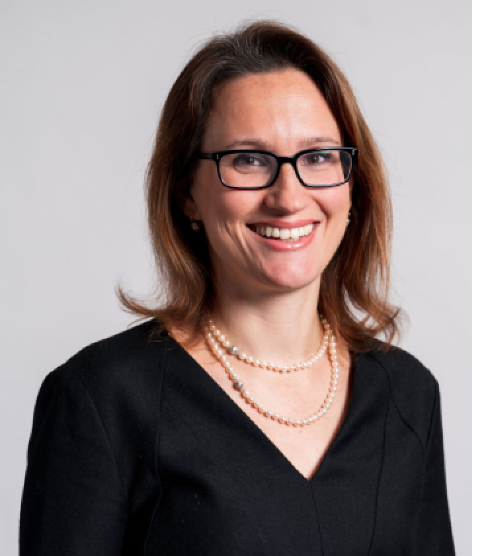
Francesca Petriccione, an international sports lawyer and professor at the University of Milan, said the initiative reflects a broader strategy to transform stadiums into long-term economic assets rather than facilities used only for sporting competitions.

“These stadiums are being developed as long-term economic assets rather than simply event venues,” Petriccione told Arab News. “The infrastructure strategy is not only about match-day capacity but also about commercial activation outside football.”

Petriccione advises leading international football clubs on strategic expansion projects in the Middle East, particularly in Saudi Arabia. Her work focuses primarily on football club acquisitions and cross-border investment in the sports sector.

She explained that the Kingdom’s broader sports infrastructure program, linked to its 2034 FIFA World Cup bid, demonstrates a portfolio approach to stadium development.

“Saudi Arabia’s plan is built around 15 proposed stadiums across five cities, including four existing venues, three already under construction and eight planned new builds,” Petriccione said. “The ministry is trying to avoid the classic white elephant problem by embedding stadiums within a broader utilization model.”

According to the professor, the Kingdom’s stadium program is designed to support both international tournament hosting and long-term infrastructure development.

“The ministry is not simply refurbishing legacy stock but selectively creating a next-generation venue network for top-tier international events,” she said.

Petriccione added that the nation’s approach emphasizes multi-purpose venues capable of hosting concerts, conferences and other large-scale events in addition to football matches, improving utilization rates and strengthening the financial model of sports infrastructure.

“Modern stadiums are financially stronger when they function as experience and events platforms rather than simply football grounds,” she said.

Some venues are also being integrated into larger urban development strategies and tourism ecosystems rather than built as standalone athletic projects, aligning sports infrastructure with broader real estate and destination planning. 

Petriccione noted that the ministry’s decision to invite private companies to operate and manage facilities signals a gradual shift toward commercially driven management structures. 

“The value is not only in construction — it also lies in operations, facility management, venue technology, hospitality, naming rights, premium seating and non-match-day monetization,” Petriccione said.

The ministry said the investment initiative aims to create a scalable operating model that could later be applied to additional sports facilities across the Kingdom, while increasing financial efficiency, enhancing commercial rights activation and generating new revenue streams for the sports sector.