ISLAMABAD: Single-use plastic bags will be banned in the federal capital from August 14, on the occasion of Pakistan’s 73rd Independence Day, as part of an initiative undertaken by the government and keeping in line with Prime Minister Imran Khan’s plans to make the country greener.
Pakistan is the 128th country to stop the use of the non-biodegradable material made from various type of polymers that are harmful to the environments.
“We are banning (single-use) plastic bags in Pakistan, especially our capital territory, and after we implement it on August 14, we want to replicate the (ban) across Pakistan,” Zartaj Gul, State Minister for Climate Change told Arab News after distributing reusable bags to promote the initiative.
“We want Pakistan to be plastic-free because it is a burden on our environment,” Gul said, adding that Pakistan wanted to demonstrate to the world that it is “contributing to green initiatives” because it is the most “vulnerable country (due to its ability to adapt to adverse effects of greenhouse gases) and is ranked number seven on the index of climate change”.
According to the Pakistan Environment Protection Agency (EPA), 55 billion single-use plastic bags are used every year. The objective of the ban is to reduce litter and trash, remove hard to recycle plastic bags from the solid waste system, and protect the environment.
The ban, under the new regulation of Environmental Protection Act 1997, will impact all retailers, vendors, manufacturers, traders, and commercial users of plastic bags. However, the EPA will grant concessions for specific use flat bags used by industries and for waste collection.
Commending the move, several environmentalists urged the government to run awareness campaigns to educate the public which is highly dependent on the use of plastic bags across the country.
“We need to hold advocacy sessions; we need to highlight the issue in order to tackle the looming crisis of plastic pollution,” Noreen Fatima, an environmental researcher working at the National Institute of Maritime Affairs told Arab News, explaining the dangers of using plastic.
“It is impacting our environment, including our marine life, causing air pollution and disease and the main dilemma is that it is not biodegradable,” she said.


Pakistan goes plastic-free on Independence Day
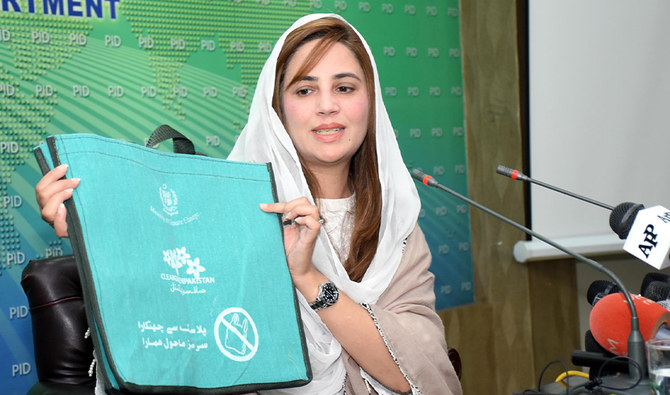
Pakistan goes plastic-free on Independence Day

- 55 billion plastic bags are used in the country every year
- Ban to help reduce harmful impact on the environment

Pakistan PM speaks to UAE president, calls for enhanced cooperation
- Shehbaz Sharif lauds UAE’s economic support in challenging times
- Both leaders discuss a range of issues, agree to stay in close contact
ISLAMABAD: Prime Minister Shehbaz Sharif on Friday praised the United Arab Emirates for what he described as steadfast financial and political support during Islamabad’s recent economic crisis, as both sides signaled plans to deepen bilateral cooperation.
In a statement issued after Sharif spoke with UAE President Sheikh Mohamed bin Zayed Al Nahyan, the Prime Minister’s Office said the two leaders discussed matters of mutual interest and agreed to stay in close contact.
“The Prime Minister lauded the UAE’s consistent and unwavering support to Pakistan, that had helped the country navigate through difficult challenges,” the statement said, adding the two leaders “reaffirmed their shared desire to further enhance mutually beneficial cooperation between Pakistan and the UAE.”
The UAE, along with other friendly nations in the region, provided critical financial assistance to the South Asian country during a balance-of-payments crisis that strained Pakistan’s foreign exchange reserves and pressured its currency. Islamabad subsequently secured an International Monetary Fund program as part of broader stabilization efforts.
Sharif, in a post on X, described the exchange as positive.
“We fondly recalled our recent meetings and reaffirmed our shared resolve to further strengthen the historic, fraternal ties between Pakistan and the United Arab Emirates, and to expand mutually beneficial cooperation,” he wrote.
Millions of Pakistanis live and work in the UAE, forming one of the largest expatriate communities in the Gulf state.
Remittances from the UAE rank among Pakistan’s top sources of foreign currency inflows and play a significant role in supporting the country’s external accounts.
UAE-based companies are also investing in Pakistan, helping Islamabad develop its seaports to facilitate regional trade.





