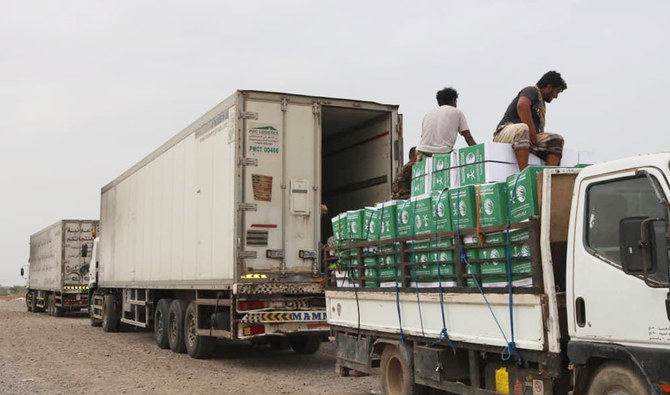
RIYADH: The King Salman Humanitarian Aid and Relief Center (KSRelief) distributed the Eid Kiswa (gifts) among children in Yemen as part of its Your Happiness is Our Happiness program in the war-torn country.
“KSRelief has distributed toys, clothing and other items to children in the Al-Ghaydah and Huswain districts of Al-Mahrah governorate,” said the KSRelief media center.
The center said the gifts were distributed to 200 families, including 600 orphans and internally displaced people (IDPs) in Al-Mahrah.
As part of the project, KSRelief also distributed toys, clothing and other gift items to children in the Al-Hazam district in Al-Jawf governorate, to IDPs from Hodeidah and Raymah, and to children at a center for special needs in Al-Jawf.
KSRelief also launched its Eid Kiswa project in the Tuban and Al-Houta districts of Lahij and to mark the festive occasion. Gifts were handed out to children in 303 families, including 319 orphans, children with special needs and IDPs.
The center also implemented its project to distribute gifts, toys, clothing and others in the Hadibu district of Socotra Island. The gifts were distributed among 80 families and included 210 orphans, IDPs and others in need.

Saudi Arabia’s aid agency distributes Eid gifts in Yemen
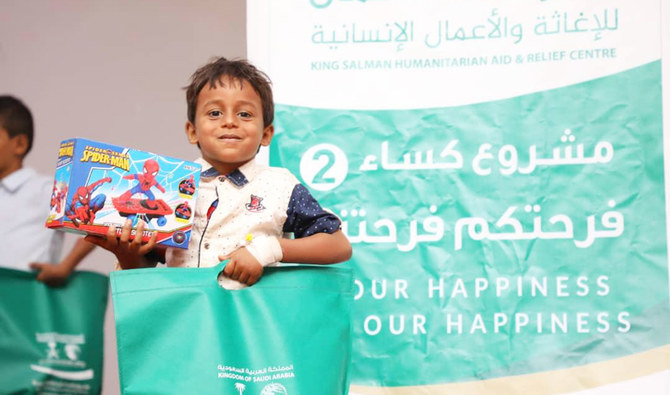
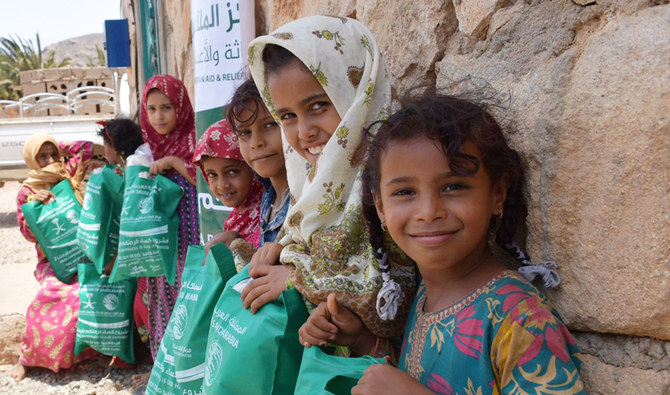
- KSRelief also launched its Eid Kiswa project in the Tuban and Al-Houta districts of Lahij and to mark the festive occasion
The founding economy: A blueprint for stability in the First Saudi State
- The establishment of the First Saudi State created a secure environment that facilitated the arrival of caravans, secured vast trade routes, and revived commerce across the Arabian Peninsula
RIYADH: The economy during the founding stage of the First Saudi State served as a fundamental pillar in building the nation, consolidating its influence, and ensuring its stability. This early economic growth was inextricably linked to achieving security, unifying regions, and organizing society—factors that directly stimulated trade, stabilized markets, and enhanced the foundations of daily life in Diriyah and its surrounding areas.
According to Dr. Abdullah Al-Saleh Al-Othaimeen's "Diriyah: Origins and Development during the First Saudi State," published by the King Abdulaziz Foundation for Research and Archives (Darah), the founding economy stands as a historical model reflecting the reciprocal relationship between political stability and early economic prosperity.
The establishment of the First Saudi State created a secure environment that facilitated the arrival of caravans, secured vast trade routes, and revived commerce across the Arabian Peninsula.
Beyond its political and intellectual prominence, Diriyah emerged as a vibrant economic hub. Its active markets attracted merchants and students from across the region, all of whom benefited from the state-provided stability. The local society relied on diverse activities for its livelihood, including trade, agriculture, and livestock breeding, with horses and camels playing crucial roles in transportation, commerce, and securing roads.
The social and administrative organization upon which the state was founded ensured the continuous availability of goods and sustained market stability. Ultimately, the close relationship between public security and economic growth during this founding phase solidified Diriyah's position as a premier political and commercial center in the Arabian Peninsula.