



LAHORE: Established by the Punjab government, the National History Museum at the Greater Iqbal Park shows all aspects of the country’s history not only after its creation, but also throws light on the struggle of Muslims ruling the subcontinent for centuries prior to Partition.
The mega project was envisaged to keep new generations of Pakistanis informed about the struggle of their forefathers for a separate country.
The museum narrates the tales from the independence movement and the first few years of the newborn state. The historic events, important statistics and speeches of the leaders of the movement have been displayed at the digital library of the National History Museum while another section displays pictures and mementos from the British colonial era.
“I have crossed the 65th year of my life and have come here with my grandson. Every wall, every corner introduces with us to a new phase of the struggle of our elders The pain they bore, they did so for the peace of their people,” Nisha Begum, a visitor, told Arab News.
A portion of the museum showcases the stories with the help of archival content, including newspaper articles, personal letters and first hand accounts.
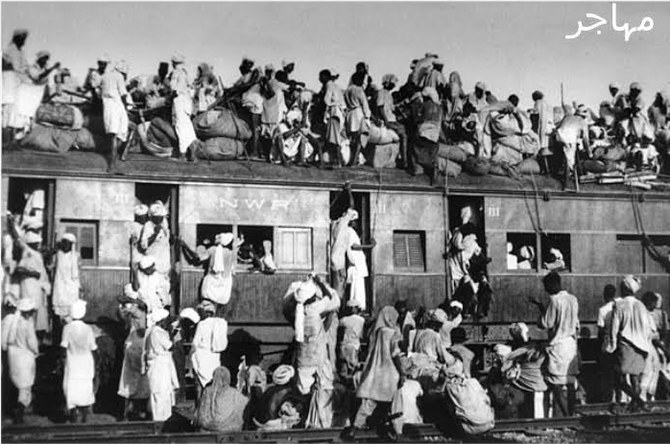
This portion also shows the scenes of great migration of August 1947. Britain left the subcontinent after 90 years, dividing it into two separate countries. Millions of Muslims started journey to West and East Pakistan (now Bangladesh) while millions of Hindus and Sikhs headed in the opposite direction. Unprecedented violence — Hindus and Sikhs on one side and Muslims on the other — was witnessed.
“The carnage was especially intense, with massacres, arson, forced conversions, mass abductions, and savage sexual violence. Some seventy-five thousand women were raped, and many of them were then disfigured or dismembered,” an article from The New Yorker recalled in June 2015.
“I have seen those black days with my eyes. I was little child at that time. I saw trains pelted with dead bodies. The Muslims sacrificed their lives for a peaceful land but the politicians wasted the struggle. The looters have taken control and the noble lost their dignity,” Salahud Din, 82, told Arab News.
Few historians believe that the truth was told to the people of India and Pakistan.
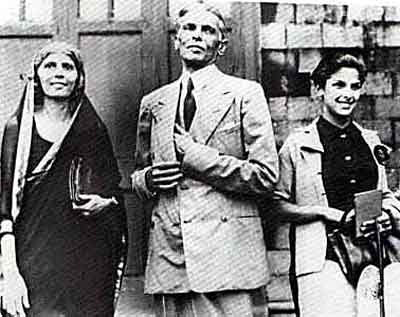
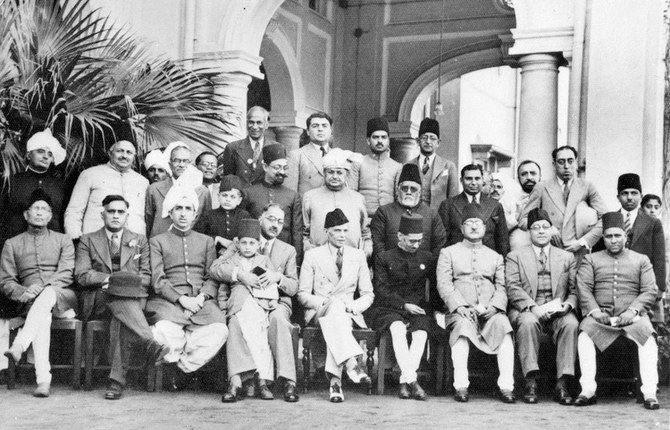
Muhammad Ali Jinah with the central leaders of the All India Muslim League.
“Partition had resulted in the biggest forced migration in history and as many as 14 million people, including 10 million from Punjab, were forcefully evicted. Although historians have failed to narrate the violence, some masterpieces of Urdu literature have highlighted the women’s experiences during Partition,” said historian Dr. Ali Usman Qasmi.
The veterans, however see the 72-year journey of Pakistan with disappointment and hope at the same time.
“The 72-year journey of Pakistan is very pathetic. A few years after its creation, the country entered the clutches of army dictators, and we failed to set up of the country as per our needs. Dictators used the country for personnel gains, depriving the people of their legitimate rights,” said veteran journalist Khadim Hussain, 84.
“I saw the moment of creation of Pakistan. The people sacrificed their lives, properties and relations in the hope of good but successive martial rule destroyed everything. Even a popular leader like Zulfikar Ali Bhutto failed to complete his agenda.”
Gen. Khawaja Ziauddin Abbassi has a different point of view: “Despite having nuclear weapons Pakistan never put the world in danger. It always behaved sensibly. The Pakistani army played important role not only in the development of the country but also contributed for peace at international level.
“Pakistan was created in the name of Islam but unjustified distribution of resources among different segments of society kept the poor away from its blessings.”
The veteran politician Raja Zafrul Haq, who took part in the independence movement, says that Pakistan is a story of success and failure at the same time.
“We lost credibility and international level because of weak system and discontinuity in democratic systems.”


