

Researchers re-create the perfume of Egyptian queen Cleopatra

Updated 12 August 2019
Follow

Researchers re-create the perfume of Egyptian queen Cleopatra

  • Team uncovers evidence of perfume industry in Thmuis
  • Fragrance reproduced with ancient formula using myrrh

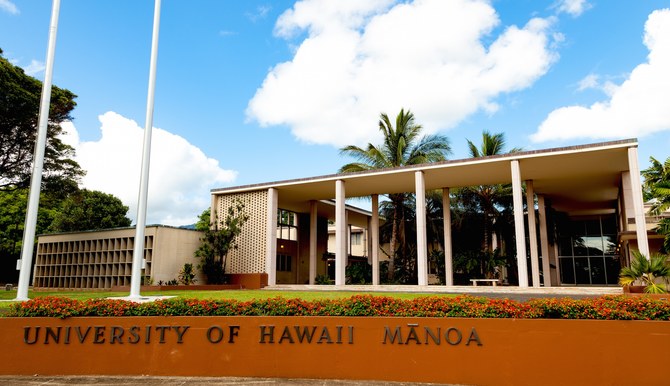
DUBAI: If you have ever wondered what perfume Cleopatra used, then two professors from the University of Hawaii at Manoa may have an answer for you.

After finding ancient perfume containers in Thmuis, an ancient Egyptian city in the Nile Delta also referred to as Tell Timai, professor Robert Littman and adjunct professor Jay Silverstein approached two experts on ancient Egyptian fragrances to recreate the legendary queen’s perfume.

Researchers Dora Goldsmith and Sean Coughlin reproduced the fragrance with the help of ancient Greek formulas from myrrh, a natural gum extracted from the small and thorny tree species.

“What a thrill it is to smell a perfume that no one has smelled for 2,000 years and one which Cleopatra might have worn,” Littman said.

The perfume is part of an exhibition by the National Geographic society, titled “Queens of Egypt,” in Washington, DC, where it will remain until Sept. 15.

Littman and Silverstein stumbled upon historic evidence of the ancient fragrance industry during excavations in Thmuis. The city is considered to be the hub of some of the most famous perfumes during ancient times.

The professors uncovered a variety of kilns from the third century BCE, which were used to produce fine lekythoi, or perfume bottles. The kilns themselves were made from imported clays.

During the excavations in 2012, the professors discovered a liquid manufacturing area and a stockpile of gold and silver coins near kilns. The discovery suggests it may have been the house of a perfume merchant.


Israel’s hostage forum releases AI-generated video of last Gaza captive

Updated 23 December 2025
Follow

Israel’s hostage forum releases AI-generated video of last Gaza captive

  • The Gaza ceasefire, which came into effect in October, remains fragile with both sides alleging violations, and mediators fearing that Israel and Hamas alike are stalling

JERUSALEM: An Israeli group representing the families of Gaza hostages released on Tuesday an AI-generated video of Ran Gvili, the last captive whose body is still being held in the Palestinian territory.
The one-minute clip, created whole cloth using artificial intelligence, purports to depict Gvili as he sits in a Gaza tunnel and appeals to US President Donald Trump to help bring his body back to Israel.
“Mr President, I’m asking you to see this through: Please bring me home. My family deserves this. I deserve the right to be buried with honor in the land I fought for,” says the AI-generated image of Gvili.
Gvili was 24 at the time of Hamas’s October 7, 2023 attack on Israel.
He was an officer in Israel’s Yasam elite police unit and was on medical leave when he learnt of the attack.
He decided to leave his home and brought his gun to counter the Hamas militants.
He was shot in the fighting at the Alumim kibbutz before he was taken to Gaza.
Israeli authorities told Gvili’s parents in January 2024 that he had not survived his injuries.
The AI clip was released by the Hostages and Missing Families Forum, the main group representing those taken captive to Gaza.
The Forum said it was published with the approval of Gvili’s family.
“Seeing and hearing Rani speak in his own voice is both moving and heartbreaking. I would give anything to hear, see and hold him again,” Gvili’s mother Talik said, quoted by the Forum.
“But all I can do now is plead that they don’t move to the next phase of the agreement before bringing Rani home — because we don’t leave heroes behind.”
The Gaza ceasefire, which came into effect in October, remains fragile with both sides alleging violations, and mediators fearing that Israel and Hamas alike are stalling.
In the first stage, Palestinian militants were expected to return all of the remaining 48 living and dead hostages held in Gaza.
Since the ceasefire came into effect on October 10, militants have released 47 hostages.
In the next stages of the truce, Israel is supposed to withdraw from its positions in Gaza, an interim authority is to govern the Palestinian territory instead of Hamas, and an international stabilization force is to be deployed.
Israeli Prime Minister Benjamin Netanyahu is expected to meet Trump in Florida later this month to discuss the second phase of the deal.