DEAUVILLE: A few steps from the sea in the Normandy resort of Deauville, a group of curious holidaymakers in flip-flops and beach garb pepper a technician with questions as he extols the capabilities of a cutting-edge 3D modelling machine.
Outside the makeshift lab, disco music blares while people wait to try out virtual reality headsets allowing them to operate robots whizzing around a gleaming production line.
Frustrated in their attempts to attract young workers, French industrial firms have taken their pitches straight to the summer crowds with a roadshow aimed at drumming up an interest in factory work.
Since mid-July the French Fab Tour has traveled along the Mediterranean and Atlantic coasts, hoping to convince young people that state-of-the-art sites offering solid pay and prospects have replaced the dreary assembly lines of the past.
Magali Kueny, a recruitment specialist on vacation from the eastern French city of Mulhouse who was watching the 3D molding display with her young daughter, knows firsthand the need to inject a bit of glamor into an industry’s image.
“There are very few qualified candidates,” she said. “Sometimes we’ll have just one candidate for four or five posts.”
The tour, which will have visited 18 seaside resorts when it wraps up on Wednesday, mixes work and play.
Amid the basketball hoops and programmable remote-controlled toy cars is a LinkedIn stand, where people get prints of would-be profile pictures. There’s also an escape game and the day ends with a free outdoor concert featuring several bands and DJs.
“Encouraging people means reaching out, by going straight to families and young people, because a career decision is something you make within the family,” said Patrice Begay of BPI France, the state-run investment bank that organized the tour.
Around 50,000 industry jobs, from aviation and rail companies to defense and IT contractors, are going unfilled this year, Begay said, despite a French jobless rate that has remained stubbornly high, standing at 8.7 percent in the first quarter.
We have plenty of industry in Normandy. Aeronautics, nuclear, automobile, and luxury groups like Hermes and Louis Vuitton all produce in Normandy, and often it’s difficult to hire.
Philippe Augier, Deauville Mayor
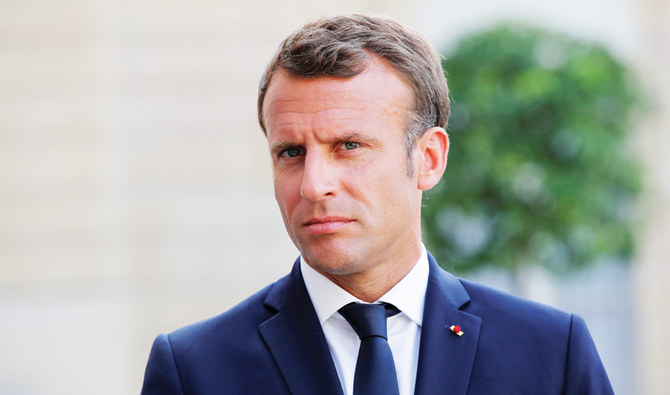
Tackling this imbalance is a key part of President Emmanuel Macron’s pledge to make France more competitive and lower the chronic unemployment, especially among young people.
Macron has vowed to return the country to “full employment” by 2025 — a rate most economists would peg at around 4.5 percent — in part by overhauling professional training and encouraging the creation of more apprenticeships.
The goal has become even more urgent in the wake of the “yellow vest” protests, which partly reflected a sense of abandonment in areas where traditional industries have been hollowed out.
“We have plenty of industry in Normandy. Aeronautics, nuclear, automobile, and luxury groups like Hermes and Louis Vuitton all produce in Normandy, and often it’s difficult to hire,” Deauville Mayor Philippe Augier said.“Young people aren’t aware of it, they don’t know enough about it,” he said.
Economists argue that French schools must also better promote the so-called “industry 4.0” jobs at automated factories, where workers are more likely to hammer on keyboards than on rivets.
But that also means tackling the stigma attached to apprenticeships, which many still consider the domain of failed students destined for a life of manual labor — not the dream most parents harbor in a country of guaranteed free university access.
Just seven percent of French youths aged 16 to 25 seek apprenticeships, compared with 15 percent in Germany, which boasts a broad and dynamic manufacturing base.
“Before people would say, if you don’t succeed in school, you’ll get sent to the factory,” Begay admitted.
The upbeat message appeared to be getting through in Deauville.
Severine, a school worker was visiting with her young son, an airplane fan. “He found himself with an engineer who talked about technologies, careers, the future, and obviously it had quite an impact,” she said.
To help companies fill jobs, Macron’s government has given local industry federations more say in the running of the country’s nearly 1,000 apprentice training centers and the state is subsiding the salaries of youths who get taken on.
It is also offering to help recruits pay for driving lessons, no small thing in a country where securing a license — a prerequisite for many jobs outside of big cities — can easily exceed €1,000 ($1,120).
The measures led to a 7.7 percent rise in apprenticeships last year, Labor Ministry figures show, and a 12.6 percent year-on-year jump for the first two months of this year.
Yet the challenge remains daunting: placement agency Adecco said in June that French firms overall have 3.5 million posts to fill this year, but half expect to struggle to find suitable candidates.
So if touting their attractiveness means putting on an evening of games and concerts at the beach, so be it.
“We’re simply showing that industry is recruiting, and that industry is dynamic,” Begay said.