

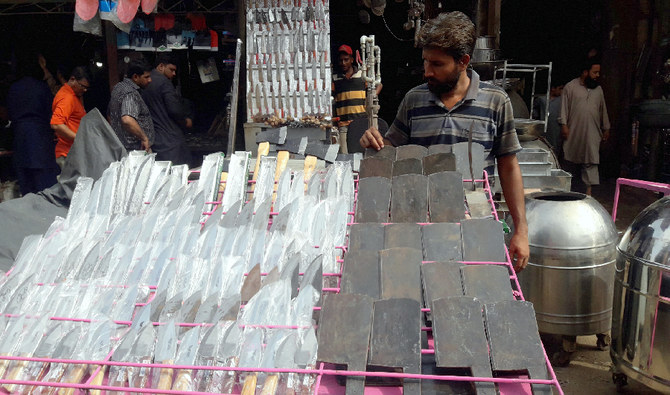

KARACHI: On any other week, Karachi’s ragged Lohar ‘blacksmith’ Market is lackluster and quiet, but once a year, before the Muslim festival of sacrifice, Eid Al-Adha, the old marketplace springs into action, a loud bustling bazaar packed full of artisans creating and selling their handiwork in Pakistan’s largest city.
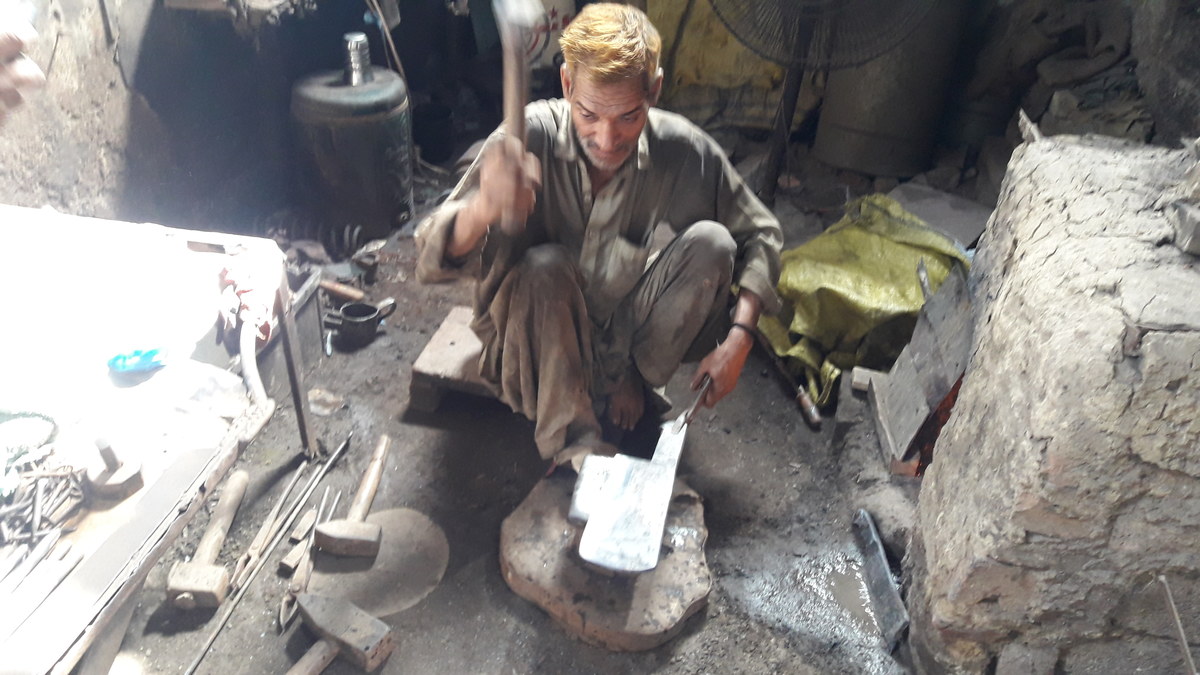
A blacksmith gives a cleaver finishing touches at Lohar Market in Karachi ahead of Eid ul Adha. August 10, 2019. (Photo AN)
“The market produces roughly 30 tons of knives of all sizes during the season of Eid Al-Adha as demand multiplies ahead of the festival,” Hajji Abdul Sattar Mugal, president of the Lohar Market association, told Arab News as he took a burning rod of iron from a coal-fired furnace.
The demand for sharp knives and cleavers comes from the city’s butchers and from people who prefer to slaughter sacrificial animals themselves on Eid Al-Adha, where more than seven million animals worth an estimated $3 billion were sacrificed on the occasion in 2017, with their hides and skins alone worth $32 million last year according to data shared by the Pakistan Tanners Association (PTA).
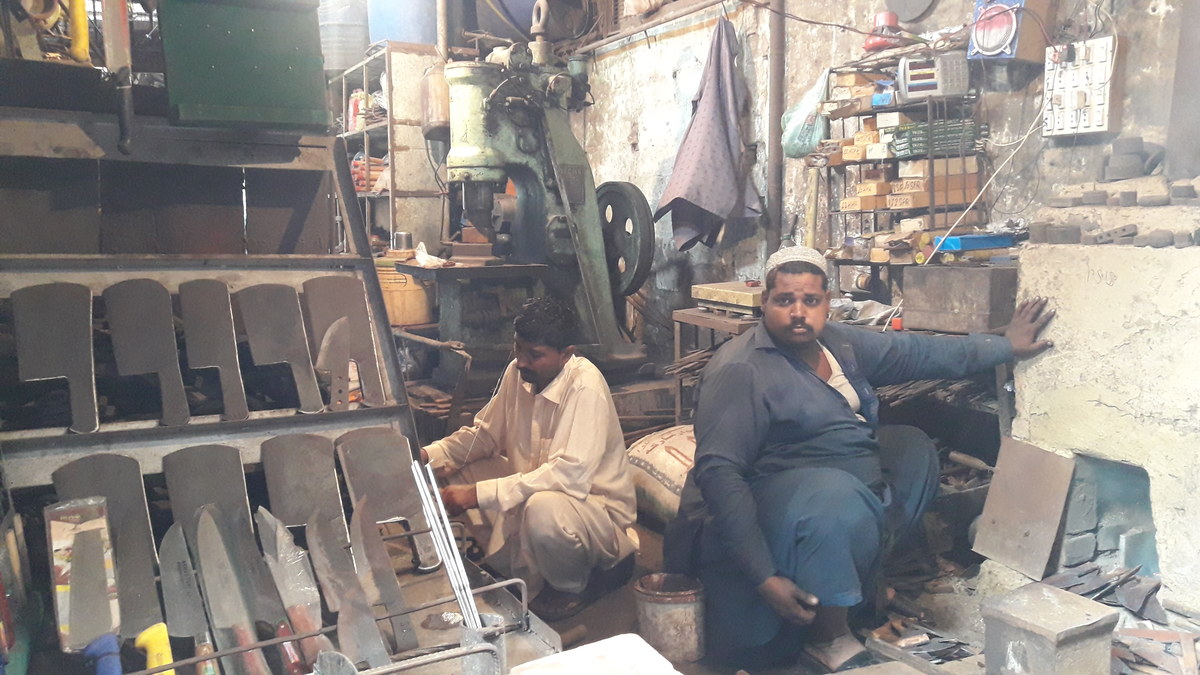
A blacksmith readies a kiln to melt iron and molding it into cleavers at Karachi’s old market. August 10, 2019. (Photo AN)
Many of the artisans and blacksmiths in Lohar Market have inherited the profession from their forefathers, and the market, stuffed full of shops and small factories, churns out some of the best instruments in the entire industry.
“The knives are made with worn-out leaf springs of trucks and buses. First, they are pressed in machines to make the blades and then sharpened and given finishing touches with the hands,” Mahmud, a blacksmith, told Arab News.
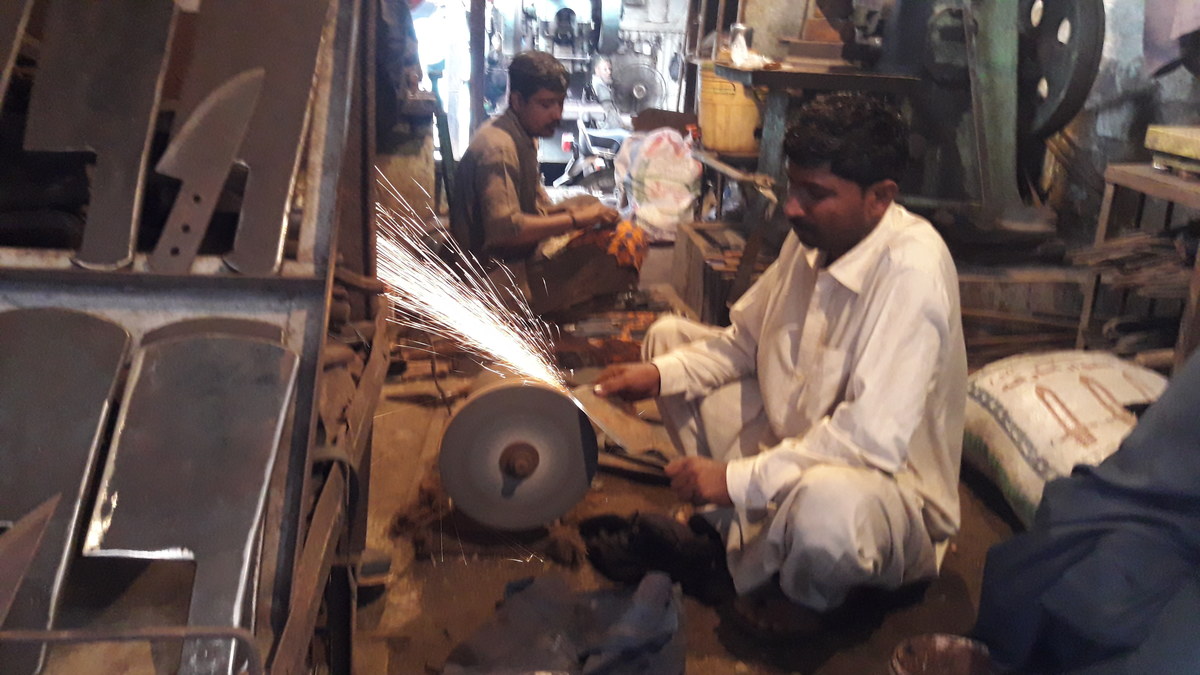
A blacksmith gives a cleaver its finishing touches on at Lohar Market in Karachi ahead of Eid ul Adha. August 10, 2019. (Photo AN)
Known for its merchandise, Lohar Market is equally popular among wholesalers and individual buyers.
“Major supply of knives and allied accessories is made in Karachi. A small quantity of around two tons goes to the interior parts of Sindh and Balochistan provinces,” Mughal said.
But on the back of record levels of inflation, and a currency devaluation that has seen Pakistan’s rupee losing more than 45 percent of its value against the dollar since last year, the blacksmiths of Lohar Market say they are spending most of their time this pre-holiday season bargaining with incensed customers.
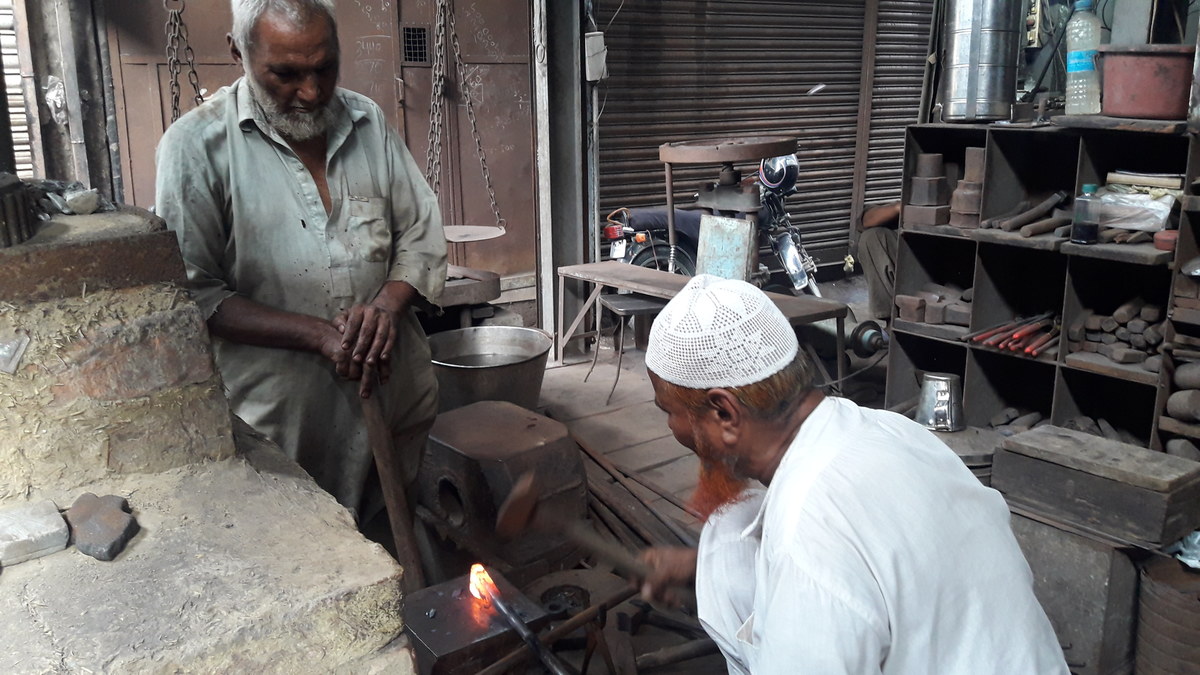
Abdul Sattar Mughal gives shape to a piping hot iron rod at his shop in Karachi’s Lohar Market ahead of Eid al-Adha. August 10, 2019
“The impact of the rupee devaluation is hurting our business because the prices of our core inputs like coal, iron, and electricity have gone up. Besides, essential tools’ prices have also increased manifold,” Mughal said and added that prices had increased by almost 20 percent per kg as compared to last year.
“Most of the time, we keep arguing with angry customers,” he said.
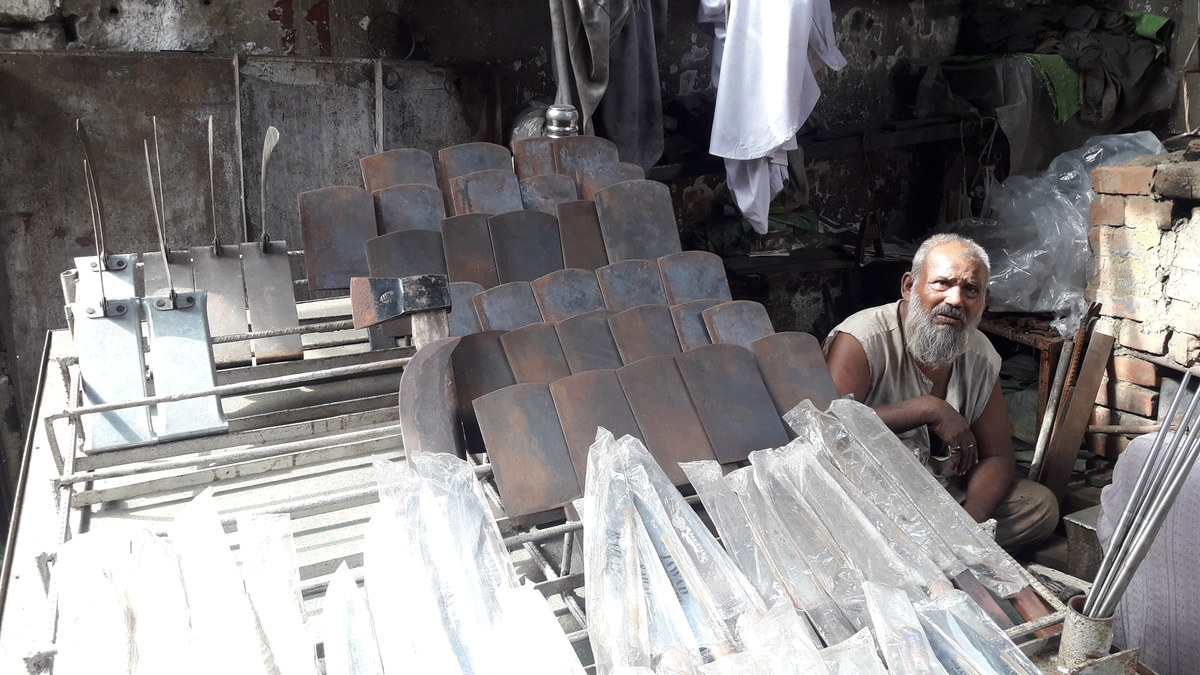
A blacksmith displays knives and cleavers at his shop in Lohar Market. August 10, 2019. (Photo AN)
Following a $6 billion bailout package that Islamabad negotiated and availed from the International Monetary Fund (IMF) earlier this year, the prices of energy including electricity and gas have drastically increased.
As a result, traders say the prices of knives have increased by 10 to 20 percent as compared to last year, and the prices of cleavers have increased by almost 30 percent.
Eid related shopping at Lohar Market is not limited to solely the selling and purchasing of knives and cleavers. There are skewers, barbecue grills, iron trays and all manner of utensils that aid in the cooking of meat.
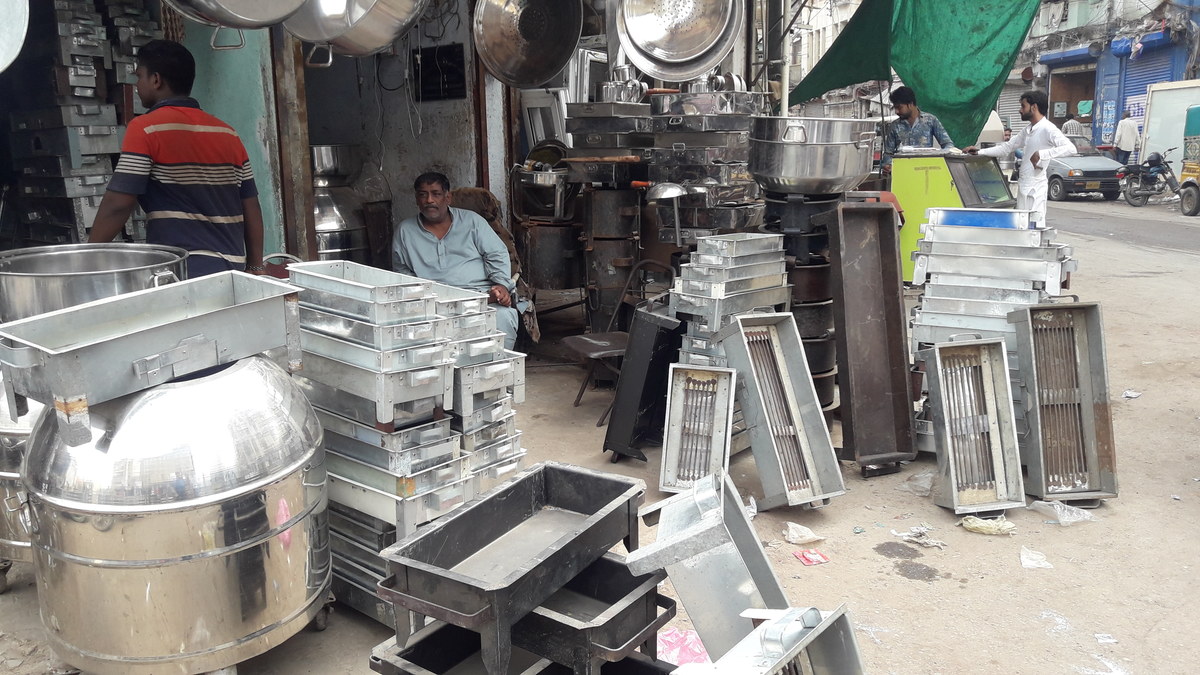
Barbecue grills and stoves on display at a shop in Lohar Market in Karachi aahead of Eid al-Adha, the Muslim feast of sacrifice. August 10, 2019 (Photo AN)
Though the wholesalers buy goods from this market and sell in other parts of the city, many customers prefer to come here in search of good bargains.
“I prefer to purchase original things from this market because they are cheaper. You have varieties here to pick of your own choice,” Abdul Qayum, a customer at the market told Arab News.
Nearby, another trading post called Junna Market buzzed with sounds of the repair and testing of meat mincing machines- the associated commotion of Eid in Karachi’s teeming bazaars.


