MINA: Saudi Arabia’s Hajj and Umrah Ministry has launched a Twitter service to help answer pilgrims’ frequently asked questions.
The service started with hundreds of tweets - accompanied by the Arabic hashtag #Your_Hajj_in_your_Own_Language - that were translated into 13 languages, including Chinese, French, Russian, Thai and Urdu.
The account covers all Hajj procedures for pilgrims, from registering with authorized Hajj service providers to the time of their departure. Ministry official Ayman Al-Arfaj said two additional Twitter accounts, @mohu_En and @mohu_INTL, were launched to reach a wider audience as well as increase engagement through technology.
“It is also meant to spread reassurance and harmony among the guests of Allah,” he told Arab News. “Around 60 people were deployed to achieve this work. These include researchers, translators, editors, content managers and graphic designers. We have started distributing hundreds of thousands of (pages) of printed material among pilgrims for the same purpose. The Hajj and Umrah minister, Dr. Mohammed Saleh Benten and his Deputy Minister of Hajj and Umrah, Dr. Abdul Fattah Mashat, are always keen to provide pilgrims with reliable and authentic information. This can help eliminate illegal Hajj campaigns. It can also lend a hand in promoting awareness and help pilgrims make their rituals in the right way.
Al-Arfaj said the initiative aimed to expand global communication with Muslims through social media. “This initiative can help us spread Hajj-related information that pilgrims need before their arrival and during their journey of faith.”
Another technological development is the Arafat Sermon app, which will offer a live translation of the sermon in the Chinese language for the first time this year. The app was launched in 2018 and initially offered translations of the sermon in English, Farsi, French, Malay and Urdu.
The day of Arafat marks the culmination of Hajj and it is where the Prophet Muhammad (peace be upon him) delivered his final sermon. A sermon is given at Masjid-e-Nimra, Mount Arafat, every year.

Saudi Hajj ministry launches Twitter awareness campaign in 13 languages including Urdu
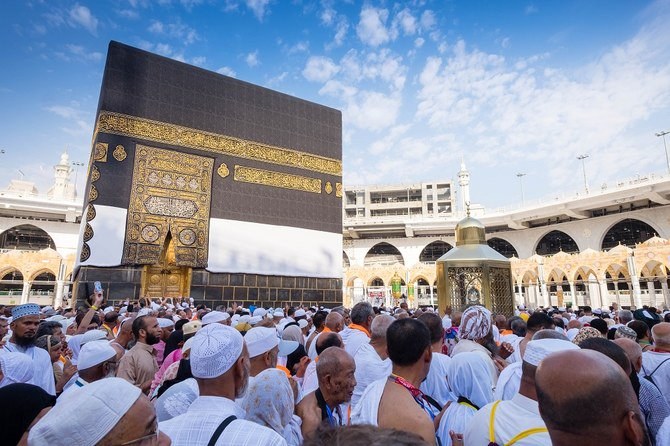
- The service started with hundreds of tweets accompanied by the Arabic hashtag #Your_Hajj_in_your_Own_Language
- The Arafat Sermon app also offers live translation of the sermon in Urdu
Pakistan’s president defends ongoing strikes in Afghanistan, urges Kabul to dismantle militants
- Afghanistan on Thursday launched attacks in retaliation for Pakistani airstrikes the previous Sunday
- Pakistan’s military says it is only targeting Afghan military installations to avoid civilian casualties
ISLAMABAD: Pakistan’s president on Monday defended his country’s ongoing military strikes in neighboring Afghanistan, saying Islamabad tried all forms of diplomacy before targeting militants operating from Afghan territory, and called on the Taliban government in Kabul to disarm groups responsible for attacks in Pakistan.
Pakistan earlier said it is in “open war” with Afghanistan, alarming the international community. The border area remains a stronghold for militant organizations including Al-Qaeda and the Daesh (Islamic State) group.
“(The Afghan Taliban) must choose to dismantle the terror groups that survive on conflict and its war economy,” Asif Ali Zardari said during a speech to lawmakers, adding that “no state accepts serial attacks on its soil.”
Afghanistan on Thursday launched attacks in retaliation for Pakistani airstrikes the previous Sunday. Since then, Pakistan has carried out operations along the border, with Information Minister Attaullah Tarar claiming the killing of 435 Afghan forces and the capture of 31 Afghan positions.
Kabul has denied such claims.
In Afghanistan, the deputy government spokesman Hamdullah Fitrat said Pakistan’s military fired mortar shells at a refugee camp in eastern Kunar province, killing three children and injuring three others.
Afghanistan’s defense ministry said Afghan forces carried out strikes targeting a Pakistani military facility near Paktia province, causing “substantial losses and heavy casualties.”
Pakistan’s military did not respond to questions. It has said Pakistan is only targeting Afghan military installations to avoid civilian casualties.
Pakistan has witnessed a surge of violence in recent months and blames it on the outlawed Pakistani Taliban, known as Tehreek-e-Taliban Pakistan or TTP. It operates both inside Pakistan and from Afghan territory.
Islamabad accuses Afghanistan’s Taliban government of providing safe havens for the TTP, which Kabul denies.
The latest cross-border fighting ended a ceasefire brokered by Qatar and Turkiye in October. The two sides failed to reach a permanent agreement during talks in Istanbul.
Zardari reiterated Pakistan’s call for talks, saying, “We have never walked away from dialogue.”
The Pakistani leader again accused Afghanistan of acting as a proxy for India by sheltering militant groups.
“Stop being used by another country as a battlefield for their ambitions,” he said.
Zardari cited a recent report from the United Nations Security Council’s monitoring team that described the presence of militant groups in Afghanistan as an extra-regional threat.


