BBC apologizes after documentary host Stacey Dooley describes Muslim gesture as ‘Daesh salute’

1 / 3
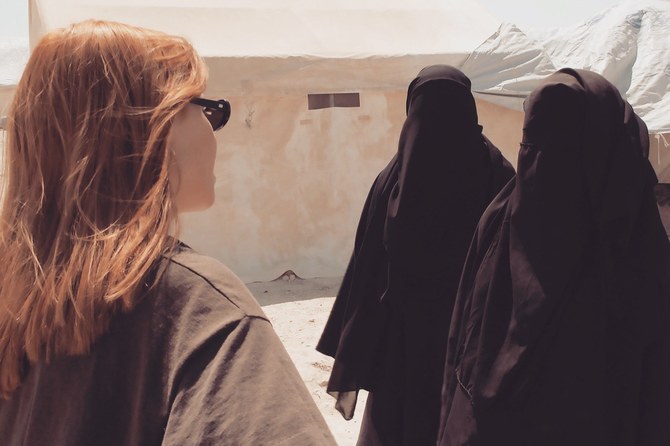
The documentary featured Stacey Dooley visiting Daesh camps in northern Syria. (Twitter/Stacey Dooley)
2 / 3
The gesture symbolizes Tawheed. (File/Shutterstock)
3 / 3
Daesh members usually make this hand gesture. (File/Shutterstock)
Updated 07 August 2019
Follow

BBC apologizes after documentary host Stacey Dooley describes Muslim gesture as ‘Daesh salute’

  • Dooley inaccurately described the gestures of the women raising their fingers in the air as a Daesh salute
  • The Panorama documentary featured Dooley visiting Kurdish controlled camps in northern Syria

DUBAI: British broadcaster the BBC has apologized after a documentary hosted by popular presenter Stacey Dooley referred to a Muslim gesture as a Daesh salute.

In the clip, which has already been removed from the final version of the episode of the current affairs series “Panorama” which aired on Monday, Dooley inaccurately described the gestures of the women raising their fingers in the air as a Daesh salute.

Dooley, 32, has risen to fame on British TV over the last decade, presenting social-issue themed television documentaries

The UK-based organization Tell MAMA (Measuring Anti-Muslim Attacks), which documents anti-Muslim attacks in the country, immediately called out the error on Twitter, explaining what the gesture meant.

“Tawhid (Tawheed) is the defining doctrine of Islam, demonstrating the oneness of Allah (God). To reduce such a fundamental and important concept to a mere “IS salute” is grossly wrong, ignorant, and damaging,” Tell MAMA wrote on Monday.

BBC has carried out a further edit of the documentary, removing the scene and apologized for the mistake.

“We wrongly described a gesture made by women filmed in a Kurdish controlled detention camp in northern Syria as an IS salute,” a BBC spokesman said.

“We apologize for this error and have removed this description from the footage,” he added.

The Panorama show featured Dooley visiting Kurdish controlled camps in northern Syria, and speaking to women who left their own countries to join Daesh.


To infinity and beyond: Grendizer’s 50 years of inspiring Arabs

Updated 27 December 2025
Follow

To infinity and beyond: Grendizer’s 50 years of inspiring Arabs

  • ⁠ ⁠50 years after its creation, the Grendizer anime series continues to capture Arab imagination
  • ⁠ ⁠⁠Arab News Japan speaks to creator Go Nagai, Middle Eastern fans and retells the story behind the UFO Robot tasked with protecting our planet

LONDON: Few cultural imports have crossed borders as unexpectedly, or as powerfully, as Grendizer, the Japanese giant robot that half a century ago became a childhood hero across the Arab world, nowhere more so than in Saudi Arabia.

Created in Japan in the mid-1970s by manga artist Go Nagai, Grendizer was part of the “mecha” tradition of giant robots. The genre was shaped by Japan’s experience during the Second World War, and explored themes of invasion, resistance and loss through the medium of science fiction.

But while the series enjoyed moderate success in Japan, its true legacy was established thousands of kilometers away in the Middle East.

By the early 1980s, “Grendizer” had spread across the Middle East, inspiring fandoms in Saudi Arabia, Kuwait, Iraq and beyond. (Supplied)

The anime “UFO Robot Grendizer” arrived on television in the region in 1979, dubbed into Arabic and initially broadcast in Lebanon during the Lebanese civil war. The story it told of the heroic Duke Fleed, a displaced prince whose planet had been destroyed by alien invaders, struck a chord with children growing up amid regional conflict and occupation by Israel.

Its themes of defending one’s homeland, standing up to aggression and protecting the innocent were painfully relevant in the region, transforming the series from mere entertainment into a kind of emotional refuge.

Much of the show’s impact came from its successful Arabization. The powerful Arabic dubbing and emotionally charged voice-acting, especially by Lebanese actor Jihad El-Atrash as Duke Fleed, lent the show a moral gravity unmatched by other cartoons of the era.

While the series enjoyed moderate success in Japan, its true legacy was established thousands of kilometers away in the Middle East. (Supplied)

The theme song for the series, performed by Sami Clark, became an anthem that the Lebanese singer continued to perform at concerts and festivals right up until his death in 2022.

By the early 1980s, “Grendizer” had spread across the Middle East, inspiring fandoms in Saudi Arabia, Kuwait, Iraq and beyond. For many, it was not only their first exposure to anime, it also delivered lessons on values such as justice and honor.

Grendizer was so influential in the region that it became the subject of scholarly research, which in addition to recognizing the ways in which the plight of the show’s characters resonated with the audience in the Middle East, also linked the show’s popularity to generational memories of displacement, particularly the Palestinian Nakba.

By the early 1980s, “Grendizer” had spread across the Middle East, inspiring fandoms in Saudi Arabia, Kuwait, Iraq and beyond. (Supplied)

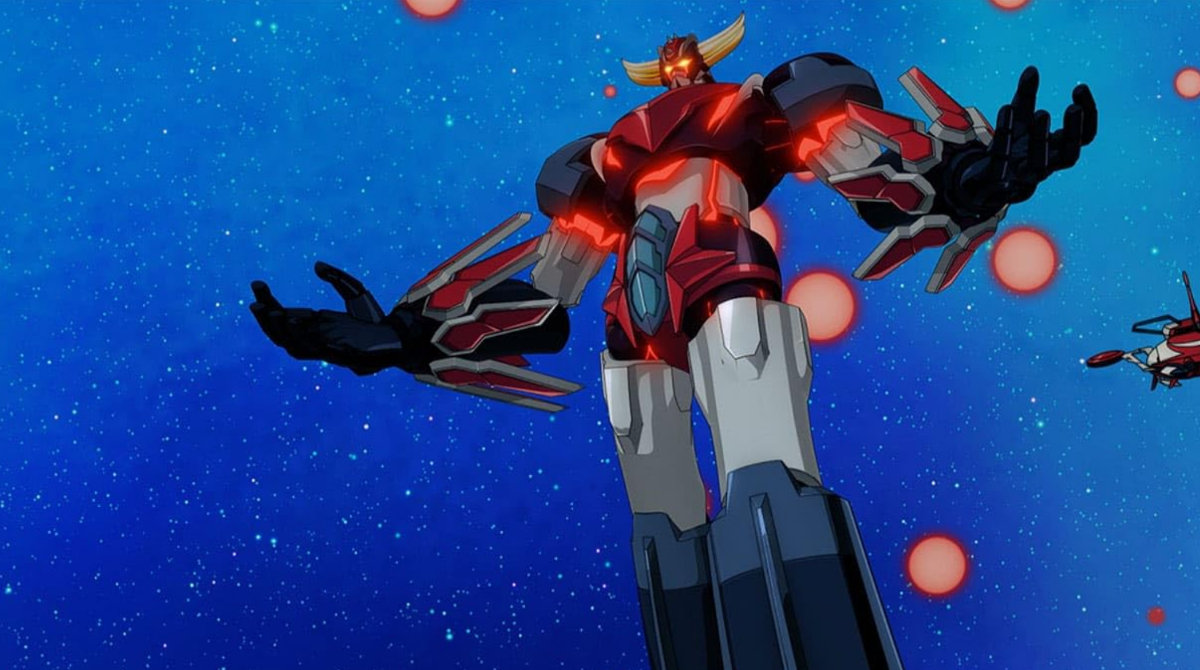
Half a century later, “Grendizer” remains culturally alive and relevant in the region. In Saudi Arabia, which embraced the original version of the show wholeheartedly, Manga Productions is now introducing a new generation of fans to a modernized version of the character, through a video game, The Feast of The Wolves, which is available in Arabic and eight other languages on platforms including PlayStation, Xbox and Nintendo Switch, and a new Arabic-language anime series, “Grendizer U,” which was broadcast last year.

Fifty years after the debut of the show, “Grendizer” is back — although to a generation of fans of the original series, their shelves still full of merchandise and memorabilia, it never really went away.


Grendizer at 50
The anime that conquered Arab hearts and minds
Enter
keywords