Advanced railways keep Hajj pilgrims on track

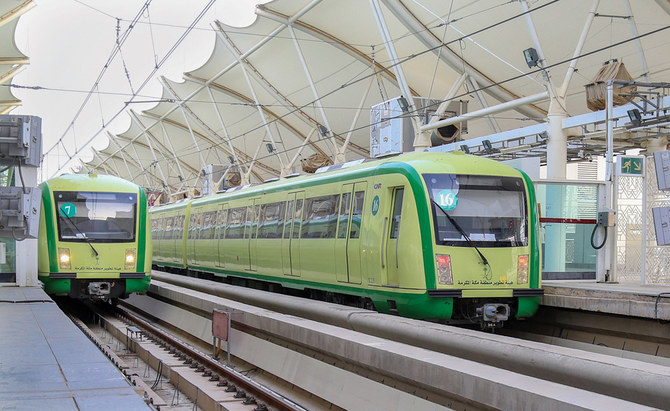
The project includes nine overground stations, each with a 300-meter-long platform that can be accessed via specific routes to the waiting areas under the stations. (Supplied photo)
Updated 06 August 2019
Follow

Advanced railways keep Hajj pilgrims on track

  • The railway is offering a safer and more comfortable pilgrimage with less congestion

RIYADH: The Al-Mashaaer Al-Mugaddassah Metro Project (MMMP), a shuttle train service that operates during the Hajj season in Makkah, introduced a new means of transport for pilgrims, easing traffic bottlenecks by reducing congestion.

The project includes nine overground stations, each with a 300-meter-long platform that can be accessed via specific routes to the waiting areas under the stations, each of which can accommodate more than 3,000 people.

According to the Makkah Region Development Authority, the shuttle train will transport more than 360,000 pilgrims during this year’s Hajj season. 

The MMMP South Line links the southeast of Arafat and southwest of Mina through Muzdalifah. The trains pass through three stations in Arafat, Muzdalifah and Mina. The track stretches over roughly 20 km, and the driverless trains run at speeds of 80-120 km per hour (kph).
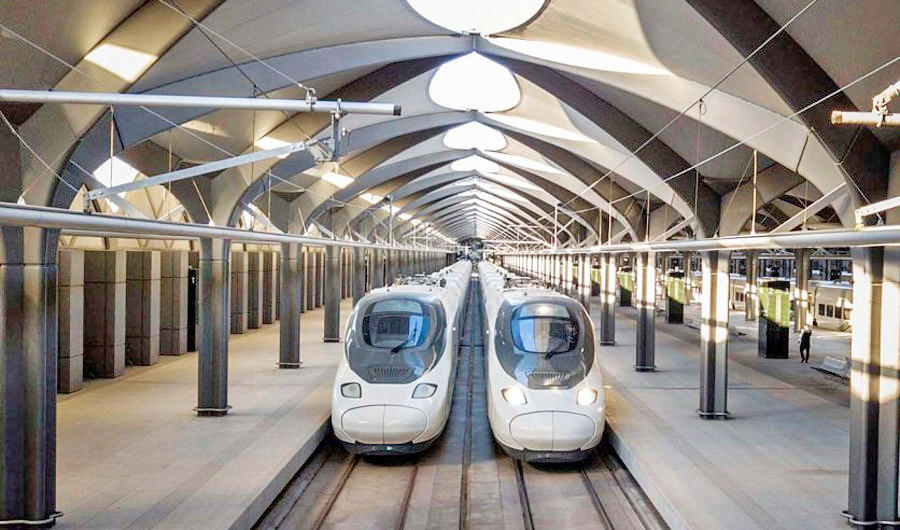


The trains are equipped with the latest technology to ensure comfort and safety. (Supplied photo)

Peak season

The metro line, which only operates for the Hajj season in Makkah — and has the highest capacity of any metro in the world — is used as an exclusive shuttle train for pilgrims between Makkah, Mount Arafat, Muzdalifah and Mina. 

It helps immensely in reducing traffic bottlenecks caused by thousands of buses and cars during the peak season.

The trains, which can travel up to 300 kph, are equipped with the latest technology to ensure comfort and safety.

The trains can cross between Arafat and Mina in 13 minutes, and between Arafat and Muzdalifah in seven.

Hajj, which is the largest annual gathering of people in the world, attracts pilgrims from across the world. The railway has replaced around 50,000 buses, promising a safer and more comfortable pilgrimage with less congestion.

The Hajj Affairs and Transport Department said it is committed to using the best urban planning and smart technology to ensure that the pilgrimage is safe and comfortable.

FAST FACTS

  • The Al-Haramain high-speed railway covers 450 km, linking stations in Makkah, Jeddah, King Abdul Aziz International Airport, King Abdullah Economic City in Rabigh, and Madinah.
  • The railway takes 21 minutes between Makkah and Jeddah, 14 minutes between Jeddah and King Abdul Aziz International Airport, and 36 minutes between King Abdullah Airport and King Abdullah Economic City.
  • The company trains Saudis in Hajj security services, and recruits Saudis who speak languages other than Arabic, providing them with intensive training to help pilgrims from around the world.

The Al-Haramain high-speed railway, which is part of the MMMP, opened to the public in October 2018, whisking travelers between the holy cities of Makkah and Madinah through Jeddah and King Abdullah Economic City (KAEC) in Rabigh.

Speaking during the opening, Rumaih Al-Rumaih, chairman of the Public Transport Authority, said: “It is a moment that marks a historical national turning point in the Kingdom’s modern transportation.”

Sharing his experience of traveling on the Al-Haramain Railway, Mohammed Marghalani, a hotel manager in Riyadh, told Arab News: “It was a great experience, and I’d love to do it again. It’s faster than the car, thus saving time. I traveled between Jeddah to Madinah, which took two-and-a-half hours. If you use a car, it will take double the time.”

The railway system hires Saudi youths during the holy season, with opportunities for them to work as security guards and administrators.

The authorities use a specialized security company to organize the boarding of pilgrims onto the trains during Hajj.

The company trains Saudis in Hajj security services, and recruits Saudis who speak languages other than Arabic, providing them with intensive training to help pilgrims from around the world.

“It’s very clean. The staff working on the train and in stations are friendly and cooperative, displaying an excellent sense of hospitality and high standard of hygiene, with very clean toilets,” said Marghalani.

To prevent overcrowding, station areas are restricted so that undocumented or ticketless pilgrims cannot enter.
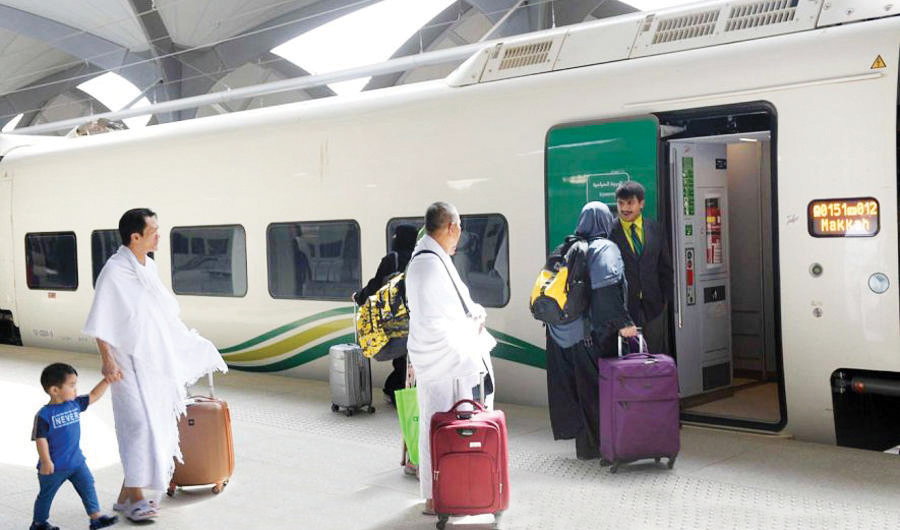


To prevent overcrowding, station areas are restricted so that undocumented or ticketless pilgrims cannot enter. (Supplied photo)

Vision 2030 

The Al-Haramain Railway project is in line with the objectives of Vision 2030 reform plan, as it should help increase the number of visitors to the Kingdom’s holy places. Zafar Hasan, who traveled recently from Makkah to Madinah using the railway, described it as a “very helpful transport initiative.”

Hasan told Arab News: “I am very impressed with the high standards of transportation between the two holy cities of Makkah and Madinah.”

“Tickets can be booked easily online. I bought an economy-class ticket to travel with my family and had a great trip. It was very quiet, safe and fast. The train was exactly on time and we had a very smooth ride.”

He said the ticket price is relatively high, but in view of the safety, high speed and luxury travel, it is a good method of transport between the two holy cities for Hajj, Umrah and Ziyarah.

Tickets for the Al-Haramain Railway can be purchased online (www.hhr.sa), as well as over the phone (920004433) or direct from ticket offices between 8 a.m. and 9 p.m.


Smart nutrition for a winter Ramadan

Updated 9 sec ago
Follow

Smart nutrition for a winter Ramadan

  • Experts share practical tips on protein timing, hydration and balanced meals

RIYADH: As Ramadan falls during winter this year, thoughtful preparation and planning is needed for a range of health and nutritional challenges.

Nutrition and fitness specialists emphasize that gradual pre-Ramadan adjustments and the selection of digestion-friendly foods are essential for a comfortable fasting experience, particularly for individuals with irritable bowel syndrome and other conditions.

Tailored strategies are especially important for athletes. Proper timing of protein intake, sufficient calories, and well-structured meals and supplements are critical to prevent muscle loss and fatigue amid a short eating window and colder weather.

Amal Althayed, a clinical dietitian specialist, highlights the importance of “smart gradual preparation” before Ramadan to avoid digestive shock, especially for those with IBS.

She recommends starting one to 10 days before Ramadan by gradually delaying the evening meal and reducing daytime portions. This approach helps align the body’s biological clock and digestive system.

At the onset of fasting, Althayed suggests prioritizing digestion-friendly foods. Iftar should start with warm liquids, such as bone broth, accompanied by simple carbohydrates and light proteins. Fried foods and heavy legumes should be avoided initially.

She also stresses the importance of a balanced sahoor, focusing on protein and soluble fiber — such as boiled eggs with whole wheat bread — while minimizing simple sugars and refined carbohydrates.

Heavy evening stimulants such strong coffee, chocolate, and high-sugar foods can irritate the digestive system and worsen symptoms, particularly for individuals with IBS, Althayed warns.

The key to navigating nutritional challenges during Ramadan — whether related to digestion or cravings for sweets — lies in mindful food choices, dietary balance, and listening to the body. Consulting a dietitian to create a personalized plan is strongly advised, she says.

Khaled Alhasher, CEO of Next Stage, a company specializing in dietary supplements, told Arab News that the main nutritional challenge during winter fasting is not dehydration, as commonly believed, but insufficient calorie and protein intake due to a short eating window and early satiety.

Alhasher recommends starting iftar with fast-digesting protein, taking supplements such as creatine before exercise, having a post-workout protein and carbohydrate meal, and ending the day with slow-digesting casein protein before bedtime.

Exercise immediately before iftar should be limited to light or moderate intensity. The body should be fueled with carbohydrates and protein at sahoor, while strong stimulants or Branched-Chain Amino Acid supplements should be avoided during fasting, he cautions.

Despite reduced thirst in winter, fluid and electrolyte replenishment remains essential. Sipping water during non-fasting hours and consuming electrolyte drinks after exercise helps maintain hydration.

Preventing muscle breakdown depends on consuming adequate protein —1.6 to 2.2 grams per k of body weight — taking casein before sleep, maintaining regular training, and using creatine, Alhasher says.

He also recommends supplements that are particularly important in winter — vitamin D, magnesium, zinc, and omega-3 — for their role in addressing deficiencies, supporting immunity, and aiding recovery.

The most common mistake is relying on supplements to compensate for a poor diet. Alhasher said: “Supplements complement; they don’t replace. Prioritize adequate calories, sufficient protein, and quality sleep first.”

Mahmoud Shaheen, head chef at Spread in Riyadh, says Ramadan offers an ideal opportunity to reset dietary habits in a healthy and balanced way while preserving the spirit of the traditional table.

Moderation and ingredient quality are essential for comfortable and harmonious fasting. Shaheen explains that iftar should start gradually, with warm fluids such as water or herbal tea and a moderate amount of dates.

Main dishes can be both healthy and indulgent by using methods such as grilling or slow cooking, paired with high-quality proteins including chicken or lean meats, and accompanied by vegetables, brown rice, or whole grains.

For desserts, Shaheen recommends lighter, balanced options, such as grilled fruits with yogurt or low-sugar pudding. Portion control is key to enjoying them without overloading the digestive system.

He also notes the benefits of mild winter spices, such as cardamom, cinnamon, and cumin, to enhance flavor without straining the body, while reducing hot spices and excessive sodium.

“Ramadan is not a season of excess, but a time for balance,” he said.