WEEKLY ENERGY RECAP: China highlights demand strength

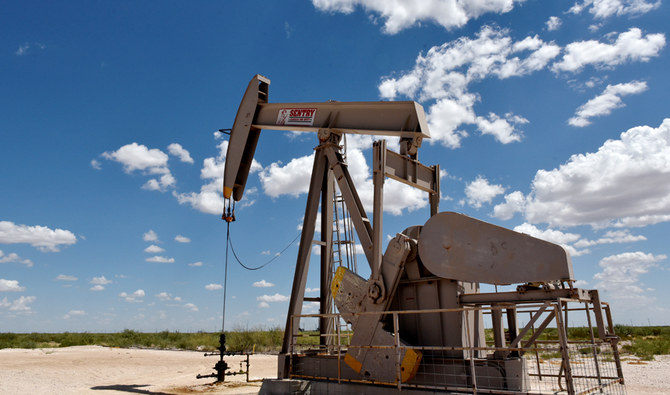
Oil has been under pressure from concerns over global economic growth amid ongoing US-China trade tensions. (Reuters)
Updated 03 August 2019
Follow

WEEKLY ENERGY RECAP: China highlights demand strength

  • Upcoming September crude oil trading was completed without a single unsold Gulf crude cargo

An eventful week ended with downward momentum for oil prices. Brent crude fell to $61.89 and WTI dropped to $55.66 per barrel.

Oil has been under pressure from concerns over global economic growth amid ongoing US-China trade tensions.

However, crude remains healthy, reflected by growing demand from refineries in Asia, where new refining capacity is coming online. 

Exports from the Arabian Gulf to Asian refiners are growing — a key barometer for the overall health of the global crude market.

Though crude oil trading activity in the Gulf region have been threatened amid political turmoil in the Strait of Hormuz, there has been no change in Asian refiner plans from the area.

Upcoming September crude oil trading was completed without a single unsold single cargo for sour crude from the Arabian Gulf.

Gulf sour crude grades have further strengthened on bullish fuel demand amid tighter supply for high sulfur fuel oil and bunker fuels. That has resulted in medium sour crude spreads pushing upwards.

The strength of underlying demand in the market was highlighted by China’s record crude oil imports from Saudi Arabia in July.

OPEC crude oil production fell to an 8-year low, just 29.42 million barrels-per-day (bpd) in July, down 280,000 bpd from June. Voluntary output cuts from Saudi Arabia and steep losses from Iran contributed to this historically low figure.

Libyan crude oil production fell below 1 million bpd to just 950,000  after the Sharara oil field, the largest in the country, went offline for the second time in as many weeks.

There was a huge decline in US crude oil stockpiles for the seventh week in a row. The EIA reported that US crude inventories declined by nearly 49 million barrels in the last seven weeks. It is the longest retreat since the winter of 2017/18 when they fell for a record 10 consecutive weeks. 

Stockpiles of gasoline and distillate fuels also shrank, which should ease concerns about slowing consumption, as strong summer demand in the US continued to drain stockpiles. The EIA report showed total US inventories were at their lowest level since late May.


PIF’s Humain invests $3bn in Elon Musk’s xAI prior to SpaceX acquisition

Updated 18 February 2026
Follow

PIF’s Humain invests $3bn in Elon Musk’s xAI prior to SpaceX acquisition

JEDDAH: Humain, an artificial intelligence company owned by Saudi Arabia’s Public Investment Fund, invested $3 billion in Elon Musk’s xAI shortly before the startup was acquired by SpaceX.

As part of xAI’s Series E round, Humain acquired a significant minority stake in the company, which was subsequently converted into shares of SpaceX, according to a press release.

The transaction reflects PIF’s broader push to position Saudi Arabia as a central hub in the global AI ecosystem, as part of its Vision 2030 diversification strategy.

Through Humain, the fund is seeking to combine capital deployment with infrastructure buildout, partnerships with leading technology firms, and domestic capacity development to reduce reliance on oil revenues and expand into advanced industries.

The $3 billion commitment offers potential for long-term capital gains while reinforcing the company’s role as a strategic, scaled investor in transformative technologies.

CEO Tareq Amin said: “This investment reflects Humain’s conviction in transformational AI and our ability to deploy meaningful capital behind exceptional opportunities where long-term vision, technical excellence, and execution converge, xAI’s trajectory, further strengthened by its acquisition by SpaceX, one of the largest technology mergers on record, represents the kind of high-impact platform we seek to support with significant capital.” 

The deal builds on a large-scale collaboration announced in November at the US-Saudi Investment Forum, where Humain and xAI committed to developing over 500 megawatts of next-generation AI data center and computing infrastructure, alongside deploying xAI’s “Grok” models in the Kingdom.

In a post on his X handle, Amin said: “I’m proud to share that Humain has invested $3 billion into xAI’s Series E round, just prior to its historic acquisition by SpaceX. Through this transaction, Humain became a significant minority shareholder in xAI.”

He added: “The investment builds on our previously announced 500MW AI infrastructure partnership with xAI in Saudi Arabia, reinforcing Humain’s role as both a strategic development partner and a scaled global investor in frontier AI.”

He noted that xAI’s trajectory, further strengthened by SpaceX’s acquisition, exemplifies the high-impact platforms Humain aims to support through strategic investments.

Earlier in February, SpaceX completed the acquisition of xAI, reflecting Elon Musk’s strategy to integrate AI with space exploration.

The combined entity, valued at $1.25 trillion, aims to build a vertically integrated innovation ecosystem spanning AI, space launch technology, and satellite internet, as well as direct-to-device communications and real-time information platforms, according to Bloomberg.

Humain, founded in August, consolidates Saudi Arabia’s AI initiatives under a single entity. From the outset, its vision has extended beyond domestic markets, participating across the global AI value chain from infrastructure to applications.

The company represents a strategic initiative by PIF to diversify the Kingdom’s economy and reduce oil dependence by investing in knowledge-based and advanced technologies.