

Iraq says ex-governor embezzled $10m in aid for displaced

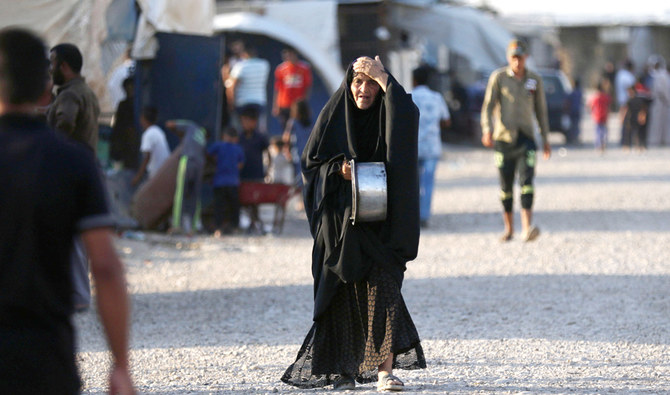
A displaced Iraqi woman walks at Al-Khazir camp for the internally displaced, located between Irbil and Mosul, on July 30, 2019. (AFP)
Updated 30 July 2019
Follow

Iraq says ex-governor embezzled $10m in aid for displaced

  • Many of the province’s inhabitants are still displaced as public services have not been fully reestablished

BAGHDAD: Around $10 million in aid for the displaced in northern Iraq’s Nineveh province, where the Daesh group was based, has been embezzled by its fugitive ex-governor, the country’s anti-corruption commission said Tuesday.

A spokesperson for the Integrity Commission told AFP that its investigators had uncovered “invoices from developers in Iraqi Kurdistan.”

But, he added, “no receipt was found” for these debited sums, which were meant for the rehabilitation of two hospitals in the northern metropolis of Mosul, capital of Nineveh.

Many of the province’s inhabitants are still displaced as public services have not been fully reestablished.

Currently, 1.6 million Iraqis are still crowded into camps for the displaced, of which 40 percent are originally from Nineveh, according to the International Organization for Migration (IOM).

A total of 11.3 billion Iraqi dinars ($9.4 million) had been allocated to the Provincial Council by the Ministry of Migration and Displaced, according to the commission.

“It has been debited and doesn’t appear in any provincial authorities’ bank accounts or in the Provincial Council funds,” he said.

“It was transferred to Kurdistan,” an autonomous region where the sacked governor of Nineveh, Nawfel Akoub, is thought to be in hiding, along with several other officials wanted by Baghdad.

He has been on the run since a ferry sank in Mosul on Mother’s Day in March, killing 150 people.

In April, the commission said that more than $60 million of public funds were diverted by officials close to Akoub from Nineveh’s budget of $800 million.

Graft is endemic across Iraq, which ranks among the world’s worst offenders in Transparency International’s annual Corruption Perceptions Index.

Since 2004, a year after the US-led invasion that ousted Saddam Hussein, almost $250 billion of public funds has vanished into the pockets of shady politicians and businessmen, according to parliament.


The art of war: fears for masterpieces on loan to Louvre Abu Dhabi

Updated 8 sec ago
Follow

The art of war: fears for masterpieces on loan to Louvre Abu Dhabi

  • UAE paid more than €1 billion to borrow priceless works, but experts in France want them back

PARIS: The Middle East war has raised fears for the safety of priceless masterpieces on loan from France to the Louvre Abu Dhabi, the museum’s only foreign branch.
The Abu Dhabi museum, which opened in 2017, has so far escaped damage from nearly 1,800 Iranian drone and missile strikes launched since the conflict erupted on Feb. 28.
However, concerns are mounting in France. “The works must be removed,” said Didier Selles, who helped broker the original agreement between France and the UAE.
French journal La Tribune de l’Art echoed that alarm. “The Louvre’s works in Abu Dhabi must be secured!” it said.
France’s culture ministry said French authorities were “in close and regular contact with the authorities of the UAE to ensure the protection of the works loaned by France.”
Under the agreement with the UAE, France agreed to provide expertise, lend works of art and organize exhibitions, in return for €1 billion, including €400 million for licensing the use of the Louvre name. The deal was extended in 2021 to 2047 for an additional €165 million.
Works on loan include paintings by Rembrandt and Chardin, Classical statues of Isis, Roman sarcophagi and Islamic masterpieces: such as the Pyxis of Al-Mughira.

A Louvre Abu Dhabi source said the museum was designed to protect collections from both security threats and natural disasters.