Highlights from the Dubai art exhibition ‘Made in Tashkeel 2019’

'Made in Tashkeel 2019'. (Supplied)
Updated 30 July 2019
Follow

Highlights from the Dubai art exhibition ‘Made in Tashkeel 2019’

Here are some selected works from Arab artists being shown in the Dubai art space’s annual exhibition. 

‘Come Fly With Me’

Badr Abbas

The self-taught Emirati artist uses much of his Cubist-style work to explore his country’s heritage. Of this piece, he writes, “We are inheriting a culture of eating in the UAE that is bypassing our traditional recipes and laying on some serious calories. Even in-flight, the menu options are deliciously varied … Indulgence has become more accessible than ever before.” The “Food for Thought” series, Abbas says, is “a satirical representation of modern culture.”

‘Relations’

Ibraheem Khamayseh
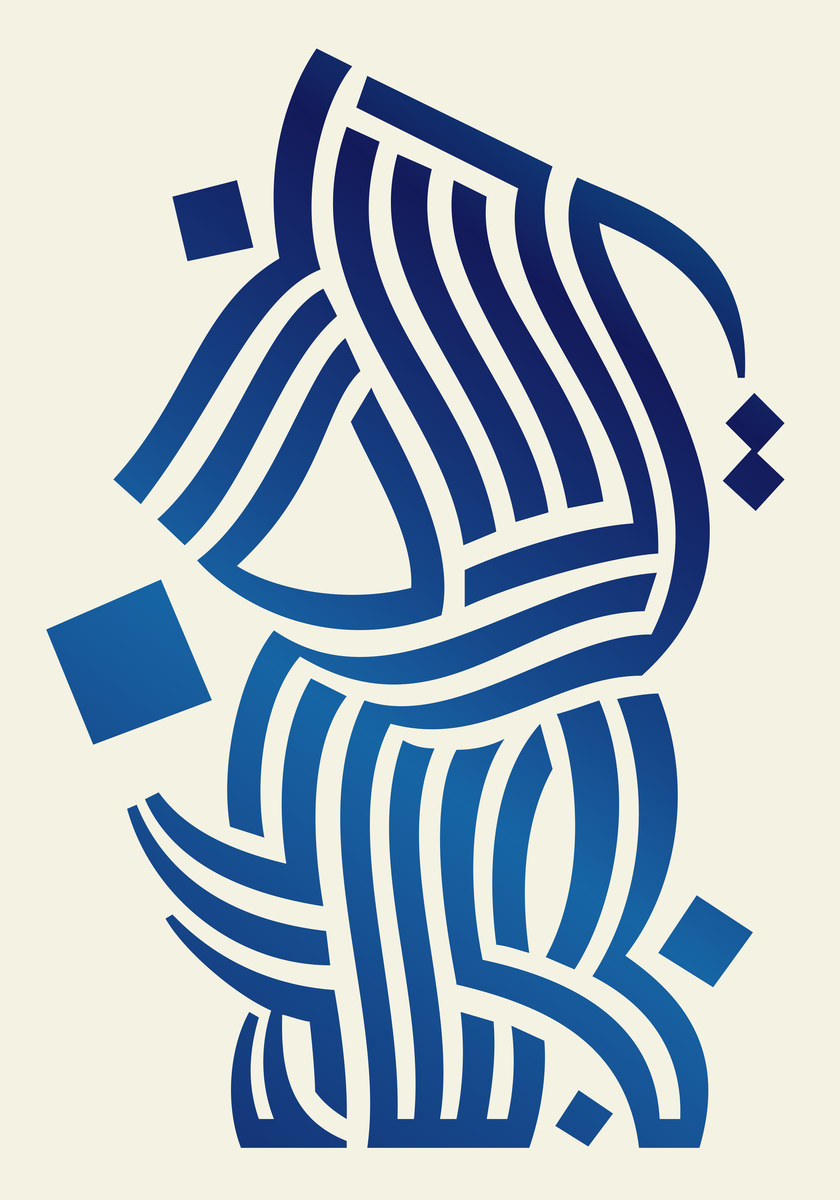
Khamayseh, who was born in Riyadh, and whose father is a calligrapher, contributes this piece, which he describes as “an experiment in letterforms.” He built it up from a collection of “daily sketches, experimental studies and graphic elements” and says that it is an attempt to break the rules of lettering by looking at the letters “as shapes and forms, rather than their functionality.”

‘State of Mind: The Struggle To Create’

Ichraq Bouzidi

The Dubai-based Moroccan artist is described by Tashkeel as “an admirer of both surrealism and minimalism” whose work “taps into the duality between real and surreal in a theatrical but minimalist way.” This mixed-media triptych, she says, represents “the struggle to create, the first phase in the process of shaping an artistic work — often inevitable, always consuming.”

‘Abandoned Places’

Jassim Al-Awadhi

One of the UAE’s premier photographers, Al-Awadhi has worked in the crime-scene field for over 20 years, which has had a significant influence on his photography, which, Tashkeel says, combines “documentation and nature, adopting an integrated approach of science and philosophy.” His “Abandoned Places” series, Al-Awadhi says, reveals locations where “silence has become the master, and repeated this scene every day without boredom.”

‘Entanglement’ 

Joanna Barakat
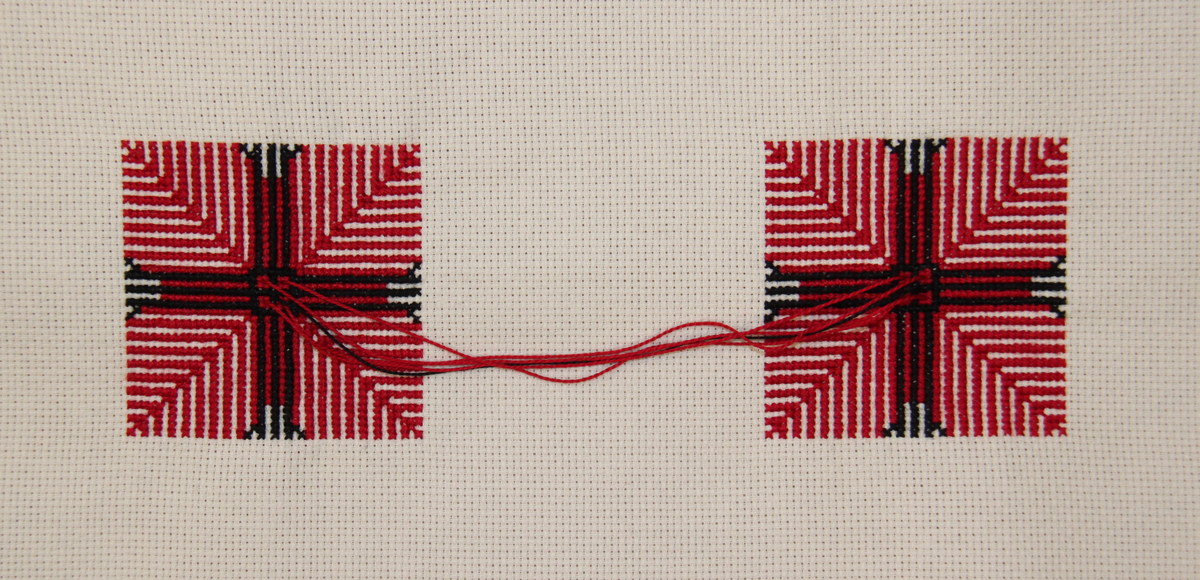
Barakat, a UAE-based Palestinian artist, uses painting, photography and tatreez (Palestinian embroidery) in her work “to question collective ideas and stereotypes using a reimagined Palestinian aesthetic.  In this work, two identical motifs are joined. The four squares in each motif “resemble the four chambers of the heart,” while their connection “removes the illusion of separateness.”

‘Sheep’

Khaled Al-Shaer
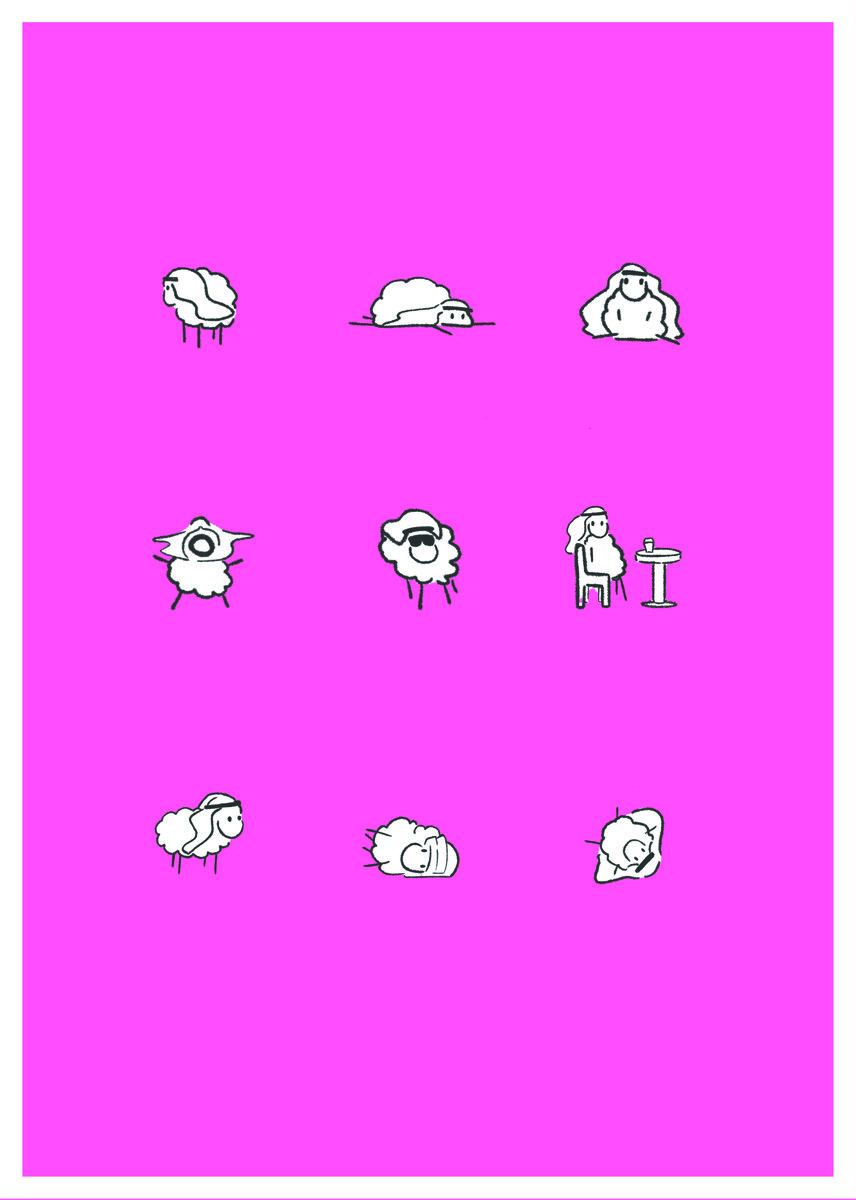
The young Emirati artist’s “Sheep” is a humorous look at “connotations that the Emirati community has used in identifying certain characteristics of individuals in the dating scene,” he says. Specifically, it’s a portrayal of men who continue to pursue women whom it’s clear have no interest in them. “He continuously follows her around as though called upon by a shepherd,” Al-Shaer says.

‘Temporary Memory’

Ruba Al-Araji

Al-Araji was born and raised in Baghdad, and is a trained architect whose artwork varies from realistic portraits to comic-book art. This piece, she says, depicts a “living station” with “cells that form to control the objects that we see around us,” as well as the effect that words play on our behavior, “changing the way we feel on a day-to-day basis.”


‘The Wild Within’ sees artists breathe new life into Mideast buildings

Updated 16 December 2025
Follow

‘The Wild Within’ sees artists breathe new life into Mideast buildings

DUBAI: Lens-based artist Ryan Koopmans and digital artist Alice Wexell are staging a showcase at Dubai’s Leila Heller Gallery that breathes new life into regional buildings.

The series of digital artworks is part of the exhibition “The Wild Within,” featuring images of old structures in Beirut, Istanbul, and Abu Dhabi filled with wild flowers.

Two of the largest works, “Heartbeats” and “The Wish,” are displayed using Ventana, a microLED architectural display surface created by visual technology company Megapixel.

'Around Us' by Ryan Koopmans and Alice Wexell. (Supplied) 

The former artwork depicts the entrance hall of Qasr Al-Watan, the UAE’s presidential palace in Abu Dhabi, while the latter reimagines the upper floors of the Emirates Palace Mandarin Oriental in Abu Dhabi.

“Each building we work with comes to us through a combination of research, travel, and intuition,” the artists told Arab News in a joint statement.

'Constellations' by Ryan Koopmans and Alice Wexell. (Supplied) 

“We are drawn to structures that carry both emotional and historical resonance, often buildings that once embodied human ambition and now exist in a state of quiet transformation.”

Koopans and Wexell made sure to research the context of each building they choose to recreate, saying “an old villa in Jeddah or a former school in Sharjah each hold their own cultural memory, influencing everything from the lighting and atmosphere to the plants and flowers that we digitally sculpt and implement into the photographs.”

'Heart of Sharjah' by Ryan Koopmans and Alice Wexell. (Supplied) 

The hypnotic works depict the interior of buildings in the region, with digitally rendered flowers carpeting the floor in a bid to “(reimage) these spaces (and) explore the relationship between nature, place, and time, while celebrating each site as a unique work of architecture with its own spirit and story,” the artists said.

Koopmans is of dual Canadian and Dutch heritage, while Wexell is Swedish and based in Stockholm, so it is noteworthy that both artists chose to explore the Middle East for their latest project.

'Blossom of the Ancestors' by Ryan Koopmans and Alice Wexell. (Supplied) 

“In the Middle East especially, the architecture reflects a layered past that merges different styles and eras, while also expressing a sense of renewal and forward-looking energy, particularly in the region’s fantastic contemporary buildings. We are drawn to the symmetry, geometry and patterns that are found not only in nature itself, but in the architectural language of the region both past and present,” they said.

The series — featuring works such as “Adore You,” “Between Worlds,” and “Blossom of the Ancestors” — explores contrasts between the natural world and human-made forms, as well as the traditional and contemporary worlds.

“We are interested in how these elements coexist and merge into one another, creating a sense of hyperrealism that feels both familiar and imaginary. By merging photography with digital sculpture, the artworks question where the boundary lies between documentation and invention, and how technology can extend rather than replace our sense of the natural world.”

'Under the Rain of Light' by Ryan Koopmans and Alice Wexell. (Supplied) 

Although the scale of the artworks ensures they leave the viewer entranced, it did pose challenges, according to the artists.

“Presented at a large scale, every texture in these artworks becomes visible, which can be demanding but is also incredibly rewarding. The magnified detail allows the visceral and atmospheric layers of the pieces to come through with greater impact,” they said, adding that each piece took “many months” to create.

“Ultimately, we want our collectors to experience a sense of wonder and contemplation, as if they are standing inside a dream that feels both entirely real yet unreal.”

The exhibition runs until Jan. 15, 2026.