

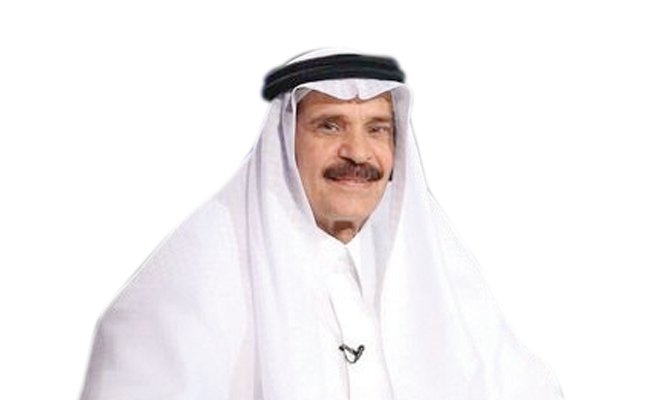
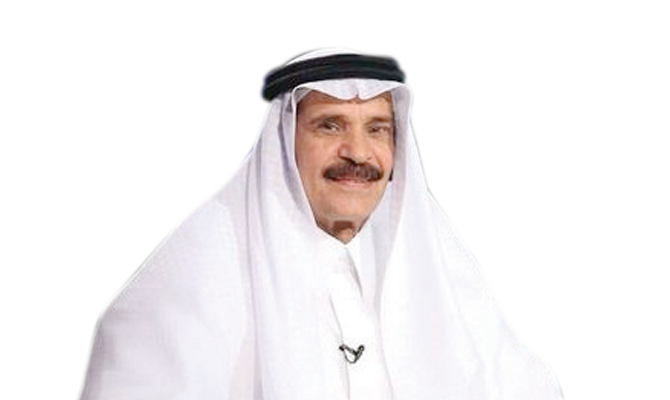
Khalid bin Hamed Al-Malik, chairman of the Saudi Journalists Association

Khalid bin Hamed Al-Malik
Updated 29 July 2019
Follow

Khalid bin Hamed Al-Malik, chairman of the Saudi Journalists Association

Khalid bin Hamed Al-Malik has been the chairman of the board of directors of the Saudi Journalists Association since 2016. Prior to that, he served as vice chairman from 2004.

He is also the editor-in-chief of Al-Jazirah newspaper, and was elected president of the Gulf Press Union in 2017.

Previously, Al-Malik worked in many governmental institutions such as the Ministry of Commerce and Industry and for the Saudi Board of Grievances.

His career in journalism took off as an editor for Al-Riyadh newspaper, Al-Yamamah magazine and  at Al-Jazirah, while he has written for most Saudi newspapers. 

He became the editor-in-chief of Al-Jazirah in 1972, and under his stewardship, it became a daily instead of a weekly. He served for 13 years before leaving, only to be appointed to the post again in 1999.

Al-Malik was the first Saudi newspaper editor to deliver a speech in Arabic at the World Newspaper Congress in South Africa in 2007.

Recently, the Saudi Journalists Association announced the first Saudi Media Forum under the title “Media Industry: Opportunities and Challenges,” and the launching of the Saudi Media Awards, to take place in conjunction with the forum by the end of November 2019.

The forum aims to provide the opportunity to discuss challenges facing the industry.

Al-Malik said the forum is set to become an annual event to cement Riyadh’s place as the Arab world’s media capital.


Saudi Arabia welcomes ceasefire agreement between Syrian Democratic Forces and Syria state

Updated 19 January 2026
Follow

Saudi Arabia welcomes ceasefire agreement between Syrian Democratic Forces and Syria state

RIYADH: Saudi Arabia has welcomed an agreement between the Syrian state and Syrian Democratic Forces.
In a foreign ministry statement early on Monday, the Kingdom said it had welcomed an deal between Damascus and Kurdish Syrian Democratic Forces that was announced by the Syrian government on Sunday.
The agreement entails merging all SDF forces into the defense and interior ministries and means that Kurdish forces will redeploy to east of the Euphrates river.
The 14-point deal would also see the immediate administrative and military handover of Deir Ezzor and Raqqa governorates.
The Syrian state would regain control of all border crossings, oil fields, and gas fields in the region, with protection secured by regular forces to ensure the return of resources to the Syrian government, while considering the special case of Kurdish areas, the state news agency SANA reported.
The ceasefire comes after intense fighting between the SDF and government troops in Aleppo. But SDF troops have now pulled back from there and the Syrian army now controls most areas east of Aleppo.
The Saudi foreign ministry statement also thanked the US for the agreement. Washington is believed to have supported brokering the ceasefire between allies SDF and the Syrian government, who they have also backed diplomatically since the fall of long-time dictator Bashar Assad.
The Syrian state announced on Friday a raft of new directives to recognize Syrian Kurds, including making their language official and bolstering other rights for the minority group.