


Islamabad: In Multan, you can smell them long before you see them.
The historic city in Pakistan’s eastern Punjab province, known for its shrines, saints and bazaars, is also home to hundreds of mango farms that spread over a vast area equal to 56,000 football fields.
The finest mangoes grow in a cluster that covers 350 km from industrial Rahim Yar Khan, south of Multan, to Khanewal, along with the belts of the Chenab River.
From there, as the aroma of the flavourful yellow fruit lingers in the hot air, the famed mangoes, called ‘aam’ in Pakistan, make their way to supermarkets around the world.
But despite producing some of the finest mangoes in the world, Pakistan’s mango export makes up only 5.8 percent of its total mango production. Over 250 varieties, each with its own distinct taste, are grown in Pakistan but just twelve are exported.
This is about to change.
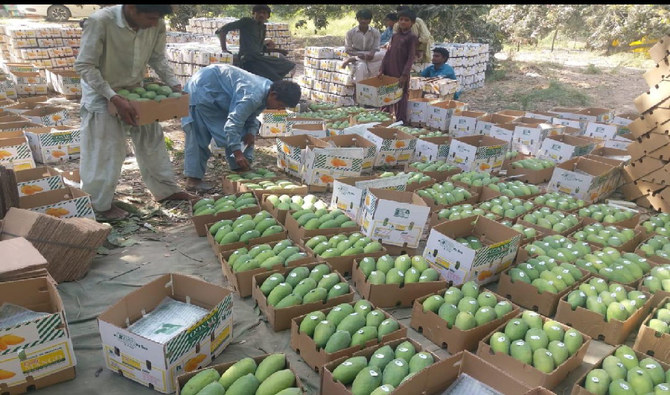
In this undated photo, workers select and categorize mangoes in Multan. (Photo by Rajput Orchard)
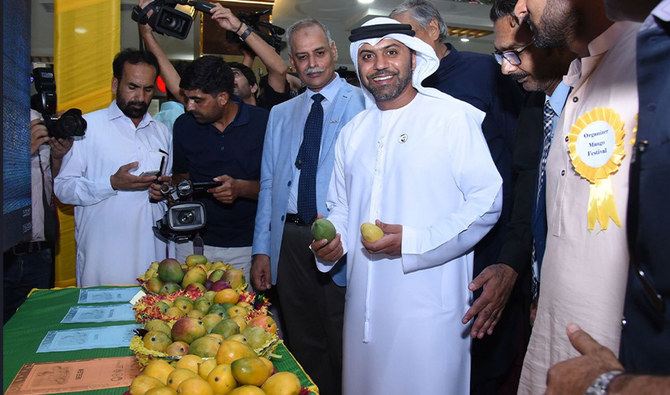
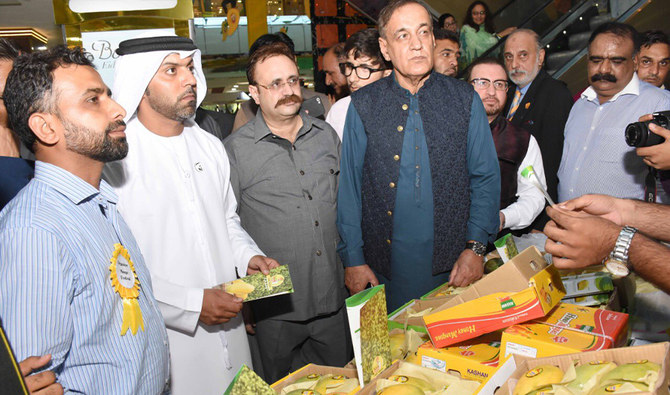
Waheed Ahmed, patron-in-chief of the All-Pakistan Fruit and Vegetable Exporters, Importers and Merchants Association (PFVA), said Pakistan was eyeing a 22 percent increase in mango exports compared to last year with the help of promotional events like the mango festival held in the UAE earlier this month that attracted a large number of international buyers.
“This year, we expect to earn $80 million by exporting 100,000 tons (of mangoes), half of which have already been exported,” Ahmed told Arab News
From the end of May through September, Pakistan’s hottest months, the country produces roughly 1.7 million tons of mangoes every year and is the world’s sixth-largest exporter of the fruit. The mangoes make their way to over 50 countries, with the bulk shipped to Saudi Arabia and the UAE.
“Chaunsa (mango type) is a favorite in the Middle East because of its special flavour and aroma,” Adeeb Ahmed Rao, head of the Multan-based Rajput Orchard, which exports 20 tons of mangoes weekly to the Gulf region, told Arab News.
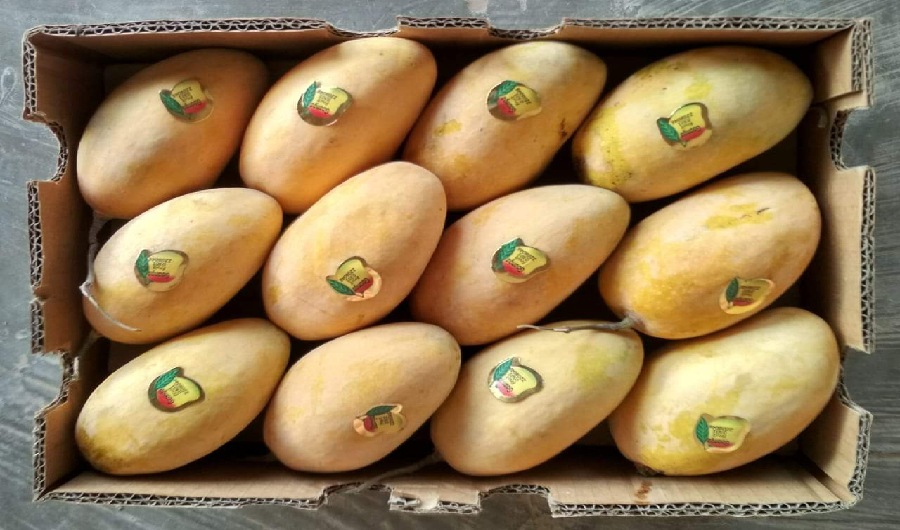
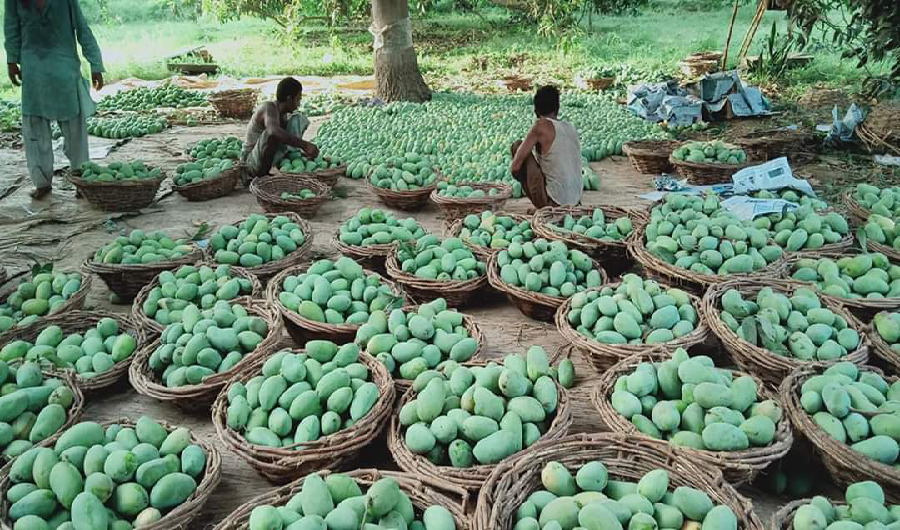
Pakistan’s export-quality mangoes, packed and ready for shipping. (Photo by Rajput Orchard)
“We send about 6 tons a week (each) to Jeddah, Dammam, and Madinah where our mangoes are awaited all year. People even say Pakistani mangoes taste better than India’s,” he said, with a hint of pride.
In Saudi Arabia, the per kg cost of mangoes is roughly Rs. 500, or $3.
Though 70 percent of all Pakistani mangoes come from Punjab, there are a significant number of farms in southern Sindh province as well, contributing to 25 percent of total production.
Humayun Durrani, a certified mango exporter from Sindh, owns 60 acres of mango farms in Badin district. Every week from May to July, his 25-year-old company, Durrani Farms, ships between 3,500 to 4,000 kg of Sindhri, Chaunsa and Dusehri mango varieties to Saudi Arabia and the UAE.
This year, however, Durrani is unhappy with the exports.
“April’s hailstorms and sudden extreme heat in May affected the quality of mangoes,” he told Arab News and added that his company was now considering new measures to cope with the effects of climate change.
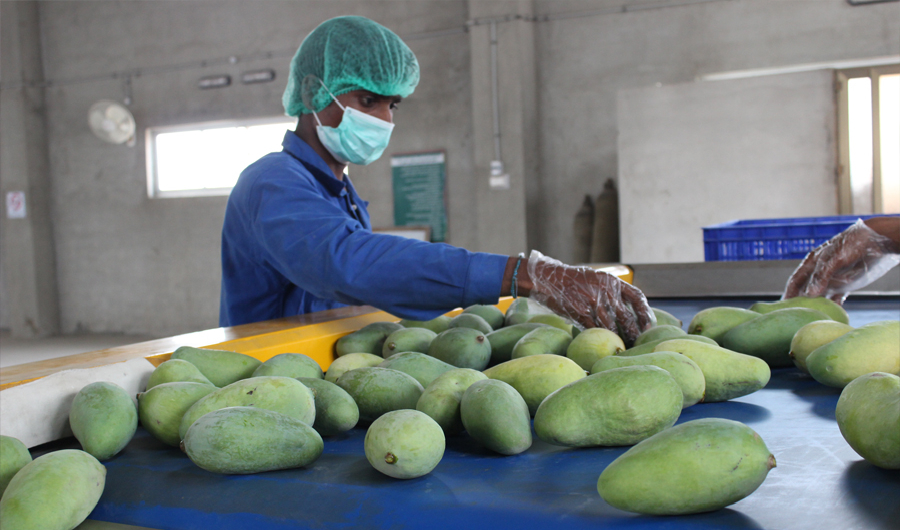
At the Durrani Farms facility in southern Sindh province, a mango inspector checks for quality in this undated photo. (Photo by Durrani Farms)
“Changing weather patterns have affected nearly 30 percent of mango produce this year,” said Waheed Ahmed of PFVA, who emphasized the use of technology and “smart practices,” to outsmart the weather.
Experts said post-harvest problems, poor shelf life, transportation, logistics, packaging and quarantine issues are key factors contributing to Pakistan’s low export volume, but the tide is changing with a greater emphasis on mango research and development.
In Multan, the Muhammad Nawaz Sharif University of Engineering and Technology has planted a model mango farm to test an initiative that aims to increase mango production and quality through better canopy management of its high-density orchard systems.
Similarly, the Mango Research Institute in Multan has introduced integrated crop management for mango growers which includes research on drip irrigation, nutrition, canopy management, and integrated pest management.
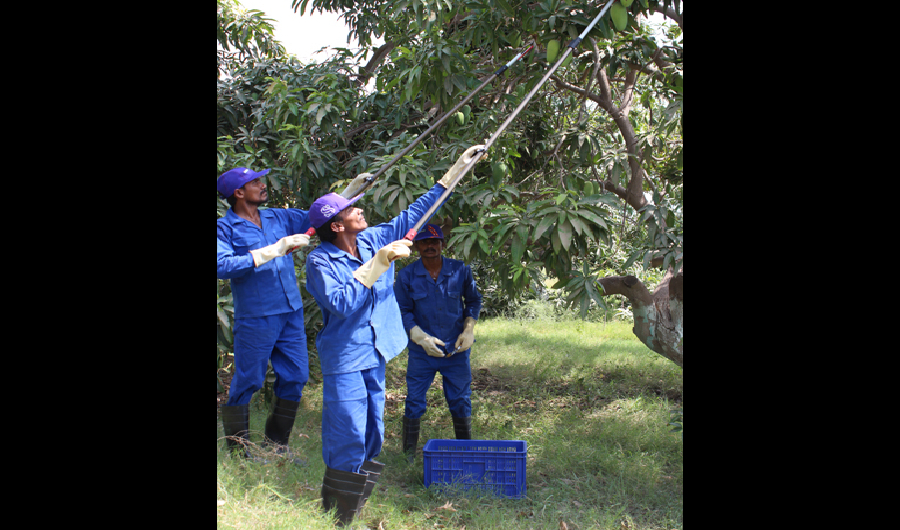
In this undated photo, uniformed mango pickers at Durrani Farms in southern Sindh province use a long pole with hook for fruit picking. (Photo by Durrani Farms)
But the key to expanding exports, Ahmed said, was a focus on innovation in production technologies to improve efficiency and shelf life.
“Our research should examine ways to introduce a high-yielding mango variety with a longer shelf life to reach high-end international markets,” he said.
Adeeb Ahmed Rao, the mango farm owner in Multan, says direct flights, more cargo services, better management, and more cold storage facilities at airports could also go a long way in helping farms and companies like his export mangoes to more distant destinations.
Currently, more than 70 percent of Pakistan’s exported mangoes are transported by sea, which remains the cheapest option, while airfreight charges are almost ten times the cost. The mangoes are exported almost entirely in raw form, with only about three percent of the produce processed into value-added products such as pulp for drinks, ice-cream, and dried mangoes.
“Selling just raw mangoes does not make sense for a top mango producing country,” Humayun Durrani said. “If Pakistan really wants to overcome its trade imbalance, then it must diversify its products. We can export canned mangoes, juices, jams, jellies, frozen yogurts and even traditional products like pickles and chutneys.”
For now, with advertisements telling buyers to “Keep calm and eat aam,” mangoes in Pakistan may not be sweetening enough of the country’s balance of payments, but in this mango-obsessed country, they are something cheerful and sweet to look forward to as the sweltering summer months drum on.


