


CHICAGO: US Special Envoy for Sudan Donald E. Booth on Tuesday said that leaders of the military government and the opposition in the African nation are moving toward a reconciliation, but added “there is a lot” that still needs to be done.
Booth, who was appointed by President Donald Trump in June, is charged with leading the US efforts to support a political solution to the current crisis that reflects the will of the Sudanese people.
Both sides in Sudan agreed a political power-sharing deal on July 17 that set out a 39-month period of transition, led by Sudan’s new “Sovereign Council,” before constitutional changes can be made. Under the agreement, a military general will lead the council for the first 21 months, a civilian for the following 18 months, and then elections will be held.
“That political declaration really addresses the structure of a transitional government and not the entire structure,” Booth said. “(The July 17 agreement) has put off the question of the legislative council. It is a document that is the beginning of a process. We welcome the agreement on that but there are still a lot of negotiations to be conducted on what the Sudanese call their constitutional declaration.”
The envoy said he expects the Sovereign Council “will have to address what the functions of the different parts of the transitional government will be,” such as the roles and powers of “the sovereign council, the prime minister, the cabinet and, ultimately, the legislative cabinet. Who will lead that transitional government is still undecided.”
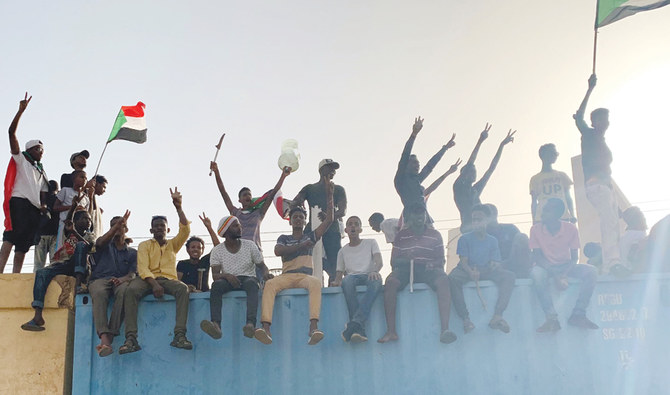
The crisis in Sudan came to a head in December 2018 when President Omar Al-Bashir imposed emergency austerity measures that prompted widespread public protests.
He was overthrown by the Sudanese military in April 2018 as a result of the unrest but the protests continued. Demonstrations in Khartoum turned violent on June 3 when 150 civilians were killed, sparking nationwide protests in which nearly a million people took part.
Booth said these protests had changed the dynamics in Sudan, forcing the military to negotiate with the people.
“The 3rd of June was a signal of the limits of people power,” he said. “But then there was the 30th of June, in which close to a million people took to the streets outside of Sudan and I think that demonstrated the limits of the military power over the people.”
Some have asked whether individuals might face prosecution for past human-rights violations, including Lt. Gen. Mohamed Hamdan Dagalo, better known as Gen. Hemeti, who was appointed head of the ruling transitional military council in April after Al-Bashir was removed from power. Booth said this would be a decision for the new transitional government.
“One has to recognize that General Hemeti is a powerful figure currently in Sudan,” he said. “He has considerable forces loyal to him. He has significant economic assets as well. So, he has been a prominent member of this transitional military council. But he has been one of the chief negotiators for the forces of Freedom and Change.
HIGHLIGHTS
• Both sides in Sudan agreed on a political power-sharing deal on July 17 that set out a 39-month period of transition, led by Sudan’s new ‘Sovereign Council,’ before constitutional changes can be made.
• Under the agreement, a military general will lead the council for the first 21 months, a civilian for the following 18 months, and then elections will be held.
• We will have to wait and see what type of agreement Sudanese will come up with, says US envoy.
“We will have to wait and see what type of agreement they will come up with…we don’t want to prejudge where the Sudanese will come out on that. It is their country and their decision on how they move forward. Our goal is to support the desire for a truly civilian-led transition.”
Booth noted that although sanctions on Sudan have been lifted, the designation of the nation as a state sponsor of terrorism remains in force. He also said he expects the pressures and restrictions on journalists covering Sudan’s transition to ease as progress continues toward redefining Sudan’s government.
“As you can see, there is still a lot that the Sudanese need to do,” said Booth. “But we fully support the desire of the Sudanese people to have a civilian-led transitional government that will tackle the issues of constitutional revision and organizing elections, free and fair democratic elections, at the end of the transitional period.”
He added that the US is working with other governments in the region to build support for the transitional process, including expanded religious freedoms, an end to the recruitment of children for military service, and improving Sudan’s economy.
“I think it is important we give the Sudanese space to negotiate with each other, and to continue to express our support to get to the civilian-led transition government that will be broadly supported by the Sudanese people,” said Booth.


