ISLAMABAD: Pakistan has agreed on a plan to overhaul instruction at madrasas or religious schools to bring the institutions closer into line with conventional schools and curb extremist teaching, Education Minister Shafqat Mahmood said on Friday.
The plan is the latest effort to address longstanding concerns that the roughly 30,000 madrasas in Pakistan provide a haven for extremist teaching with a rigid curriculum based around religious studies that fails to prepare students for employment after they graduate.
Under the plan, agreed with the madrasa umbrella organization, Wafaq-ul-madaris, religious schools would be registered and helped to strengthen conventional teaching in subjects like English, science and mathematics.
They would remain responsible for religious teaching and in exchange would have to commit to ensuring that extremist teaching was not part of the curriculum.
“There will be no preaching of hate speech of any kind against any religion or sect,” he said.
Prime Minister Imran Khan, facing heavy international pressure to clamp down on militant groups operating from Pakistan territory, announced plans earlier this year to “mainstream” the madrasas, often associated with feeding radicalized youth to militant Islamist groups.
Numerous similar attempts have been made over the years, going back to the time of former President Pervez Musharraf almost two decades ago.
Mindful of the risk of backlash in a deeply conservative country, Mahmood said the government was not seeking confrontation with the madrasas, which are often the only form of education available to poor families.
“We will not be taking over the madrasas,” he told reporters at a meeting in his office in Islamabad. “This is not a crackdown. We are looking at this as a means of facilitating.”
The schools would remain independent of government control and while he said in his view they should not be associated with political movements, there would be no formal ban.
“We are not making this a precondition,” he said.
Regional offices of the education ministry would oversee registration and help with issues including raising standards and opening bank accounts for the madrasas which raise their own funds and are organized according to particular denominations.
He said the changes would take effect gradually, with a first group of madrasas taking examinations next year.
With issues including finding the funds to hire thousands of new teachers and a separate but related push to develop a new unified national curriculum, he was unwilling to estimate a timeframe.
“This will not happen in a day,” he said.


![]()

Pakistan aims to bring religious schools into mainstream
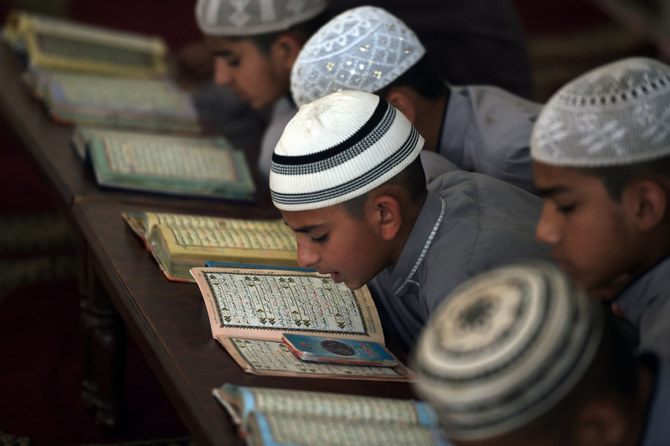
Pakistan aims to bring religious schools into mainstream
- The schools will ensure that extremist teaching is not part of their curriculum
- Similar attempts have been made over the years, going back to Pervez Musharraf’s time almost two decades ago
Latest updates




© 2026 SAUDI RESEARCH & PUBLISHING COMPANY, All Rights Reserved And subject to Terms of Use Agreement.