Deloitte misreading law to avoid penalty, says India

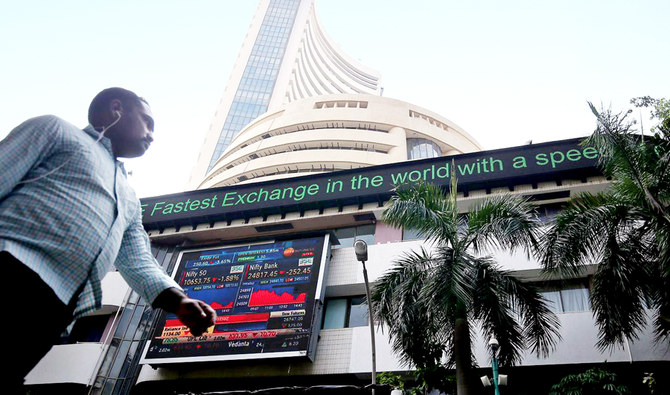
India is making efforts to weed out corrupt practices from financial institutions to ensure transparent business deals. (Reuters/File)
Updated 14 July 2019
Follow

Deloitte misreading law to avoid penalty, says India

  • The law cannot be read in such a narrow and pedantic manner

NEW DELHI: India has told a tribunal the local auditing affiliate of international accounting group Deloitte Touche Tohmatsu is misreading a key federal law as the firm seeks to avoid a five-year ban on new business, according to legal documents reviewed by Reuters on Sunday.

Deloitte Haskins & Sells LLP is contesting the government’s call for the ban on the auditor for its alleged involvement in a financial fraud.

The government has said it detected several violations of auditing standards by Deloitte and a KPMG affiliate while investigating fraud at IFIN, a unit of Infrastructure Leasing and Financial Services, whose debt defaults last year triggered fears of a financial contagion. Both auditors deny wrongdoing.

Deloitte’s filing showed it last month argued the government case should be dismissed because it came after the auditor’s 10-year stint at IFIN ended. The last audit it did was for the fiscal year to March 2018.

The alleged fraud began to be exposed last autumn and Deloitte said the law only allowed such a ban to be imposed if the auditor was actively auditing the company at the time, and did not allow the government to take into account the firm’s work over previous years.

India’s Ministry of Corporate Affairs has countered, saying the law cannot be read in such a “narrow and pedantic manner,” according to its June 28 tribunal filing, which has been reviewed by Reuters and is not public.

“A fraud that continues till date on account of errant past auditor ... can undoubtedly be covered” under Indian law provisions, the government said in its 13-page filing, adding Deloitte was misreading and incorrectly interpreting the law.

The law was intended to “weed out an errant auditor from practicing so that corporate democracy, transparency and the economy of the country is not destabilizing,” it added.

The case will next be heard on Monday at the National Company Law Tribunal in Mumbai.

A spokesman for Deloitte told Reuters on Sunday it had been advised the government’s case was “not maintainable,” declining to comment further. It has previously said “it has been thorough and diligent” in its duties as an auditor.

India detected auditing failures as part of its wide-ranging probe into alleged fraud and mismanagement at IFIN, which has also been investigated by several other agencies including the Serious Fraud Investigation Office and the central bank.

The auditing firms gave clean audit reports and “miserably failed to fulfill the duty entrusted to them,” the government has alleged, saying the fraud at IFIN was “nothing short of organized crime, actively aided and abetted by the statutory auditors.”

In its filing, the government also said that if Deloitte’s interpretation of law was to be accepted, it would mean any auditor who commits fraud, but resigns before legal proceedings are initiated against it, cannot be banned in the country.


Industry leaders highlight Riyadh’s Metro, infrastructure as investment catalysts

Updated 29 December 2025
Follow

Industry leaders highlight Riyadh’s Metro, infrastructure as investment catalysts

RIYADH: Saudi Arabia’s capital, Riyadh, is experiencing a transformative phase in its real estate sector, with the construction market projected to reach approximately $100 billion in 2025, accompanied by an anticipated annual growth rate of 5.4 percent through 2029.

The Kingdom is simultaneously advancing its data center capacity at an accelerated pace, with an impressive 2.7 GW currently in the pipeline. This expansion underscores the critical role of strategic land and power planning in establishing national infrastructure as a cornerstone of economic growth.

These insights were shared by leading industry experts during JLL’s recent client event in Riyadh, which focused on the city’s macroeconomic landscape and emerging trends across office, residential, retail, hospitality, and pioneering sectors, including AI infrastructure and Transit-Oriented Development.

Saud Al-Sulaimani, Country Lead and Head of Capital Markets at JLL Saudi Arabia, commented: “Riyadh is positioned at the forefront of Saudi Arabia’s Vision 2030, offering unparalleled opportunities for both investors and developers. National priorities are continuously recalibrated to ensure strategic alignment of projects and foster deeper collaboration with the private sector.”

He added: “Recent regulatory developments, including the introduction of the White Land Tax and the rent freeze, are designed to stabilize the market and are expected to drive renewed focus on delivering premium-quality assets. This dynamic environment, coupled with evolving construction cost considerations in select segments, is fundamentally reshaping the market landscape while accelerating progress toward our national objectives.”

The event further underscored the transformative impact of infrastructure initiatives. Mireille Azzam Vidjen, Head of Consulting for the Middle East and Africa at JLL, highlighted Riyadh’s transit revolution. She detailed the Riyadh Metro, a $22.5 billion investment encompassing 176 kilometers, six lines, and 84 stations, providing extensive geographic coverage, with a depth of 9.8 km per 100 sq. km. This strategic development generates significant TOD opportunities, with properties in proximity potentially commanding a 20-30 percent premium. JLL emphasized the importance of implementing climate-responsive last-mile solutions to enhance mobility and accessibility, particularly given Riyadh’s extreme temperatures.

Gaurav Mathur, Head of Data Centers at JLL, emphasized the rapid expansion of the Kingdom’s AI infrastructure, signaling a critical area for technological investment and innovation.

Focusing on the construction sector, Maroun Deeb, Head of Projects and Development Services, KSA at JLL, explained that the industry is actively navigating complexities such as skilled labor availability, material costs, and supply chain dynamics.

He highlighted the adoption of Building Information Modeling as a key driver for enhancing operational efficiency and project delivery.