SANTA FE, Texas: The family of a Pakistani exchange student who was one of 10 people killed in a mass shooting at a Texas high school last year traveled to the US and visited the school and community this week, wanting to learn more about the nine months she had spent there, including her final moments.
Sabika Aziz Sheikh’s father, three siblings and cousin entered the Santa Fe High School art classroom where the 17-year-old was shot as she hid with other students in a storage closet. Her mother, Farah Naz, couldn’t bring herself to take the final steps into the room, explaining in Urdu through an interpreter that the image “would stay with me ... throughout my whole life.”
Although the family knew their two-week visit to the Houston area would be difficult, they felt Sabika would have wanted them to make the trip from Karachi, which also allowed them to personally thank people for their support, particularly residents of Santa Fe.
“We’re still trying to grapple with the puzzle pieces, what her final moments were for her. The thought of it is so traumatizing,” said Sabika’s cousin Shaheera Jalil Albasit, who served as the family’s interpreter during an interview Wednesday with The Associated Press. Although Albasit came to Santa Fe right after the shooting, it is the first visit for the rest of the family.
In addition to visiting the school, they met with Sabika’s Santa Fe host family and with the prosecutors handling the case against the student charged with carrying out the attack. They also plan to meet with family members of other shooting victims.
“I knew this was going to be hard, but I had to do it,” Sania Aziz Sheikh, Sabika’s 15-year-old sister, said about visiting Santa Fe. Also on the trip were her 11-year-old sister, Soha, and her 14-year old brother, Ali.
Sabika, seven other students and two teachers were killed in the May 18, 2018, attack at the school, which is about 55 miles (88 kilometers) southeast of Houston. Thirteen other people were wounded. The student accused in the attack, 18-year-old Dimitrios Pagourtzis, is scheduled to stand trial in January on state murder charges. He also faces federal charges.
Sabika came to Santa Fe, a city of about 13,000 residents, through a federal program in which high school students from countries with significant Muslim populations study in the US.
While Sabika fully embraced living in America — going trick-or-treating on Halloween and attending prom with friends — she also worked to educate Santa Fe residents about Pakistan and Islam.
Her parents said Sabika was committed to being a cultural ambassador for Pakistan and representing her religion and country in a positive light.
Her father, Abdul Aziz, said it was important to tour Sabika’s school and learn about her life there. On Tuesday, the family was given a tour of the campus, which was empty because of the summer break.
With Sabika’s schedule in hand, they went from classroom to classroom and sat where she once did. They eventually went to the art room, where the family members who ventured inside sat on the floor where Sabika died and were able to more or less envision what her final moments looked like, Albasit said.
Sabika was less than three weeks from returning home when she was killed.
Sania said she took comfort in learning from one of Sabika’s friends that she had been “very happy” the night before the shooting.
Abdul Aziz, 52, who works as a distributor of cosmetics and plastic products in Pakistan, said despite what happened, he “feels very positively” about the US and Santa Fe. But he and his wife said they had been unaware of the prevalence of gun violence in the US
Sabika’s parents are part of a group of family members of shooting victims who sued Pagourtzis’ parents, claiming they had been negligent in entrusting him with guns.
Albasit said that although Sabika’s parents are confident Pagourtzis will be convicted, finding justice for Sabika would require more of a systemic change in US gun violence.
“No matter what happens, it’s not going to bring back my daughter. But that will give me some sense of peace,” said Naz, 45.
Albasit, 27, who recently finished graduate school in Washington, D.C., became active in the gun control movement following her cousin’s death.
Abdul Aziz, who visits his daughter’s grave in Karachi every day, said her presence in their lives remains as real as it was before, but that it’s not something that can be seen.
“She’s here in everything we do. That is not going to change,” he said.


![]()

Pakistani family visits school where exchange student shot
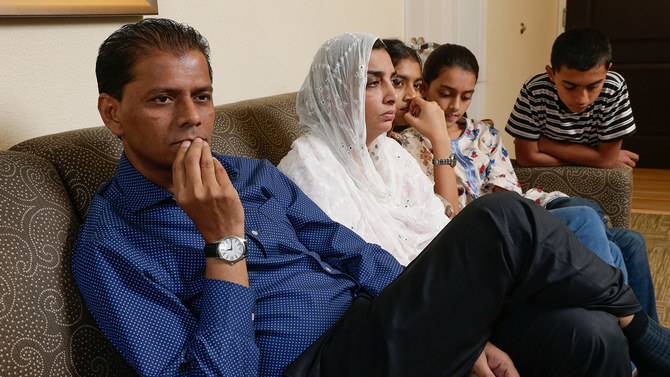
Pakistani family visits school where exchange student shot
- Sabika, seven other students and two teachers were killed during Santa Fe High School shooting
- Sabika was less than three weeks from returning home when she was killed
Latest updates


© 2026 SAUDI RESEARCH & PUBLISHING COMPANY, All Rights Reserved And subject to Terms of Use Agreement.