KARACHI: Saudi Arabia, the United Arab Emirates and other Gulf Cooperation Council countries remained key contributors to Pakistan’s remittance inflows for fiscal year 2018-19 (FY19), collectively sending 53.7 percent or $11.74 billion, the central bank has said.
Overall, overseas Pakistani workers remitted $21.84 billion during FY19, showing a growth of 9.68 percent compared with $19.91 billion received during the same period last year, the State Bank of Pakistan said on Wednesday.
Experts say the devaluation of the rupee and the rise of oil prices in the Middle East are the key reasons for the growth in remittances.
“The dollar rate against the rupee is higher which means Pakistani workers’ families at home receive larger amounts. Also, inflows from legal channels has increased because banks have incentivized,” said Khurram Schehzad, a senior financial analyst and CEO of Alpha Beta Core — a financial advisory firm.
He added: “Our remittances growth mainly comes from the UAE and Saudi Arabia; the inflows from west are minimal.”
In FY19, Pakistani workers in Saudi Arabia remitted $5 billion, 3 percent higher than last year’s $4.8 billion while inflows from the UAE were $4.6 billion, or 6 percent higher than $4.3 billion last year. Collectively, workers from the Kingdom, the UAE and other GCC countries contributed $11.74 billion to remittances in FY19 as compared to $11.38 in FY18.
Saudi Arabia and the UAE remained traditional markets for Pakistani manpower, with emigration patterns for 2018 showing the UAE as the largest destination country for Pakistani emigrants with 54 percent of emigrants, followed by 26.39 percent to Saudi Arabia, 7.11 percent to Oman, and 5.49 percent to Qatar, according to Pakistan’s Bureau of Emigration and Overseas Employment (BEOE).
Pakistani officials say the country is facilitating its workers abroad as they play a vital role in the economy, having helped to reduce pressure on external accounts during the outgoing year.
“We are facilitating Pakistani workers with legal aid through our lawyers and our labor attachés help them in resolving the issues with their Kafeel (sponsors),” said Sheikh Fayyaz Ud Din, Chairman of the National Assembly’s standing committee on overseas Pakistanis. “We also make arrangements in the case of the death of a worker to bring back the body.”
In Saudi Arabia during 2018, the majority of the emigrants came from Bangladesh (257,313) followed by Pakistan (100,910) and India (72,399), BEOE data shows.

Saudi Arabia, UAE remain top contributors to Pakistan’s remittances
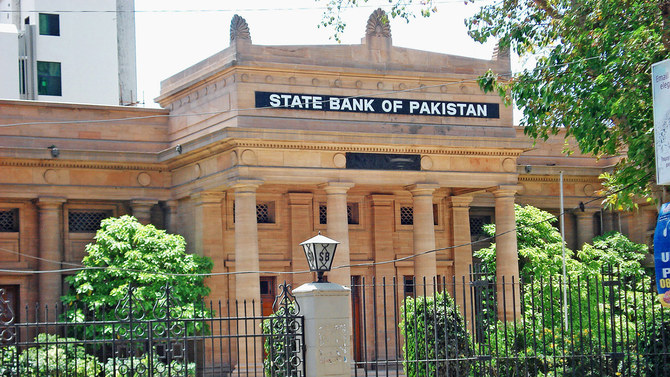
- The two countries made up 44% of inflows in fiscal year 2018-19
- Pakistani workers remitted total of $21.84 billion, up 9.6% from last fiscal year
Curfew extended in Gilgit-Baltistan, probe ordered after deadly Khamenei protests
- At least 15 people were killed in clashes with law enforcement agencies over the weekend in Gilgit-Baltistan
- Government also announces a de-weaponization campaign, crackdown on hate speech and cybercrime in region
ISLAMABAD: The government in Pakistan’s Gilgit-Baltistan (GB) region on Tuesday extended a curfew in Gilgit district and ordered a judicial probe into violent protests over the killing of Iranian Supreme Leader Ali Khamenei in US-Israeli strikes last week, an official said.
At least 15 people were killed in clashes with law enforcement agencies over the weekend in GB, where protesters torched and vandalized several buildings, including United Nations regional offices, an army-run school, software technology park and a local charity building.
The violence prompted regional authorities to impose curfew in Gilgit and Skardu districts on March 2-4 as officials urged people to stay indoors and cooperate with law enforcers, amid widespread anger in Pakistan, particularly among members of the Shiite minority, over Khamenei’s killing.
On Tuesday, the GB government convened to review the situation and announced the extension of curfew in Gilgit among a number of security measures as well as ordered the establishment of a judicial commission to investigate the weekend violence in the region.
“The government has made it clear that the law will strictly take its course against elements involved in vandalism at government institutions, private properties and incidents of vandalism in Gilgit and Skardu and no kind of mischief will be tolerated,” Shabbir Mir, a GB government spokesperson, said in a statement.
“In view of the security situation, curfew will remain in force in Gilgit, while the decision to extend the curfew in Skardu will be taken keeping the ground realities and the changing situation in view.”
The statement did not specify how long the curfew will remain in place in Gilgit.
Besides the formation of the judicial commission to investigate the violent clashes, the government also decided to launch a large-scale de-weaponization campaign in the entire Gilgit district, for which relevant institutions have been directed to immediately complete all necessary arrangements, according to Mir.
In addition, a crackdown has been ordered on hate speech, spread of fake news and cybercrime.
“The aim of these decisions is to ensure the rule of law, protect the lives and property of citizens and crack down on miscreants,” he said. “Approval has also been given to immediately survey the affected infrastructure and start their restoration work on priority basis.”
Demonstrators in Pakistan’s southern port city of Karachi also stormed the US Consulate on Sunday, smashing windows and attempting to burn the building. Police responded with batons, tear gas, and gunfire, leaving 10 people dead and more than 50 injured.
Pakistani authorities have since beefed up security at US diplomatic missions across the country, including around the US consulate building in Peshawar, to avoid any further violence.