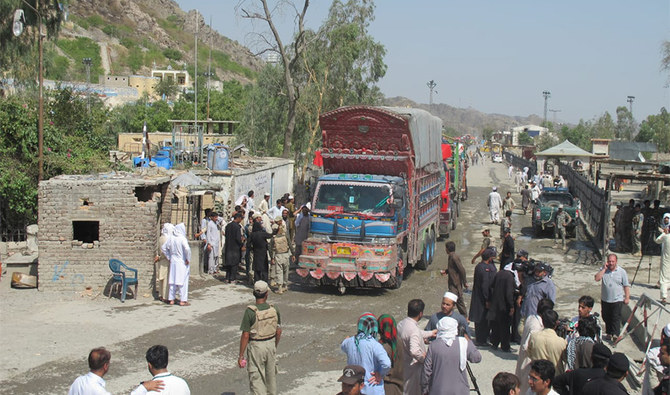
PESHAWAR: With an aim to facilitate trade and economic activities along the Pakistan-Afghanistan border at Torkham, Pakistani authorities have finalized all arrangements to keep the border crossing open round-the-clock, with Prime Minister Imran Khan scheduled to inaugurate the facility in August, a top official from the Khyber tribal district told Arab News.
“Keeping in view the prime minister's earlier directions, the Khyber district administration, including other departments such as custom and Federal Investigation Agency (FIA), have completed all requirements to keep this strategic border open 24/7,” Mahmood Aslam Wazir, deputy commissioner of the district told Arab News.
Traders and custom clearing agents from both the countries expressed optimism that an uninterrupted flow of business along the Torkham border would result in a far-reaching and positive impact for the economies of the two countries.
Khan Jan Alokozay, deputy chief of Afghanistan Chamber of Commerce and Industries (ACCI) told Arab News that Pakistan's role was of paramount importance, especially to facilitate Afghanistan’s incessant trade and economic activities.
“The economies of both the neighbors will touch new heights the day the idea (keeping the Torkham border opened round-the-clock) is materialized,” he added.
Faiz Muhammad, President Sarhad Chamber of Commerce and Industry (SCCI), said that, currently, the Islamabad-Kabul trade volume was below $1 billion annually due to certain trade barriers and high tariff rates levied by the Afghan government on Pakistani goods.
“I’m sure commerce and trade will be increased by up to $3 billion annually in the first six months if the border is kept open 24/7,” he said.
However, Alokozay said his country was the best available market for Pakistani goods, adding that the initiative would create more space for Pakistani products to thrive in the Afghan market.
“I think enhanced business between the two countries will ultimately lead to [a] solution [to end] political differences between the two immediate neighbors. The option of keeping the border open will help achieve the $6 billion bilateral trade volume annually,” he said.
Arafat Khan, a Pakistani businessman who trades along the Torkham border, said that keeping the crossing open would ensure multiply trade activities between the two neighbors, provided the governments sort out the mechanism to ease trade barriers and bureaucratic formalities for a smooth release of goods without unnecessary delay.
“Bilateral business will get a huge boost if the border is kept open, but trade volume can only be increased if Islamabad-Kabul move to ease existing trade obstacles,” he added.
Hazrat Nabi Toor, President of the Afghanistan’s custom clearing association at Torkham, said that the concerned authorities from both the countries should work toward resolving unnecessary trade hurdles.
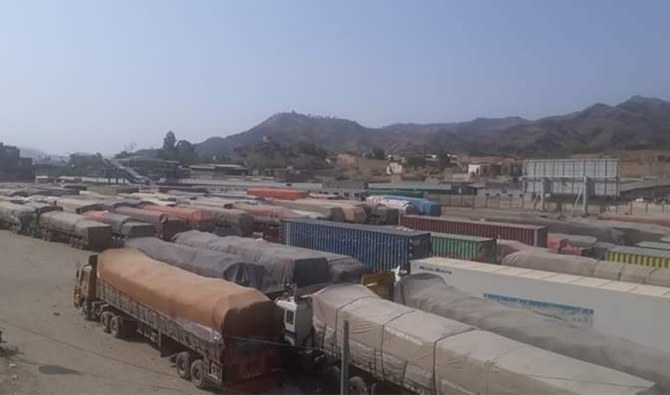
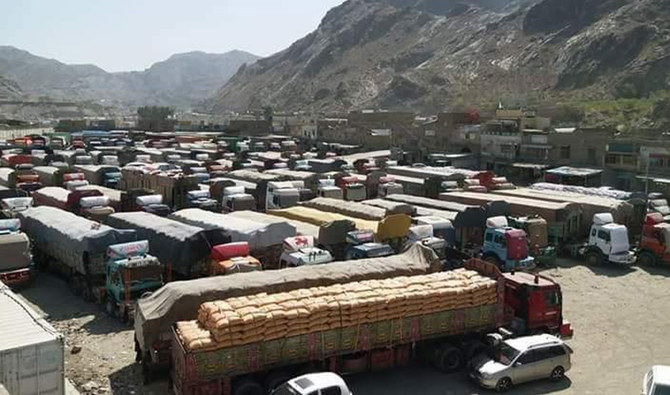
“The border is closed since last Friday because of protest by businessmen against trade barriers. These kinds of protests cause (losses such as for perishable goods) vegetables and fruits get rotten,” he added.
Aftab Shinwari, a Pakistani trader who frequents the area, said that the move would work as a huge advantage for businessmen from both the countries.
“Currently there seems to be no trade mechanism in place at Torkham because the border can be shut any time, which inflicts heavy losses on businessmen,” he said.
The deputy commissioner said his administration has intensified efforts to facilitate the business community once the border is operational 24/7.


![]()
![]()
![]()

Pakistan's border with Afghanistan to remain open 24/7 from August
Pakistan's border with Afghanistan to remain open 24/7 from August
- PM Khan will inaugurate the new initiative along Torkham crossing
- Businessmen hope the move will boost trade ties between both countries
Latest updates





© 2026 SAUDI RESEARCH & PUBLISHING COMPANY, All Rights Reserved And subject to Terms of Use Agreement.