TIKRIT, Iraq: At least three people were killed and four wounded when three mortar bombs hit the northern Iraqi town of Shirqat on Tuesday, police officials and hospital sources said.
Police officials in the area said Daesh militants were involved in the attack and the mortars were fired from a nearby mountainous area were militants are still active.
“Daesh fighters are hiding in (the) Makhoul mountains area and use it as a launchpad for their attacks,” said Shirqat police colonel Khalil Sahan.
Daesh has recently mounted a series of hit-and-run attacks aimed at undermining the government.
Iraq declared victory over the group, which once held large swathes of the country, in December 2017. But after they were defeated and driven out of areas they controlled for years, the militants have adapted their tactics to insurgent-style attacks.

Mortar attack kills three people in northern Iraq: police
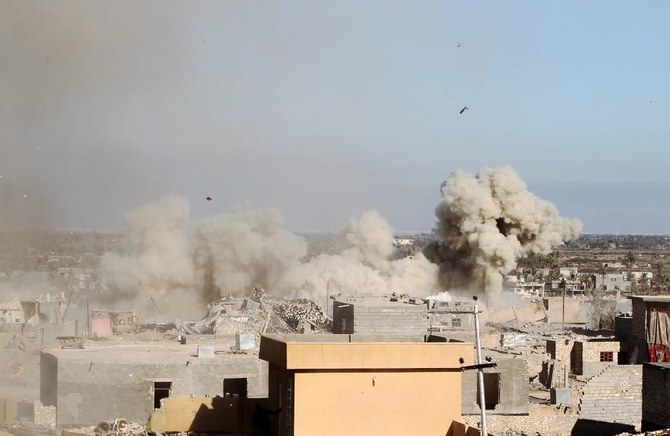
- Daesh recently mounted a series of attacks against the Iraqi government
- The country declared victory over the militants back in December 2017
Iran Guards say will block oil exports as long as war continues
- Shipping traffic through the strategic Strait of Hormuz, through which nearly 20 percent of the world’s crude oil usually transits, has been severely disrupted
TEHRAN: Iranian forces will not allow the export of oil from the region to allies of the United States and Israel as long as the war continues, a Revolutionary Guards spokesman said Tuesday.
“The Iranian armed forces... will not allow the export of a single liter of oil from the region to the hostile side and its partners until further notice,” said Ali Mohammad Naini, according to a report from Iran’s Tasnim news agency.
He said any change would take place based on the conditions of the conflict.
On February 28, the US and Israel launched strikes against Iran that killed its supreme leader Ayatollah Ali Khamenei and triggered a war that has spread across the Middle East.
Iran has responded with drone and missile strikes targeting Israel and US interests across the region.
Shipping traffic through the strategic Strait of Hormuz, through which nearly 20 percent of the world’s crude oil usually transits, has been severely disrupted.
Iranian forces have repeatedly targeted oil tankers passing through the strategic waterway since the war began.
Oil prices have since risen dramatically to over $100 per barrel — the highest since Russia’s invasion of Ukraine in 2022 — before reversing course Monday after US President Donald Trump said military operations would be ending soon.
“Their efforts to reduce and control the price of oil and gas will be temporary and fruitless,” IRGC spokesman Naini said. “Trade in war conditions is hinged on security.”
The Revolutionary Guards late on Monday urged countries to expel their US and Israeli ambassadors to gain passage through the Strait of Hormuz.
“Any Arab or European country that expels the Israeli and American ambassadors from its territory will have complete freedom and authority to pass through the Strait of Hormuz starting tomorrow,” the Guards said, as quoted by Iranian state TV.
“The Iranian armed forces... will not allow the export of a single liter of oil from the region to the hostile side and its partners until further notice,” said Ali Mohammad Naini, according to a report from Iran’s Tasnim news agency.
He said any change would take place based on the conditions of the conflict.
On February 28, the US and Israel launched strikes against Iran that killed its supreme leader Ayatollah Ali Khamenei and triggered a war that has spread across the Middle East.
Iran has responded with drone and missile strikes targeting Israel and US interests across the region.
Shipping traffic through the strategic Strait of Hormuz, through which nearly 20 percent of the world’s crude oil usually transits, has been severely disrupted.
Iranian forces have repeatedly targeted oil tankers passing through the strategic waterway since the war began.
Oil prices have since risen dramatically to over $100 per barrel — the highest since Russia’s invasion of Ukraine in 2022 — before reversing course Monday after US President Donald Trump said military operations would be ending soon.
“Their efforts to reduce and control the price of oil and gas will be temporary and fruitless,” IRGC spokesman Naini said. “Trade in war conditions is hinged on security.”
The Revolutionary Guards late on Monday urged countries to expel their US and Israeli ambassadors to gain passage through the Strait of Hormuz.
“Any Arab or European country that expels the Israeli and American ambassadors from its territory will have complete freedom and authority to pass through the Strait of Hormuz starting tomorrow,” the Guards said, as quoted by Iranian state TV.
© 2026 SAUDI RESEARCH & PUBLISHING COMPANY, All Rights Reserved And subject to Terms of Use Agreement.


