

Eastern Libya, US firm close to signing Libya port deal

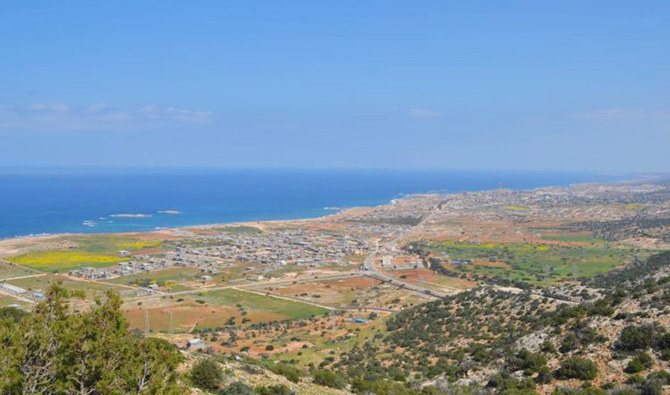
The development of a multipurpose, deep sea port in Susah, Libya, will give a big boost to the local economy. (Social media)
Updated 07 July 2019
Follow

Eastern Libya, US firm close to signing Libya port deal

  • It would be a coup for the parallel govt, which has not gained global recognition

TUNIS, BENGHAZI: Eastern Libyan authorities and US security firm Guidry Group plan to finalize an agreement to develop a major port in the east of the troubled oil producer, both sides said.
Talks have been going on for about a year to build a port in Susah, which would mark a rare sign of investment in Libya. Most of the country has been in chaos since the toppling of Muammar Qaddafi in 2011.
“The Guidry Group and the State of Libya through the Sea Port Authority officially signed the concession agreement on May 13 for the development of a multi-purpose, deep sea port in Susah, Libya,” the Guidry Group said in a statement to Reuters.
“Next steps for the project will involve establishing all the technical, financial, operational and commercial requirements,” the firm said.
Salah Elhasi, head of the eastern port authority, said no final deal had been signed yet but 90 percent of work was done.
“We are in the final stage of the agreement. ...and are reviewing the agreement’s details,” he said.
Neither side gave details. In February, both had put the investment volume of the project at $1.5 billion.
A final signature would be a coup for the parallel government in charge of eastern Libya which has not gained international recognition. The UN-backed government sits in Tripoli in western Libya.

HIGHLIGHT

The Susah port is supposed to be the main entry port for goods into Libya as a sea depth of up to 40 meters would enable containers to load goods on smaller vessels headed for other cities.

The Susah port is supposed to be the main entry port for goods into Libya as a sea depth of up to 40 meters would enable containers to load goods on smaller vessels headed for other cities.
Officials hope the port will create jobs in a country where most look to a bloated public sector or join armed groups.
Since the negotiations started, tensions between the two governments have escalated as eastern Libyan forces led by Khalifa Haftar allied to the parallel government started a military campaign to seize Tripoli.
The port is meant to serve the whole of Libya.
The Guidry Group said it was “very close” to signing a funding agreement for the port.
Some fear a port may damage ancient historical sites.
Susah, with its sleepy fishing harbor next to historic temple columns and also some underwater sites, is close to the ancient Greek mountain city of Cyrene.


Kuwait to boost Islamic finance with sukuk regulation

Updated 05 February 2026
Follow

Kuwait to boost Islamic finance with sukuk regulation

  • The move supports sustainable financing and is part of Kuwait’s efforts to diversify its oil-dependent economy

RIYADH: Kuwait is planning to introduce legislation to regulate the issuance of sukuk, or Islamic bonds, both domestically and internationally, as part of efforts to support more sustainable financing for the oil-rich Gulf nation, Prime Minister Sheikh Ahmad Abdullah Al-Ahmad Al-Sabah said on Wednesday.

Speaking at the World Governments Summit in Dubai, Al-Sabah highlighted that Kuwait is exploring a variety of debt instruments to diversify its economy. The country has been implementing fiscal reforms aimed at stimulating growth and controlling its budget deficit amid persistently low oil prices. Hydrocarbons continue to dominate Kuwait’s revenue stream, accounting for nearly 90 percent of government income in 2024.

The Gulf Cooperation Council’s debt capital market is projected to exceed $1.25 trillion by 2026, driven by project funding and government initiatives, representing a 13.6 percent expansion, according to Fitch Ratings.

The region is expected to remain one of the largest sources of US dollar-denominated debt and sukuk issuance among emerging markets. Fitch also noted that cross-sector economic diversification, refinancing needs, and deficit funding are key factors behind this growth.

“We are about to approve the first legislation regulating issuance of government sukuk locally and internationally, in accordance with Islamic laws,” Al-Sabah said.

“This enables us to deal with financial challenges flexibly and responsibly, and to plan for medium and long-term finances.”

Kuwait returned to global debt markets last year with strong results, raising $11.25 billion through a three-part bond sale — the country’s first US dollar issuance since 2017 — drawing substantial investor demand. In March, a new public debt law raised the borrowing ceiling to 30 billion dinars ($98 billion) from 10 billion dinars, enabling longer-term borrowing.

The Gulf’s debt capital markets, which totaled $1.1 trillion at the end of the third quarter of 2025, have evolved from primarily sovereign funding tools into increasingly sophisticated instruments serving governments, banks, and corporates alike. As diversification efforts accelerate and refinancing cycles intensify, regional issuers have become regular participants in global debt markets, reinforcing the GCC’s role in emerging-market capital flows.

In 2025, GCC countries accounted for 35 percent of all emerging-market US dollar debt issuance, excluding China, with growth in US dollar sukuk issuance notably outpacing conventional bonds. The region’s total outstanding debt capital markets grew more than 14 percent year on year, reaching $1.1 trillion.