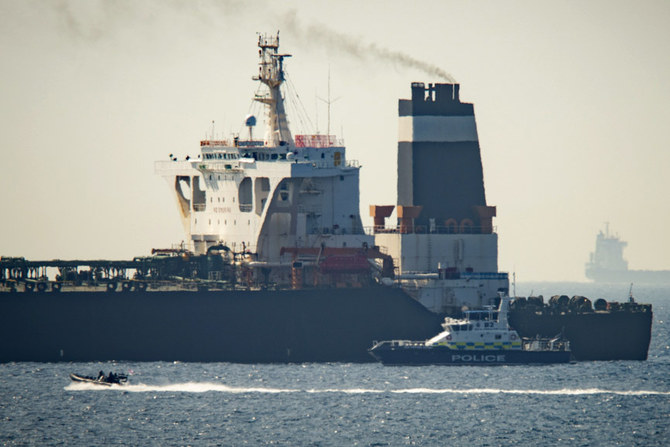

MADRID/LONDON/DUBAI: British Royal Marines seized a giant Iranian oil tanker in Gibraltar on Thursday for trying to take oil to Syria in violation of EU sanctions, a dramatic step that drew Tehran’s fury and could escalate its confrontation with the West.
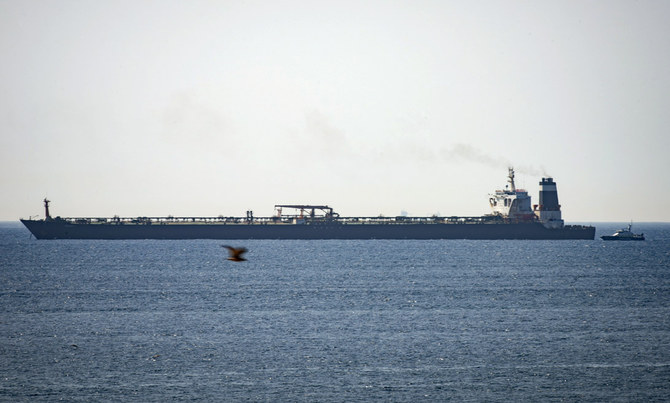
The Grace 1 tanker was impounded in the British territory on the southern tip of Spain after sailing around Africa, the long route from the Middle East to the mouth of the Mediterranean.
“We have reason to believe that the ‘Grace 1’ was carrying its shipment of crude oil to the Banyas Refinery in Syria,” Picardo said in a statement. “That refinery is the property of an entity that is subject to European Union sanctions against Syria.”
The Grace 1 is a Panamanian-flagged tanker, according to the shipping trade publication Lloyd’s List.
“We have detained the vessel and its cargo,” Picardo said.
Spain's caretaker foreign minister Josep Borrell said the tanker was stopped by British authorities after a request from the United States.
The EU and others have imposed sanctions on Assad's government over its continued crackdown against civilians. They currently target 270 people and 70 entities.
'Unacceptable seizure'
Iran’s Foreign Ministry summoned the British ambassador to voice “its very strong objection to the illegal and unacceptable seizure” of its ship.
The diplomatic gesture lifted any doubt over Iran’s ownership of the vessel, which flies a Panama flag and is listed as managed by a company in Singapore.
Shipping data reviewed by Reuters suggests the tanker was carrying Iranian oil loaded off the coast of Iran, although its documents say the oil is from neighboring Iraq.
While Europe has banned oil shipments to Syria since 2011, it had never seized a tanker at sea. Unlike the US, Europe does not have broad sanctions against Iran.
The EU has imposed sanctions on 277 Syrian officials including government ministers over their role in the “violent repression” of civilians.
It has frozen the assets of some 72 entities and introduced an embargo on Syrian oil, investment restrictions and a freeze on Syrian central bank assets within the European Union.
“This is the first time that the EU has done something so public and so aggressive. I imagine it was also coordinated in some manner with the US given that NATO member forces have been involved,” said Matthew Oresman, a partner with law firm Pillsbury Winthrop Shaw Pittman who advises firms on sanctions.
“This is likely to have been meant as a signal to Syria and Iran — as well as the US — that Europe takes sanctions enforcement seriously and that the EU can also respond to Iranian brinkmanship related to ongoing nuclear negotiations.”
Caught by its own admission
Authorities in Gibraltar made no reference to the source of the oil or the ownership of the ship when they seized it.
But Iran’s acknowledgment that it owned the ship, and the likelihood that its cargo was also Iranian, drew a link between the incident and a new US effort to halt all global sales of Iranian crude. Iran describes that as an illegal “economic war.”
Iran has long been supplying its allies in Syria with oil despite sanctions against Syria. What is new are US sanctions on Iran itself, imposed last year when President Donald Trump pulled out of an agreement that had guaranteed Tehran access to world trade in return for curbs on its nuclear program.
A spokesman for British Prime Minister Theresa May welcomed Gibraltar’s move.
Spain, which challenges British ownership of Gibraltar, said the action was prompted by a US request to Britain and appeared to have taken place in Spanish waters.
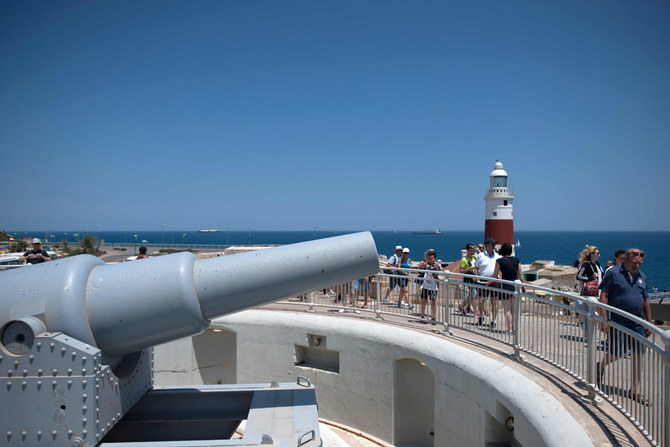
Gibraltar is a British overseas territory, a small rocky outcrop on Spain’s southern tip.