ISLAMABAD: Pakistan on Monday extended the deadline for a tax amnesty scheme in order to encourage residents to declare hidden assets and, in turn, broaden the country’s revenue base.
The deadline for the initiative, which was set to end on June 30, has now been moved to July 3.
In comments to the media on Sunday, Prime Minister Imran Khan’s financial adviser, Dr. Abdul Hafeez Sheikh said that the initiative was to ensure that people had a little more time to take advantage of the scheme.
He said that the government’s tax revenue target was Rs5.55 trillion ($36.80 billion) for the current fiscal year, adding that – as part of the measures to ensure compliance – authorities had lowered the introductory threshold for income tax, in addition to ensuring a clampdown on tax evasion.
The amnesty scheme, introduced in May this year, allows Pakistani citizens, except public office holders and their spouses, to declare hidden assets by paying 4 percent tax on domestic and 6 percent tax on offshore assets.
Recently, PM Khan, who wants to make this scheme a success, urged people to avail the opportunity and avoid being penalized.
Pakistan’s national debt has increased from Rs6,000 billion to Rs30,000 billion in the past decade, with PM Khan and his team terming it as a “debt trap” – one that has compelled the country to keep seeking fresh loans in order to pay the interest for previous ones.
The government, for its part, insists that the economy has been under severe stress because half of the country’s income has been used to repay debts and interests on foreign loans.
In May this year, Pakistan reached an accord with the International Monetary Fund for a three-year, $6 billion bailout package aimed at shoring up fragile public finances and strengthening a slowing economy.


Government urges Pakistanis to come clean with new deadline for tax amnesty scheme

Government urges Pakistanis to come clean with new deadline for tax amnesty scheme
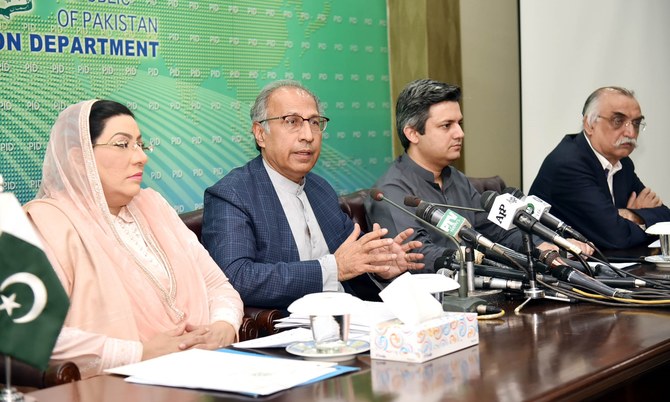
- Date moved from June 30 to July 4 to encourage more people to declare assets
- Take advantage of the opportunity and avoid being penalized, PM Khan says

At UNSC, Pakistan warns competition for critical minerals could fuel global conflict
- The demand for critical minerals has surged worldwide due to rapid expansion of electric vehicles, advanced electronics and clean energy technologies
- Pakistan’s representative says all partnerships in critical minerals sector must be ‘cooperative and not exploitative’ and respect national ownership
ISLAMABAD: Ambassador Asim Iftikhar Ahmad, Pakistan’s permanent representative to the United Nations (UN), has warned that intensifying global competition over critical minerals could become a new driver of global conflict, urging stronger international cooperation and equitable access to resources vital for the world’s energy transition.
The warning comes as demand for critical minerals and rare earth elements surges worldwide due to the rapid expansion of electric vehicles, advanced electronics and clean energy technologies, with governments and companies increasingly competing to secure supply chains while raising concerns that this may lead to geopolitical rivalries in the coming years.
Speaking at a Security Council briefing on ‘Energy, Critical Minerals, and Security,’ Ahmad said experience showed that the risks of instability increased where mineral wealth intersected with weak governance, entrenched poverty and external interference.
“Access to affordable, reliable and sustainable energy is essential for development, stability and prosperity. The global transition toward renewable energy, electric mobility, battery storage and digital infrastructure has sharply increased the demand for critical minerals,” he said.
“This upsurge has generated new geopolitical and geo-economic pressures. If not managed responsibly, competition over natural resources can affect supply chains, aggravate tensions, undermine sovereignty and contribute to instability.”
In several conflict-affected settings, he noted, illicit extraction, trafficking networks and opaque financial flows have fueled armed conflict and violence, weakened state institutions and deprived populations of legitimate revenues.
“The scramble for natural resources and its linkage to conflict and instability is therefore not new,” Ahmad told UNSC members at the briefing. “Pakistan believes that natural resources must serve as instruments of economic development and shared prosperity, and not coercion or conflict.”
He urged the world to reaffirm the right of peoples to permanent sovereignty over their natural resources, saying all partnerships in the critical minerals sector must be cooperative and not exploitative, respect national ownership, ensure transparent contractual arrangements and align with host countries’ development strategies.
“In order to prevent the exploitation of mineral-producing countries and regions, particularly in fragile and conflict-affected settings, support their capacity-building for strengthening domestic regulatory institutions, combating illicit financial flows, ensuring environmental safeguards, and promoting equitable benefit-sharing with local communities,” he asked member states.
“Promote equitable participation in global value chains. Developing countries must be enabled to move beyond extraction toward processing, refining and downstream manufacturing. Technology transfer, skills development and responsible investment are essential to avoid perpetuating structural imbalances.”


