

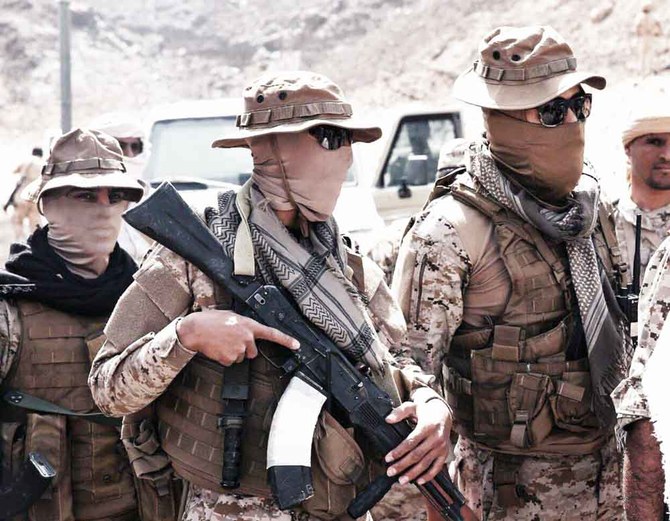

JEDDAH: The daring raid that captured Daesh’s leader in Yemen was meticulously planned for almost a month, and executed in a 10-minute early-morning blitz on his home by Saudi special forces, security sources have told Arab News.
Abu Osama Al-Muhajir — known during the operation as “the special catch” — was arrested on June 3, along with the terror group’s finance officer and a number of other Daesh fighters. Their capture was kept secret for 22 days so that investigators could complete inquiries and confirm their identities.
The operation began, as sensitive security operations often do, with intelligence. Sources reported that Al-Muhajir was living in a house in a Yemeni village, with other terrorists and their wives and children. The house was placed under surveillance, and Daesh’s presence confirmed.
“The mission commander was selected, one of the most prominent officers of the Special Security Forces, who in his turn chose the individuals participating in the mission. All have had advanced training in this kind of dangerous operation,” a source told Arab News.
“They put together a three-stage plan to ensure the veracity of the intelligence, the completion of the task in the fastest way possible without causing any harm to people living nearby or exposing the members of the force to any harm, and exiting the site taking those arrested to a safe area.”
Stage one of the operation involved constant monitoring of the house to check people’s comings and goings, and the quantity and quality of weapons they were likely to have, including bombs.
The monitoring stage complete, the mission commander set the operation for 9:30 a.m. on June 3, the last day of Ramadan. “The time was chosen for several reasons, most importantly because during Ramadan, people eat the suhoor meal before dawn and go back to sleep afterwards, and the sleeping schedule of the people inside the house had been carefully studied,” a source said.
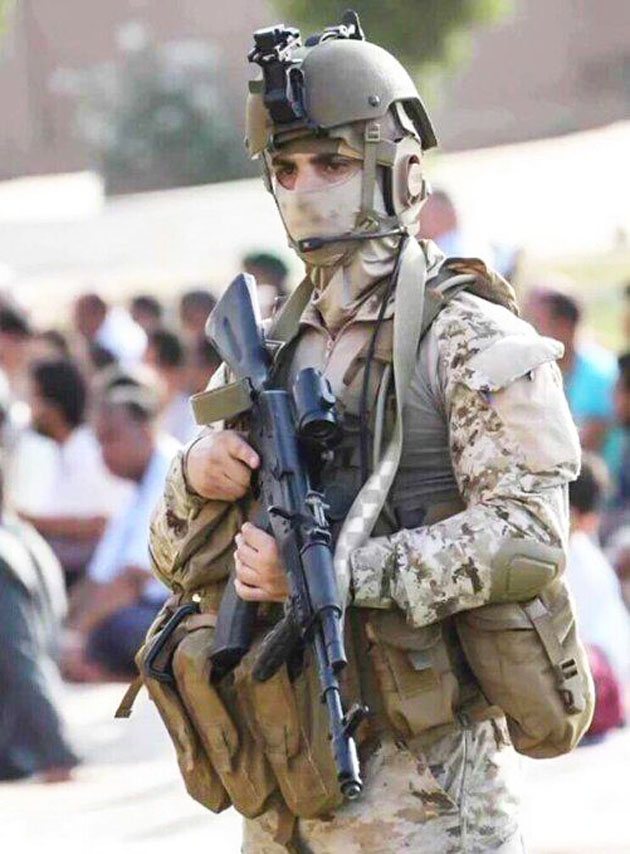
Ten minutes was all that Saudi special forces needed to capture Yemen's Daesh leader Abu Osama Al-Muhajir and other key terrorists on June 3, but it took them weeks to prepare for the successful operation. (Supplied photo)
“The operational plan was finely tuned to minimize collateral damage from the raid, and arrest the terrorists while ensuring the safety of the women and children inside the house. Approval was given for the execution.
“The Force Commander informed his colleagues of the method of attack and execution, and the method of withdrawal after execution or in the event of any emergency.
“When the time came, the execution of the second phase of the plan took place, attacking and raiding the house at exactly 9:20 a.m. The operation met no resistance and the special forces arrested all those in the house. Within 10 minutes of the raid, the entire mission was complete, which included arresting people, confiscating any weapons in the house, and getting out.”
The third stage was transporting the “precious catch” to a safe area away from any danger, either from Daesh agents or other terrorist organizations, including the Iran-backed Houthi militias. This also went perfectly as planned.
Saudi special forces are trained, by leaders in the field worldwide, in how to plan and execute such sensitive tasks with speed and precision, and safely. The success of this operation came as no surprise to the Yemeni political analyst Abdullah Ismail.
“It demonstrates the extraordinary capabilities of the Saudi forces in particular and the Arab coalition forces in general, carrying out such delicate operations, the result of intelligence work and the success of surveillance, which led to the arrest of a person in 10 minutes without causing any injuries to civilians or to the participating forces,” he told Arab News.
“This operation is a serious blow to Daesh, which became active to some extent after the overthrow of the Yemeni state through the Houthi coup.”


