



KARACHI: When the Anti-Narcotics Force (ANF) gets a tip for a drug bust, Bing and Bouncer are the first ones on the crime scene, helping to weed out some of the toughest drug runners in Pakistan’s teeming port city of Karachi.
They are the “unsung heroes” of the country’s war against drugs, part of Sindh province’s Canine Detection Unit (CDU) established in 1998 and comprising 28 dogs who help clean up the mean streets of a city of 15 million, particularly its massive airport and two seaside ports.
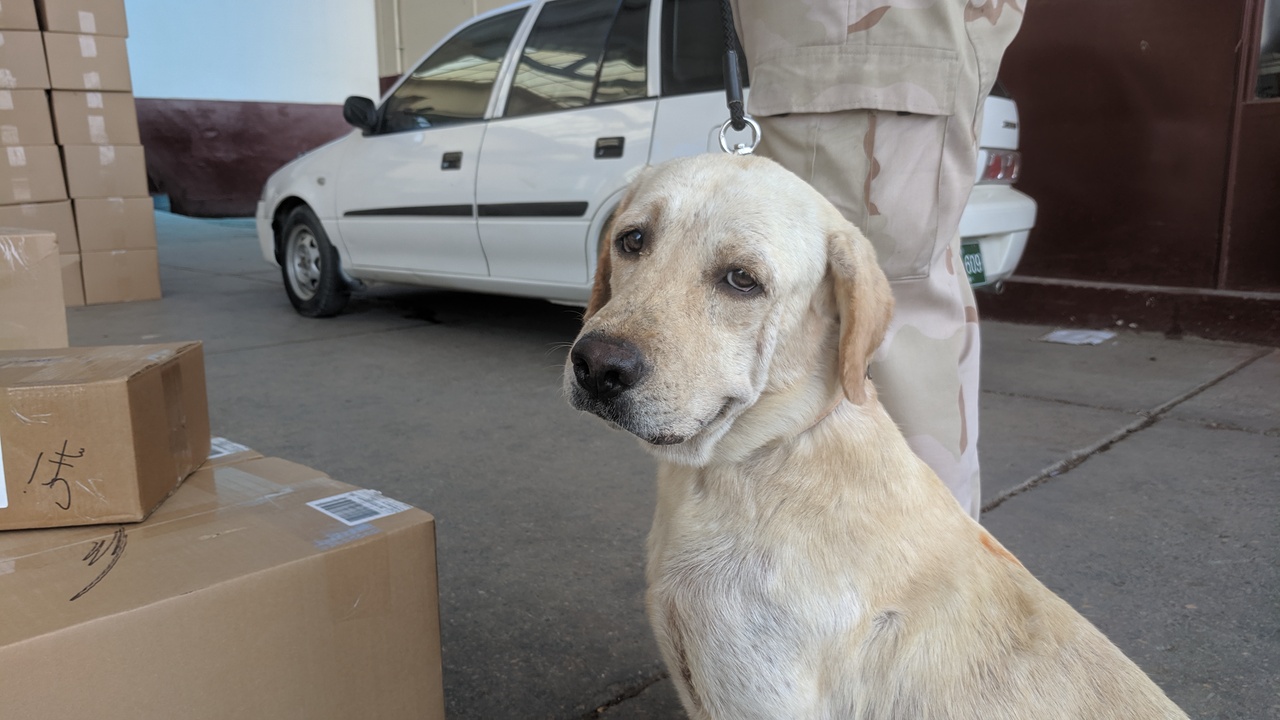
A sniffing dog of Labrador breed, named Bing, sits near a consignment before searching it for the suspected presence of narcotics at Karachi’s Jinnah International Airport here on June 26, 2019. (AN photo)
In 2016-17, Pakistan seized a total of 2860 metric tons of different types of narcotic drugs, according to data from the United Nations Office on Drugs and Crime. The figure has drastically risen since, officials say, in view of the increase in poppy cultivation in neighboring Afghanistan. Apart from servicing Pakistan’s nearly 7 million drug users, a flood of drug money also taints politics, corrupts officials and swells a vast illicit economy.
To keep things under control, drug bust teams have had to step up their act in recent years and ANF’s 28 four-legged colleagues are integral to the efforts.
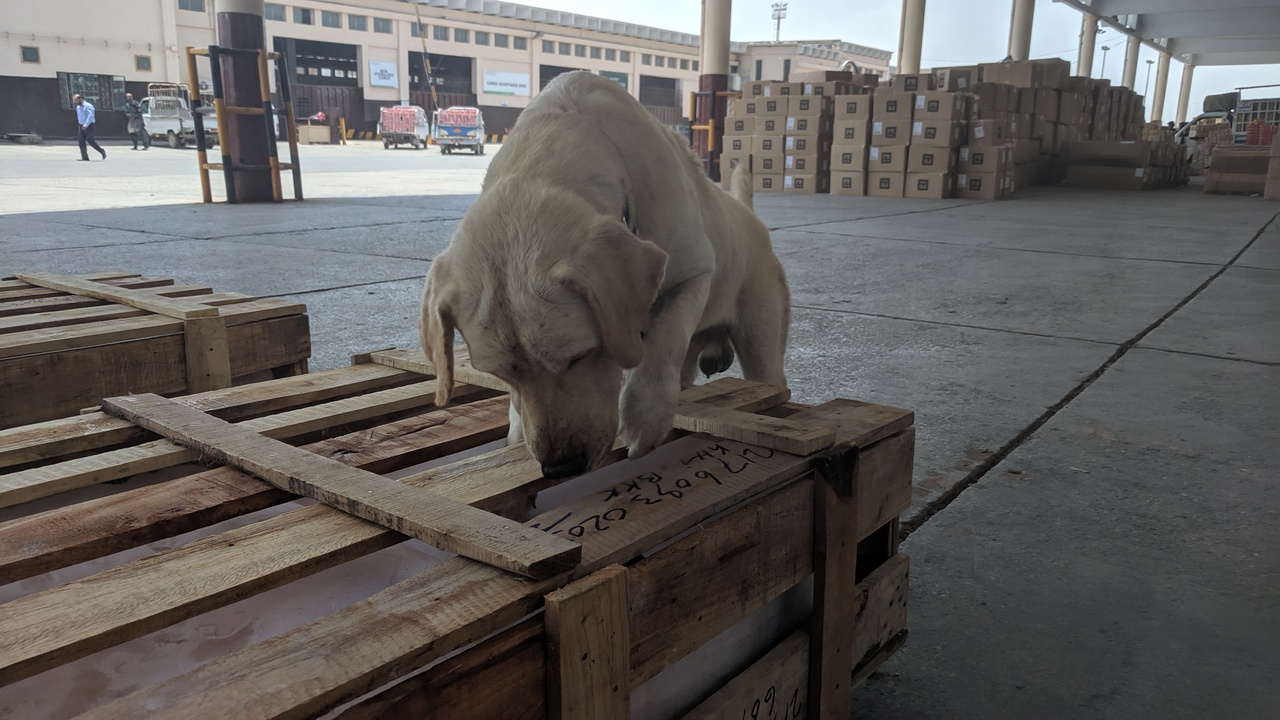
A sniffing dog of Labrador breed, named Bing, sniffs a consignment for the suspected presence of narcotics at Karachi’s Jinnah International Airport here on June 26, 2019. (AN photo)
“These are the unsung heroes of our war against drug trafficking,” ANF dog handler Rashid Ali said as he tossed a ball at seven-year-old Bing on Wednesday, the International Day Against Drug Abuse and Illicit Trafficking, observed annually on 26 June since 1989. “No matter how much you take care of them and make them happy, it’s the least reward for their great work.”
Canine noses have 220 million olfactory receptors compared to only 5 million in humans, making them masters at detecting drugs, ANF trainer Zaheer Ahmed said. Labradors, known for their wise and calm nature, and aged two years old, make the best fit.
Once selected, the dogs undergo six months of rigorous training during which they are made to smell different types of drugs concealed in bags and hard-to-detect places. Trainers and handlers keep a sharp eye on the process to ensure that the minimal amount of drugs are used so the dogs don’t get addicted.
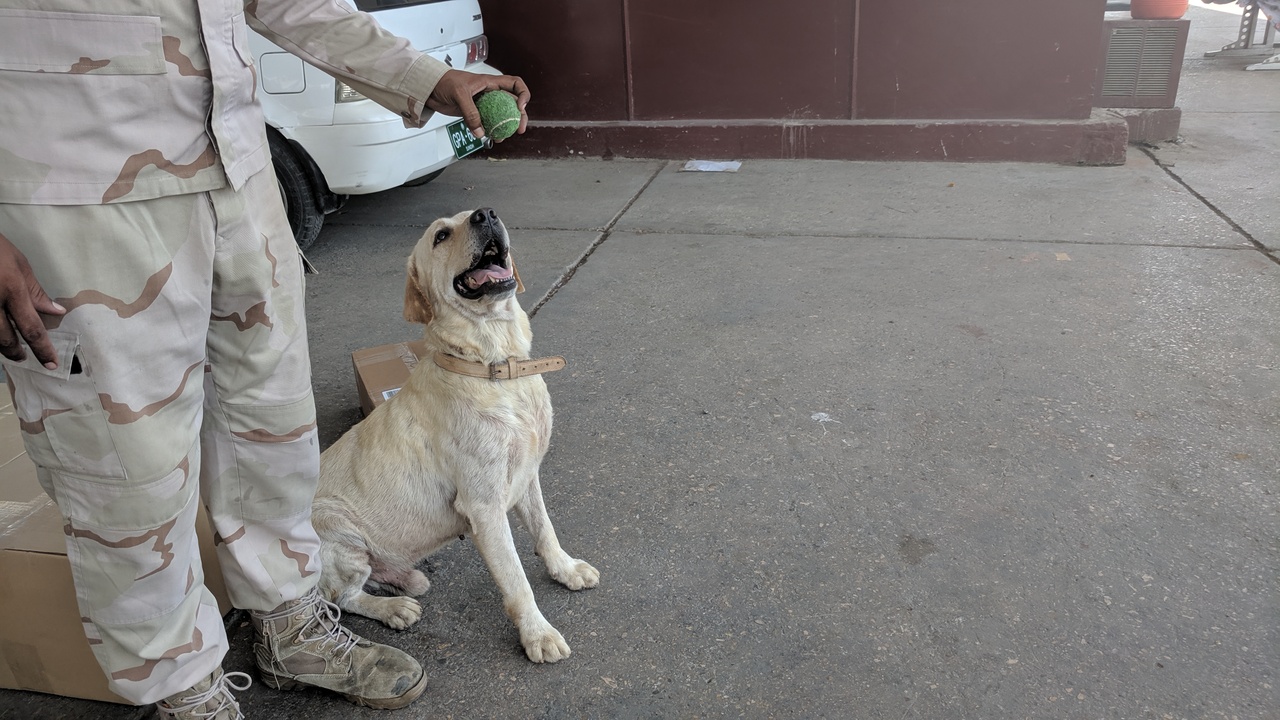
A sniffing dog of Labrador breed, named Bing, looks toward a tape ball in the hands of its handler Rashid Ali at Karachi’s Jinnah International Airport here on June 26, 2019. “The dog becomes happy and gets an energy boast when the ball is tossed up and the dog jumps to catch it. It’s done as a reward at the end of every task,” handler Rashid Ali told Arab News. (AN photo)
Extreme care is also taken in the canines’ diet and exercise.
“They are given imported food: boneless beef, vegetables, wheat flour and fresh milk are what they consume on a daily basis,” Ahmed said.
Bing, Bouncer and their other 26 friends have many big busts to their credit. In December 2018, the sniffer dogs recovered nearly 3 kilograms of hashish from a shipment at Karachi airport’s cargo unit. In March this year, they helped the ANF seize 22.8 kilograms of hashish during a raid in Karachi’s Mujahid Colony.
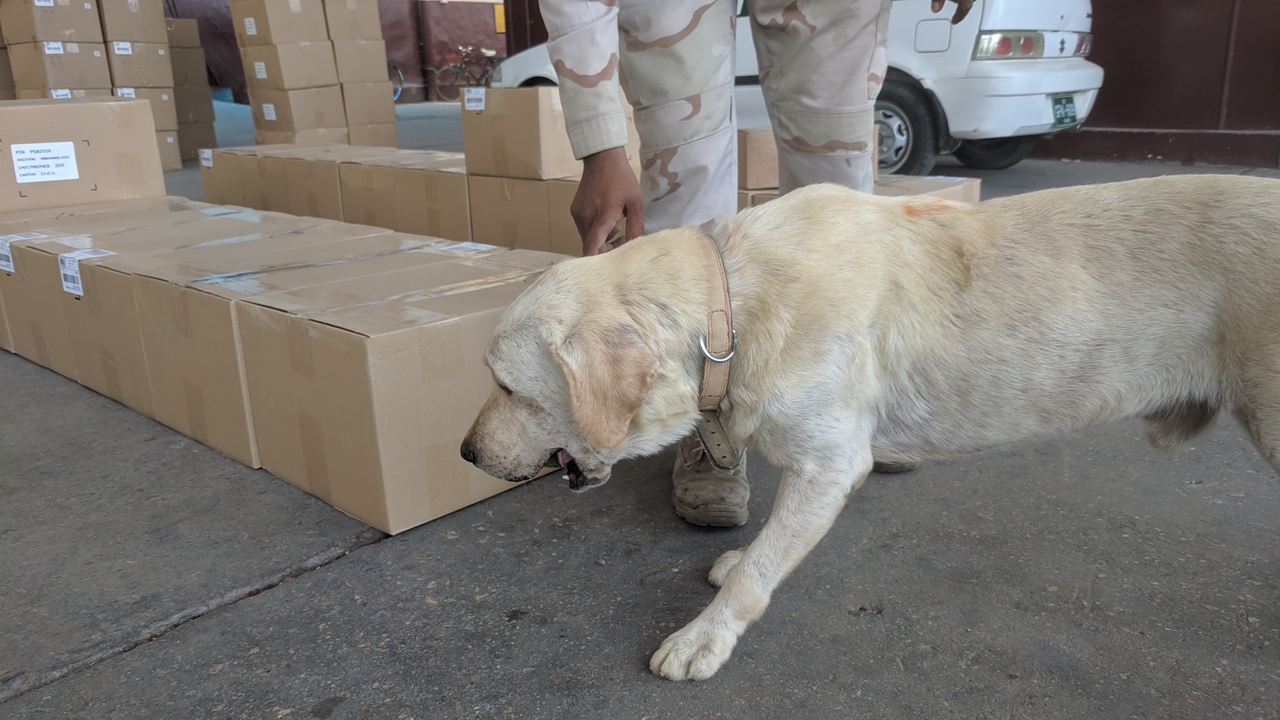
A sniffing dog of Labrador breed, named Bing, sniffs a consignment for the suspected presence of narcotics at Karachi’s Jinnah International Airport here on June 26, 2019. (AN photo)
On Wednesday, Ali directed Bing to search cargo at the Karachi airport while Bouncer watched from a room nearby, catching a short break. The area was clean. The duo will be on duty for eight hours when Banty and Rozee will take over for the night shift.
According to the ANF website, a properly trained dog can find drugs hidden in places and objects which will usually be missed even by latest techniques and technologies.
“There are examples where drug-finding dogs detected illicit drugs from suspicious luggage and persons which were cleared by all detectors and scanning machines,” the ANF website said.
Ahmed acknowledged the dogs’ special role: “The role of sniffing dogs is central [to the fight against drugs] but it is least highlighted.”
As Bing completed his task, Ali tossed him a tape ball to catch. It’s now play time.
“This is the reward after a hard day’s work,” the handler said. “It gives the dog happiness and energy.”
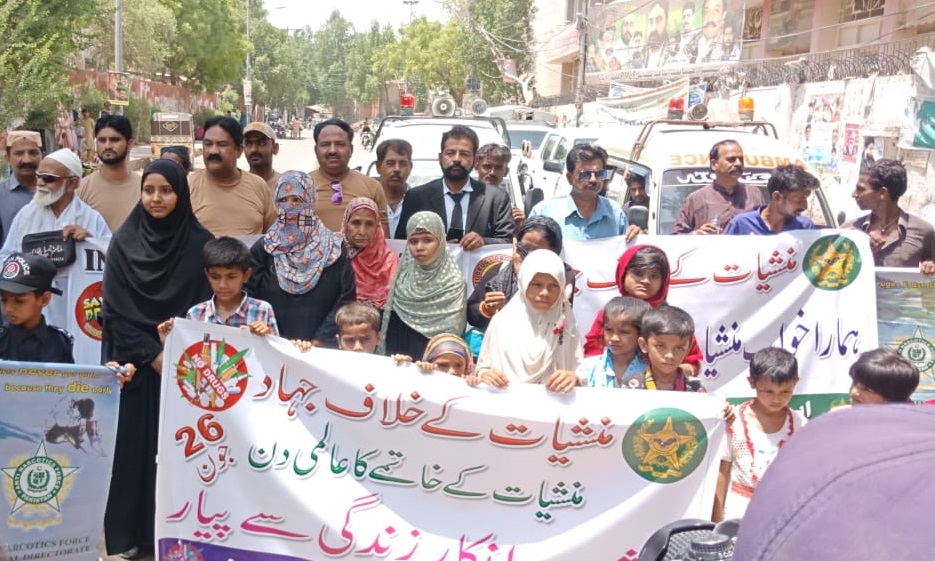
Participants of walk, including women and children, march on a road in Hyderabad to make people aware about the harms of using drugs. Walks and seminars were held in Karachi, Hyderabad, Tando Muhammad Khan and other cities of Sindh province to observe the International Day against Drug Abuse and Illicit Trafficking 2018 here on June 26, 2019. (Photo by ANF)


