

Saudi film industry heralds new dawn with opening of first arthouse cinema

1 / 9
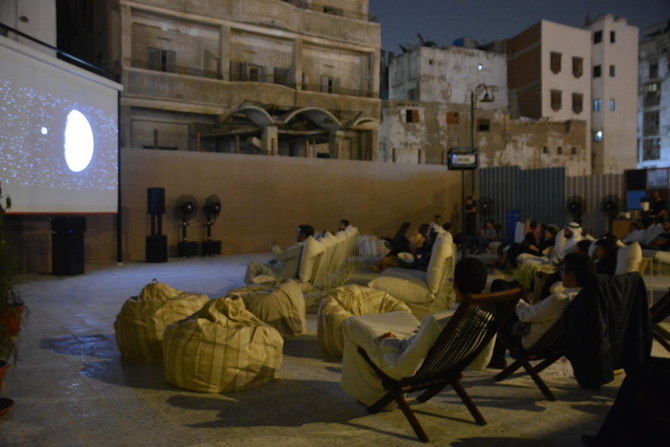
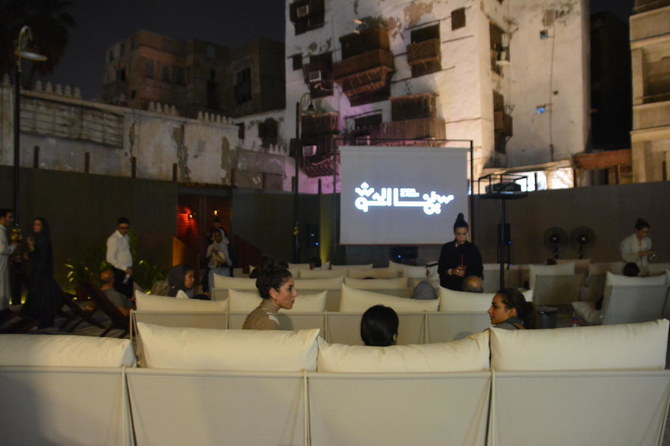
The outdoor Cinema El-Housh opened in the historic city of Jeddah with the screening of director Stanley Kubrick’s celebrated ‘2001: A Space Odyssey.’ (AN Photo)
2 / 9
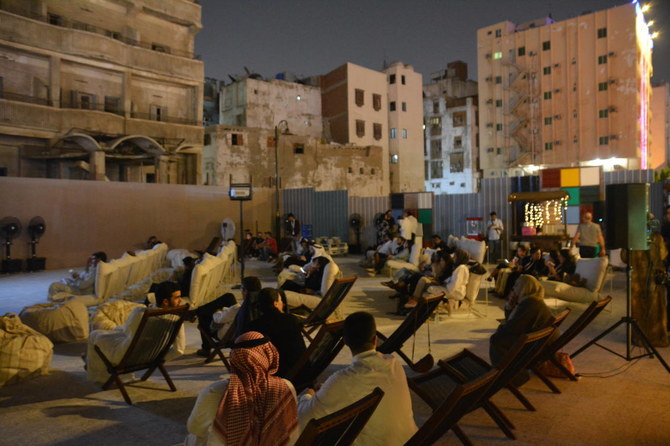
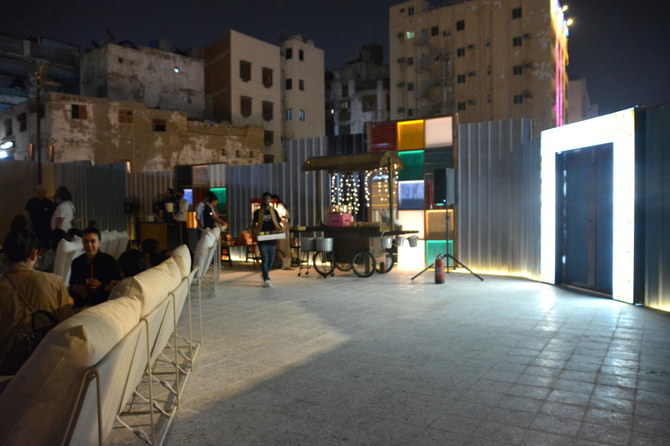
The outdoor Cinema El-Housh opened in the historic city of Jeddah with the screening of director Stanley Kubrick’s celebrated ‘2001: A Space Odyssey.’ (AN Photo)
3 / 9
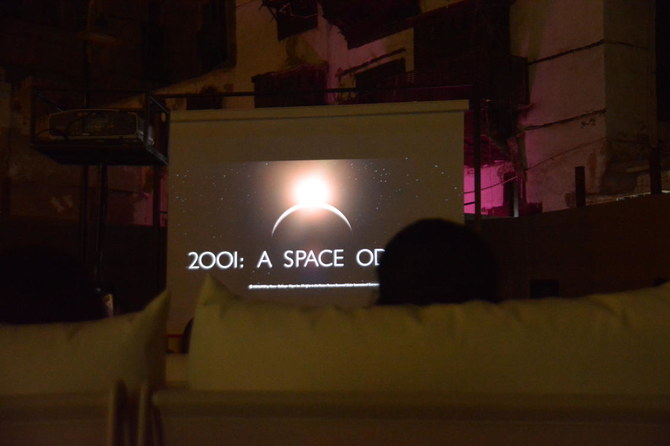
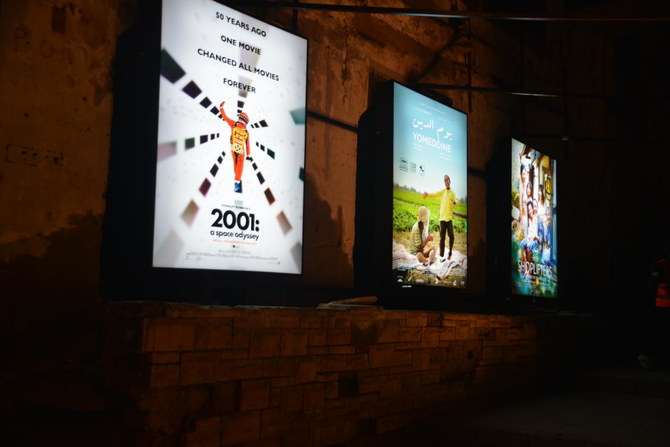
The outdoor Cinema El-Housh opened in the historic city of Jeddah with the screening of director Stanley Kubrick’s celebrated ‘2001: A Space Odyssey.’ (AN Photo)
4 / 9
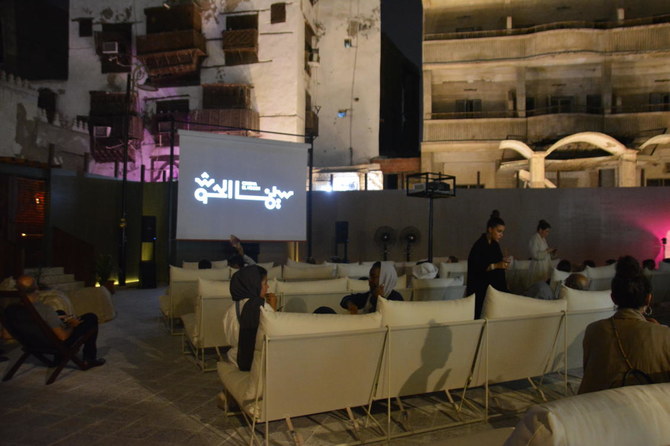
The outdoor Cinema El-Housh opened in the historic city of Jeddah with the screening of director Stanley Kubrick’s celebrated ‘2001: A Space Odyssey.’ (AN Photo)
5 / 9
The outdoor Cinema El-Housh opened in the historic city of Jeddah with the screening of director Stanley Kubrick’s celebrated ‘2001: A Space Odyssey.’ (AN Photo)
6 / 9
The outdoor Cinema El-Housh opened in the historic city of Jeddah with the screening of director Stanley Kubrick’s celebrated ‘2001: A Space Odyssey.’ (AN Photo)
7 / 9
The outdoor Cinema El-Housh opened in the historic city of Jeddah with the screening of director Stanley Kubrick’s celebrated ‘2001: A Space Odyssey.’ (AN Photo)
8 / 9
The outdoor Cinema El-Housh opened in the historic city of Jeddah with the screening of director Stanley Kubrick’s celebrated ‘2001: A Space Odyssey.’ (AN Photo)
9 / 9
The outdoor Cinema El-Housh opened in the historic city of Jeddah with the screening of director Stanley Kubrick’s celebrated ‘2001: A Space Odyssey.’ (AN Photo)
Updated 28 June 2019
Follow

Saudi film industry heralds new dawn with opening of first arthouse cinema

  • Cinema El-Housh is the brainchild of Saudi film director, producer and screenwriter Mahmoud Sabbagh and the event will continue until July 25 as part of the Jeddah Season festival
  • Mahmoud Sabbagh: We chose old Jeddah because the phenomena existed here, and the idea of an arthouse film isn’t new

JEDDAH: Saudi Arabia’s blossoming film industry on Tuesday heralded a new dawn with the launch of the Kingdom’s first arthouse cinema.

The outdoor Cinema El-Housh opened in the historic city of Jeddah with the screening of director Stanley Kubrick’s celebrated “2001: A Space Odyssey” to mark the movie’s 51st anniversary.

The project is the brainchild of Saudi film director, producer and screenwriter Mahmoud Sabbagh and the event will continue until July 25 as part of the Jeddah Season festival.

“Cinema El-Housh is one of the first proper arthouses for film theater initiatives in Saudi Arabia and in Jeddah,” Sabbagh told Arab News.

“The idea of the cinema comes from outdoor cinemas, which was a phenomenon that existed in old Jeddah from the 1940s until the end of the 1970s, where people gathered in courtyards where they would screen a film and enjoy it.

“We are bringing that back to the community with all its minimalism and gestures for bringing people together and bringing the communal experience of watching films again,” he said.

“We chose old Jeddah because the phenomena existed here, and the idea of an arthouse film isn’t new. It really strikes a balance between a commercial cinema and non-commercial cinemas.

“With the opening of cinemas, we are witnessing a burst of commercial-driven cinema multiplexes. However, there was a void someone had to fill by introducing this idea of arthouse cinemas,” added Sabbagh.

“We are free to screen films that are of non-commercial value, non-mainstream, more independent films that are film festival frequent and classics, and Saudi films. We want to be a platform for all the emerging Saudi voices.”


Tuesday’s private screening of “2001: A Space Odyssey” was also attended by Saudi actor Khaled Yeslam who said the film’s message conveyed the dawning of a new era in the Kingdom.

“From my perspective, choosing “2001: A Space Odyssey,” it started with the new dawn of mankind. And the music played was the music we listened to in the 1980s and 1990s,” Yeslam told Arab News.

“So, seeing such an entry as a film in Al-Balad, it’s a metaphor itself; here in Al-Balad, in Jeddah, in Saudi Arabia itself. I thought it was planned and that he meant to do that. And I think Mahmoud is such a genius for choosing such a film.”

On the Kingdom’s booming film industry, Yeslam said: “Through movies, it’s finally our (Saudis) time to tell our stories. We’re fed up with the stereotypes and double standards by Western media and it’s time to reveal our reality.

“In the end, we’re just human, we’re just like everyone else, and I believe that art is a way to connect with others as humans.”

FASTFACTS

Outdoor cinemas existed in Jeddah from the 1940s until the late 1970s.


New book explores 12 masterpieces of Islamic manuscript art across centuries

Updated 22 January 2026
Follow

New book explores 12 masterpieces of Islamic manuscript art across centuries

  • William Greenwood discusses his new book on a dozen masterful Islamic manuscripts 

DUBAI: A new book exploring 12 extraordinary Islamic manuscripts has been published with the intention of making these richly illustrated masterpieces accessible to all. 

“Illuminated: Art, Knowledge, and Wonder in Twelve Islamic Manuscripts,” published by Empty Quarter Press, showcases a dozen of the finest manuscripts ever produced, including the medieval Arab classics “Maqamat al-Hariri,” “Kalila wa Dimna,” “Aja’ib Al-Makhluqat Wa Ghara’ib Al-Mawjudat,” and “Kitab Al-Diryaq,” as well as spectacular works spanning the 13th to 17th century Timurid, Safavid, and Mughal worlds.  

Its author, William Greenwood, is a specialist in Islamic art and culture. The featured manuscripts were valued as both vessels of knowledge and as artistic products in their own right. From medical treatises and celestial charts to epic poetry and fables, each manuscript reflects the diverse traditions of Islamic intellectual and artistic life. 

'Maqamat Al Hariri' (circa 1236-37). (Supplied)

For Greenwood, who has worked as a curator for more than 10 years, most recently at Zayed National Museum in Abu Dhabi, the featured manuscripts are important for several reasons. Firstly, they are incredible works of art. Secondly, each is “a snapshot of the time when it was made, in terms of the artistic styles and content, but also the historical context.” 

The first chapter of “Kitab al-Diryaq,” for example, has been attributed to mid-13th-century Mosul, and “is very much about glorifying the ruler,” Greenwood says. “Kitab Suwar al-Kawakib al-Thabita,” copied in 15th-century Samarkand, speaks to the flourishing of science during the Timurid Renaissance, while the Hamzanama, from 16th-century India, marks the beginning of a distinctively Mughal style of painting. 

“The third reason is that, as beautiful as the paintings and illumination are, these are almost always intended to enliven texts which in themselves are wonderful – whether they are national epics like the “Shahnameh,” encyclopaedic works like “Aja’ib al-Makhluqat,” or demonstrations of virtuoso linguistic skill like “The Maqamat of Al-Hariri.” 

For Greenwood, who has worked as a curator for more than 10 years, most recently at Zayed National Museum in Abu Dhabi, the featured manuscripts are important for several reasons. (Supplied)

Lastly, he says, they are “remarkable testaments to a multicultural and cosmopolitan Islamic world, absorbing, refining, and rethinking everything from Indian fables and classical astronomy into a coherent and distinctively ‘Islamic’ whole.”  

Greenwood’s interest in illuminated manuscripts was initially sparked by a mid-14th-century Mamluk copy of “Sulwan al-Muta’ fi ‘Udwan al-Atba’,” which he encountered while working at the Museum of Islamic Art in Doha.  

“It’s the only illustrated medieval copy of this text and was probably made for a royal patron,” explains Greenwood, who has also worked at the British Museum in London. “The mix of Byzantine, Persian, and Chinese elements within the painting appealed to my interest in cross-cultural encounters. The text itself is part of the ‘mirrors for princes’ genre, which is supposed to provide guidance for rulers; this was a very important type of writing, which is represented in ‘Illuminated’ by an early 14th-century Mamluk copy of ‘Kalila wa Dimna.’”  

'Kalila wa Dimna' (circa 1310). (Supplied)

However, it was not a single discovery or experience that prompted him to write the book, but rather a growing realization that, although the general public engages with illustrated and illuminated Islamic manuscripts, there were few general works on the topic.   

“There are lots of very detailed publications which deal either with specific manuscripts or particular design elements across them, but not much for an interested but non-academic audience. It was also quite exciting to think about having paintings from these very different manuscripts together in one publication. Here you can follow the evolution of styles and ideas from the 13th through to the 17th century, which is helpful for non-specialists.” 

The end result is a richly illustrated book written for a wide audience. Both a celebration of the artistic traditions of the Islamic book and an invitation to uncover its beauty and treasures, “Illuminated” brings together Islamic art, scholarship, and storytelling in an accessible and engaging form. 

“I hope that being able to see these works together in one publication will open readers’ eyes to how wonderful they are,” says Greenwood. “This is really intended for everyone, and if it sparks wider interest in the manuscripts featured, then that in itself brings a unique value. All of these works deal with learning and imparting wisdom in some way, and if this book can help to spread that a little further, then it has done its job.”