SEPANG, Malaysia: Malaysia authorities have arrested four Indians and seized more than 14 kilograms of drugs and over 5,000 turtles from their luggage at the Kuala Lumpur airport.
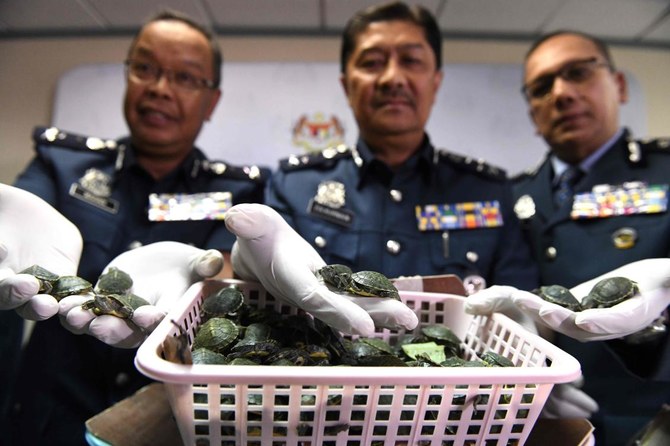
Senior customs official Zulkarnain Mohamed Yusof said Wednesday that agents found a total 5,255 red-ear slider baby turtles kept in small baskets from the luggage of two Indian nationals who flew in from Guangzhou, China on June 20.
He said the men had no permits for the turtles and told investigators that the terrapins, estimated to be worth $12,700, were meant to be sold as pets in India. The men are expected to be charged and could face up to five years in jail and a fine, he said.
The red-ear sliders are one of the world’s most commonly traded turtles meant for the pet and meat markets. Permits are required as young turtles are susceptible to carrying salmonella and pose health concerns.
Separately, Zulkarnain said officials also found a total of 14.34 kilograms of methamphetamine worth 717,000 ringgit ($174,000), hidden in special compartments in boxes that were hand-carried by two men. One of them flew in from Hyderabad, India on June 19 and another on June 20 from Bengaluru, he said in a statement.
The two men, believed to be drug mules, are expected to be charged and face the death penalty if convicted.


Malaysia seizes drugs, turtles from Indian nationals

Malaysia seizes drugs, turtles from Indian nationals

- Agents found a total 5,255 red-ear slider baby turtles kept in small baskets from the luggage of two Indian nationals
- Separately, two Indian nationals were arrested for possession of 14.34 kilograms of methamphetamine


Bangladesh’s religio-political party open to unity govt
- Opinion polls suggest that Jamaat-e-Islami will finish a close second to the Bangladesh Nationalist Party in the first election it has contested in nearly 17 years
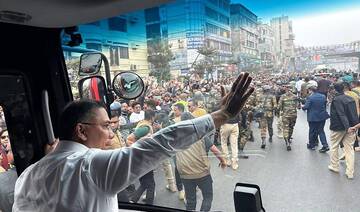
DHAKA: A once-banned Bangladeshi religio-political party, poised for its strongest electoral showing in February’s parliamentary vote, is open to joining a unity government and has held talks with several parties, its chief said.
Opinion polls suggest that Jamaat-e-Islami will finish a close second to the Bangladesh Nationalist Party in the first election it has contested in nearly 17 years as it marks a return to mainstream politics in the predominantly Muslim nation of 175 million.
Jamaat last held power between 2001 and 2006 as a junior coalition partner with the BNP and is open to working with it again.
“We want to see a stable nation for at least five years. If the parties come together, we’ll run the government together,” Jamaat chief Shafiqur Rahman said in an interview at his office in a residential area in Dhaka, days after the party created a buzz by securing a tie-up with a Gen-Z party.
Rahman said anti-corruption must be a shared agenda for any unity government.
The prime minister will come from the party winning the most seats in the Feb. 12 election, he added. If Jamaat wins the most seats, the party will decide whether he himself would be a candidate, Rahman said.
The party’s resurgence follows the ousting of long-time Prime Minister Sheikh Hasina in a youth-led uprising in August 2024.
Rahman said Hasina’s continued stay in India after fleeing Dhaka was a concern, as ties between the two countries have hit their lowest point in decades since her downfall.
Asked about Jamaat’s historical closeness to Pakistan, Rahman said: “We maintain relations in a balanced way with all.”
He said any government that includes Jamaat would “not feel comfortable” with President Mohammed Shahabuddin, who was elected unopposed with the Awami League’s backing in 2023.