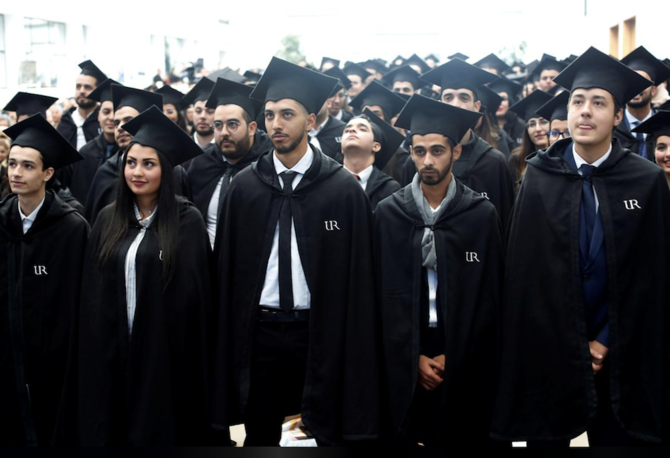

LONDON: More than half the young people in much of the Arab world would like to leave their home countries, a survey conducted by BBC Arabic has found.
That number has jumped by more than 10 percent for those aged 18-29 since 2016, according to the Big BBC News Arabic Survey 2018/19, conducted with the Arab Barometer research group. The survey received responses from more than 25,000 people aged 18 and over in Morocco, Algeria, Tunisia, Libya, Egypt, Palestine, Yemen, Jordan, Iraq, Sudan, and Lebanon.
One of the survey’s most striking figures showed that 70 percent of young Moroccans were thinking about leaving their country.
Almost half of those surveyed in Sudan, Jordan and Morocco — and a third of those in Iraq — are considering emigrating. Although Europe is the overwhelming choice for North Africans, the number of people in other countries in the region who want to go to Europe has fallen since previous surveys.

The Gulf is the number one choice for Egyptians, Yemenis, and Sudanese, whilst North America is top of the wish list for people in Jordan and Lebanon.
Participants in the survey “seem to be turning away from Europe and towards North America and the Gulf, and that’s perhaps because the Gulf has been opening its doors a little bit more in recent years,” said Rosie Garthwaite, senior producer at BBC News Arabic.
The number of people risking their lives to cross the Mediterranean Sea and seek refuge in Europe surged in the last eight years — peaking in 2016. Many of those migrants were fleeing violence in Syria and Iraq, but there were also large numbers of Afghans, North Africans and people from sub-Saharan Africa making the journey.
Overall, there has been an increase in the number of people who are considering emigration since 2013 in Jordan, Iraq, Morocco, Libya, Tunisia, and Egypt, the survey said. However, there has been a decrease in the number in Palestine, Algeria, Sudan, Yemen, and Lebanon. Rates in the latter have “declined substantially over the past decade,” the survey said.
Often the desire to leave is fueled by a decline in the economic situation in the region, the report stated: “Economic factors are the predominant reason for emigration followed by corruption, and men are more likely than women to consider emigrating, especially in Egypt.”
Arab countries had the highest youth unemployment rates in the world in 2018, according to the International Labour Organization (ILO). Conflict and instability in Yemen, Palestine, Sudan, Algeria, Libya and Iraq has increased economic deterioration.
The ILO says that around 20 percent of people aged 15-24 in Morocco were unemployed in 2018, and according to the survey a significant minority of people there “want more rapid or sudden (political) change, particularly young people.”
In Jordan and Lebanon, economies have been battered by the fallout from violence in neighboring Syria and Iraq.
Jordan has taken in hundreds of thousands of Syrian refugees and has the second-highest share of refugees compared to population in the world. At the same time, tax hikes introduced to meet International Monetary Fund (IMF) targets to reduce Jordan’s debt burden triggered widespread protests in 2018.
Since 2011, Lebanon has taken in 1.5 million Syrians and Palestine refugees from Syria, accounting for 30 percent of Lebanon's population, the world’s highest concentration per capita of refugees according to the European Civil Protection and Humanitarian Aid Operations department.
Meanwhile, Yemen, Sudan, and Libya featured in the 10 most corrupt countries in the world according to the Corruption Perceptions Index 2018.