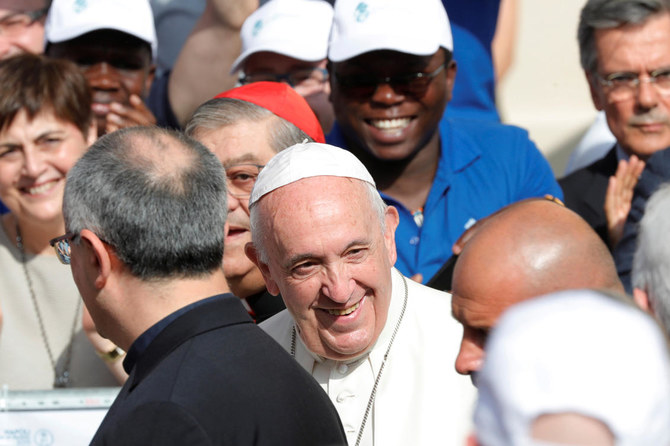
VATICAN CITY: Pope Francis called Friday for a reform of the way theology is taught in Catholic schools, saying students must learn about dialogue with Judaism and Islam, and that overall there must be greater freedom in theological research and academic pursuits.
The Jesuit pope made the call during a speech at the Jesuit-run theology university in Naples. It follows his outreach this year to the Muslim world with the signing of a joint statement with the imam of Cairo’s Al Azhar, the seat of Sunni learning, establishing the relationship between Catholics and Muslims as brothers, with a common mission to promote peace.
In his speech, Francis said dialogue and partnership with the Muslim world is necessary “to build a peaceful existence, even when there are the troublesome episodes by fanatic enemies of dialogue.”
Catholic theology students must learn the culture, language and way of thinking of Jews and Muslims “to better understand and live out our relationship,” he said.
After the theologically doctrinaire papacies of St. John Paul II and Pope Benedict XVI, Francis has stressed instead the need to “walk together” with interfaith partners, often joking that theologians should ruminate on a deserted island while religious leaders press ahead with dialogue on the ground. He has also called for a more pastoral, merciful and conscience-driven approach to sticky theological problems, such as Communion for the civilly remarried.
“Theological freedom is necessary,” Francis said Friday. “Without the possibility of trying new paths, you don’t create anything new.” Speaking off the cuff, Francis, though, made a distinction between the necessary freedom required for theological study and the need for theological precision in preaching to the faithful.
He called for a revision of the way theology is taught so that it focuses on welcome, dialogue and flexibility. In addition, lay people should be encouraged to take up theological studies, especially women, he said.


Pope seeks more freedom in theology, dialogue with Islam
Pope seeks more freedom in theology, dialogue with Islam

- He said dialogue and partnership with the Muslim world is necessary “to build a peaceful existence”
- He called for a revision of the way theology is taught so that it focuses on welcome, dialogue and flexibility.


Afghan Taliban says Pakistan bombs Kabul in fresh escalation
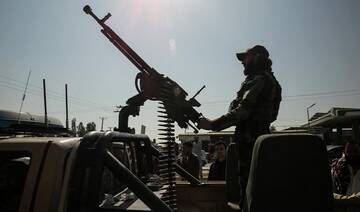
KABUL: The Afghan government said on Friday that Pakistan had carried out fresh strikes on Kabul and several other provinces.
Taliban government spokesman Zabihullah Mujahid said in a post on X that Kabul, Kandahar, Paktia, Paktika, and some other areas, were targeted.
Pakistan has killed at least 641 Afghan Taliban operatives and injured more than 855 in the ongoing conflict between the two sides since last month, Information Minister Attaullah Tarar said on Wednesday.
Islamabad has said its airstrikes, which have at times directly targeted the Afghan Taliban government, are aimed at ending Kabul’s support for militants carrying out attacks on Pakistan. The Taliban has denied aiding militant groups.
Fresh clashes between the two neighbors began on Feb. 26 after Afghanistan’s border forces launched attacks against Pakistani military installations. Kabul said the attack was in retaliation for Islamabad’s airstrikes earlier in February. Both forces have since then engaged in the worst fighting between them in decades.
Relations between Pakistan and Afghanistan have remained strained since the Afghan Taliban seized power in August 2021. Pakistan has witnessed a surge in militant attacks across the country in recent months that it blames on militants it alleges are based in Afghanistan. Kabul denies the allegations and insists that its soil is not used by militant groups for attacks against other countries.
While Afghanistan has voiced the desire for dialogue, Pakistan has repeatedly ruled out talks, saying it will continue targeting militant hideouts through “Operation Ghazab lil Haq” until Kabul desists from supporting militants.